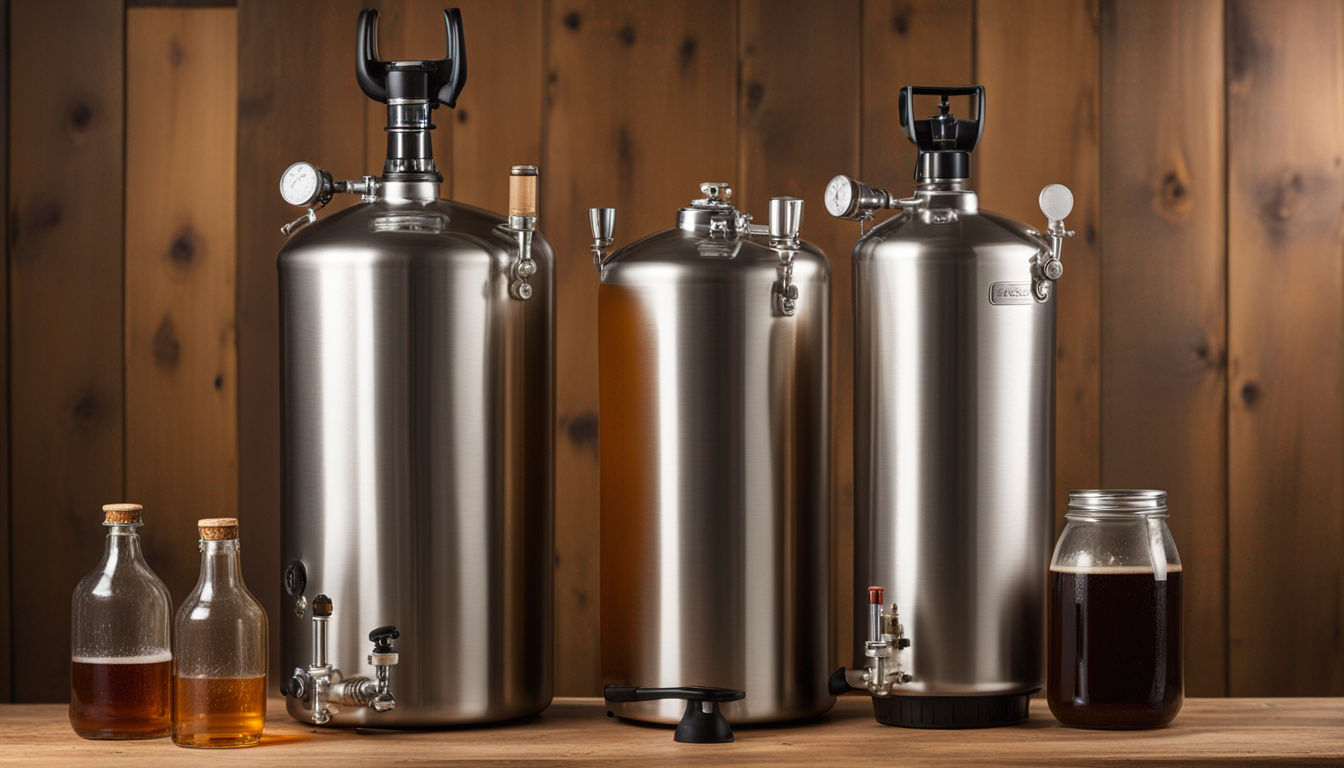
Batch number seven is when I started hating bottling. The brew day was fun — measuring grain, watching the boil, pitching yeast, feeling like a mad scientist. Then two weeks later came bottling day: cleaning 54 bottles, mixing priming sugar, filling each bottle one at a time with a spring-loaded wand that dripped on the floor, capping each one with a wing capper that left my hand aching, and cleaning up the sticky mess afterward. Two hours of tedium for a hobby that's supposed to be enjoyable.
By batch twelve, I bought a keg. By batch thirteen, I wondered why I'd waited so long. But kegging isn't automatically the right move for everyone. The startup cost is real, you need space for a dedicated fridge or freezer, and bottling has genuine advantages that kegging can't replicate. Here's the honest comparison I wish I'd found before dropping $350 on my first setup.
Bottling: The Case For and Against
What Bottling Does Well
Low startup cost. A bottling bucket, auto-siphon, bottling wand, wing capper, and a bag of caps runs $30-50 total. If you're saving pry-off bottles from commercial beer, the bottles themselves are free. For someone who's brewed three batches and isn't sure the hobby will stick, that's the right price point. Check out our bottling guide for the technique details.
Portability. A six-pack of homebrew makes a great gift, travels to a party easily, and fits in any fridge. Try carrying a 5-gallon Corny keg and a CO2 tank to a backyard barbecue. You can do it — I've done it — but it requires planning, a hand truck, and the kind of determination usually reserved for moving apartments.
Natural carbonation. Bottle conditioning (carbonating with priming sugar and residual yeast) creates a fine, persistent, champagne-like carbonation that some styles genuinely benefit from. Belgian ales, hefeweizens, and English bitters have a traditional bottle-conditioned character that forced carbonation doesn't perfectly replicate. The yeast in the bottle also provides a small amount of ongoing conditioning that can improve flavor over months.
Long-term storage. Capped bottles store for months or years. High-gravity beers like barleywines and imperial stouts actually improve with bottle aging. A keg ties up $50-100 worth of equipment for the entire aging period. A case of bottles sits on a shelf and asks nothing of you.
What Bottling Does Poorly
Time. Cleaning, sanitizing, filling, and capping 48-54 bottles takes 90-120 minutes even when you're efficient. That's after you've already spent 4-6 hours on brew day. The ratio of tedious work to fun work is brutal.
Consistency. Priming sugar calculations aren't always exact. Temperature variations during bottle conditioning mean some bottles carbonate more than others. I've had batches where bottles from the same case ranged from slightly flat to borderline gushers. Bottle-to-bottle variation is a fact of life with natural carbonation.
Oxidation risk. Every bottle fill introduces a small amount of oxygen. The auto-siphon transfer, the bottling wand, the headspace in each bottle — it all adds up. For hop-forward beers like IPAs, where oxygen is the mortal enemy of hop aroma, bottling is a losing battle. A fresh IPA bottled at home starts losing its hop punch within 2-3 weeks.
Bottle bombs. Over-prime, bottle before fermentation is truly finished, or catch a wild yeast infection, and you've got 50 grenades conditioning in your closet. It's rare if you follow proper procedures, but it happens. I had one batch explode at 3 AM. The cleanup involved a shop vac and a genuine conversation about the hobby with my wife.
Kegging: The Case For and Against
What Kegging Does Well
Speed. Transferring 5 gallons of beer from fermenter to keg takes 10-15 minutes. No filling individual bottles. No capping. No priming sugar calculations. Rack the beer into a sanitized keg, purge with CO2, seal, connect to gas, and you're done. The time savings compound — over a year of monthly brewing, kegging saves you roughly 20 hours compared to bottling. That's almost a full day of your life, returned.
Consistent carbonation. Set your CO2 regulator to the desired pressure (typically 10-14 PSI at 38-40F for most ales), wait 5-7 days, and every pour is identically carbonated. No bottle-to-bottle variation. No guessing on priming sugar. If the carbonation level is wrong, adjust the pressure and fix it in 24 hours. Try telling 50 bottles to carbonate differently.
Reduced oxidation. A closed transfer from fermenter to a CO2-purged keg introduces virtually zero oxygen. For IPAs, pale ales, and any hop-forward style, this is transformative. My kegged IPAs stay fresh for 4-6 weeks. My bottled IPAs started fading at 10 days. The difference isn't subtle.
Draft beer at home. I'm not going to pretend this isn't a huge part of the appeal. Pulling a pint of your own beer from a tap in your kitchen is deeply satisfying. Guests lose their minds. Your spouse starts requesting specific styles. The dog doesn't care, but everyone else does.
What Kegging Does Poorly
Upfront cost. A basic kegging setup is a $200-400 investment. Used gear can lower this, but you're still spending 5-10x more than bottling equipment. If you brew twice and decide the hobby isn't for you, those kegs make expensive planters.
Space. You need a dedicated refrigerator or chest freezer (a "keezer") to keep kegs cold and serve at proper temperature. A standard 7 cubic foot chest freezer ($200 new, $50-100 used) holds two Corny kegs and a CO2 tank. That's a significant footprint in an apartment, garage, or basement.
Portability. Getting draft homebrew to a party requires either filling growlers (you'll need them), using a jockey box (portable draft system, $150+), or physically transporting the keg with a picnic tap. It's doable but far less convenient than grabbing a six-pack.
Sharing. You can't hand someone a keg of your beer as a gift. Well, you can, but you're also handing them a CO2 setup, a fridge, and a tutorial. Bottles are self-contained gifts. Kegs are ecosystem-dependent.
The Real Cost Breakdown
Bottling Setup
- Bottling bucket with spigot — $15
- Auto-siphon and tubing — $12
- Bottling wand — $4
- Wing capper — $15
- 100 crown caps — $4
- Bottles — $0 (save commercial bottles)
Total: $50
Ongoing cost per batch: ~$2 (caps and priming sugar)
Basic Kegging Setup (Single Keg)
- Used ball-lock Corny keg (5 gallon) — $50-70
- 5 lb CO2 tank (new or recertified) — $60-80
- Dual-gauge CO2 regulator — $50-65
- Gas and liquid disconnect set — $15-20
- Beverage tubing and picnic tap — $10-15
- O-ring kit and keg lube — $8
Total: $193-258
Add a used chest freezer or mini-fridge: $50-150
Total with fridge: $250-400
Ongoing cost per batch: ~$1 (CO2 refill is $15-20 and lasts 6-10 kegs)
The Upgraded Keg Setup (Two-Tap Keezer)
- 2x used Corny kegs — $100-140
- 5 lb CO2 tank — $60-80
- Dual-gauge regulator with manifold — $70-90
- 2x disconnect sets — $30-40
- 2x Perlick 630SS faucets — $80-100
- Shanks, tailpieces, and drip tray — $40-50
- 7 cu ft chest freezer — $50-150 (used)
- Inkbird ITC-308 temperature controller — $35
- Timber collar (DIY) — $30-40
Total: $495-725
This is the "I'm doing this for real" setup. Two taps, proper faucets, temperature-controlled serving. It sounds expensive until you realize two kegs of homebrew replace approximately $200 worth of craft beer, and the system pays for itself within 4-6 batches.
When to Make the Switch
My advice: bottle your first 5-10 batches. Here's why.
First, you need to confirm the hobby sticks. Kegging equipment sitting unused is an expensive reminder of abandoned hobbies. Bottling equipment sitting unused cost you $50.
Second, bottling teaches you things kegging doesn't. You learn about priming calculations, natural carbonation, bottle conditioning, and the patience required to wait for carbonation. These are foundational skills even if you never bottle again.
Third, by batch 10, you know what you like to brew. If you're making mostly IPAs and pale ales (where oxidation is the enemy), kegging is a huge upgrade. If you're making mostly Belgian ales and barleywines (where bottle conditioning adds value), you might prefer to keep bottling — or go hybrid.
The Hybrid Approach
Here's what I actually do, and what many experienced homebrewers settle on: keg most batches, bottle a few.
My IPAs, pale ales, and session beers go straight into kegs. Speed, freshness, and consistent carbonation matter for these styles, and the reduced oxidation keeps hops punchy for weeks.
My barleywines, imperial stouts, and Belgian quads get bottled. These beers benefit from the yeast conditioning in the bottle, they're meant to age for months or years, and I want to share them as gifts or bring them to bottle shares.
Filling bottles from the keg is the best of both worlds. Carbonate in the keg, chill the bottles, reduce the serving pressure to 2-3 PSI, and fill slowly using a picnic tap and a bottle filler attachment (the Blichmann BeerGun at $100 or the cheaper Last Straw at $30 both work). You get the convenience of kegging with the portability of bottles when you need it.
Whatever you choose, don't let the packaging step ruin the hobby. Brew day should be fun. If bottling makes you dread the two weeks between pitching and packaging, kegging will reignite the joy. If bottling is a pleasant ritual you enjoy — cracking open a bottle you filled yourself, hearing that gentle hiss of carbonation — then stick with it. Visit our homebrewing hub for more gear guides and technique breakdowns as your setup evolves.
The beer doesn't know how it got into the glass. It only knows whether you enjoyed making it.