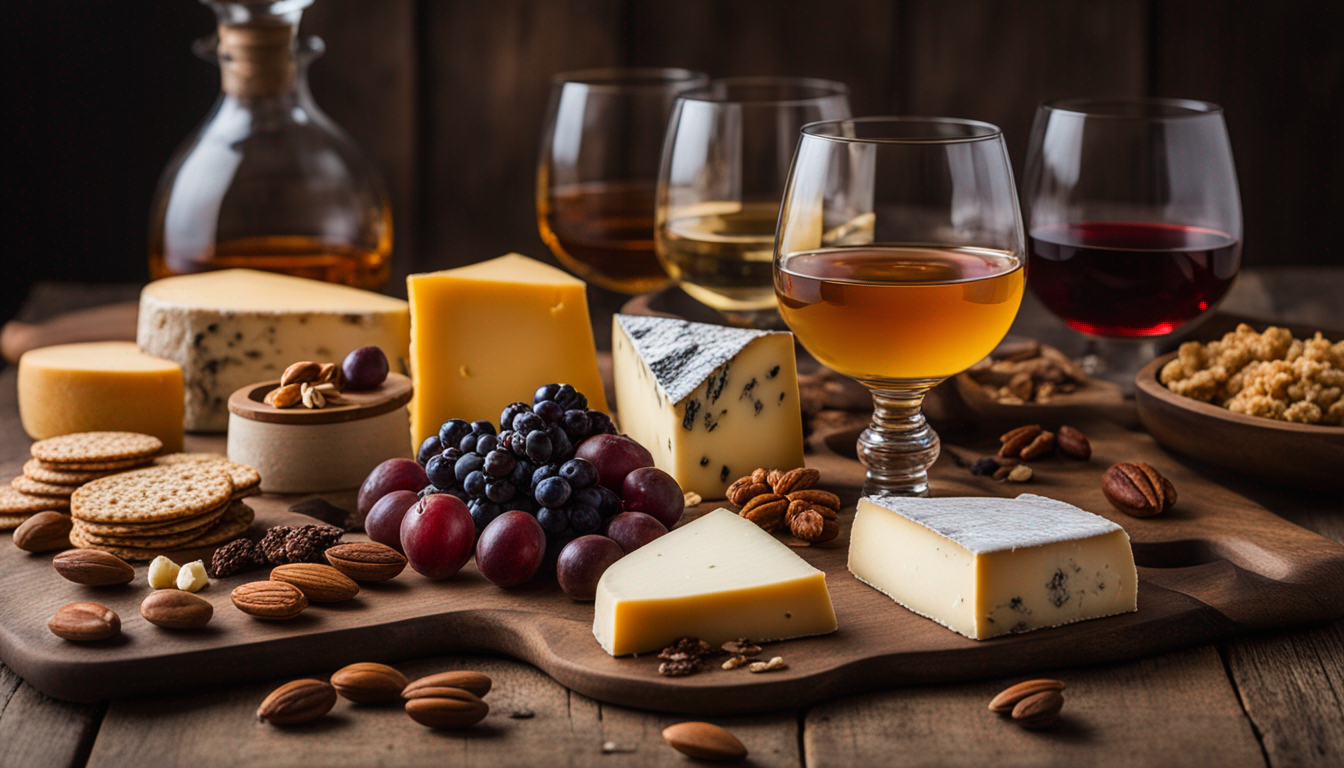
Last year I hosted a whiskey and cheese night that went sideways in the best way. The plan was five curated pairings with tasting notes. What actually happened was eight friends arguing about whether Gouda or Gruyère was better with rye, someone discovering they loved Islay Scotch (after years of "I don't do peaty"), and a heated debate about whether cheese should come before or after the whiskey on your palate.
This guide is part of our Food & Drink Pairings series, where we explore the best combinations for every palate.
That's the goal. Not a lecture. Not a tasting exam. An evening where people discover something new while eating well and drinking better. Here's how to make it happen without a sommelier certification or a second mortgage.
The Budget Reality
Let's get this out of the way first, because most whiskey tasting guides pretend money doesn't exist.
For 6-8 guests, you need:
- Whiskey: 5 bottles × $25-60 each = $125-300 (you'll have plenty left over)
- Cheese: 5 varieties × $8-15 each = $40-75
- Accompaniments: Crackers, bread, fruit, nuts = ~$30
- Palate cleansers: Sparkling water, plain crackers = ~$10
Total realistic budget: $200-400 for an evening that would cost $80+ per person at a whiskey bar. And you keep the leftover bottles.
The bottles I recommend below are all available at standard retail. Nothing allocated, nothing you need to hunt for. If you have to stand in a line at 6 AM on a Saturday, it's not a casual tasting—it's an obsession. Different event.
The Five Pairings
Pairing 1: Buffalo Trace + Aged Gouda (18+ months)
Why it works: Start gentle. Buffalo Trace at 90 proof is approachable, with caramel, vanilla, and light fruit. Aged Gouda develops butterscotch and crystalline crunch that mirrors the bourbon's caramel sweetness. The flavor bridge is literally caramel—the cheese develops it through aging, the bourbon through barrel char. They're arriving at the same destination via different roads.
Cheese notes: Look for Beemster XO (26-month) or any Dutch Gouda aged 18 months or more. The crystals in aged Gouda aren't just texture—they're concentrated amino acids (tyrosine), and they add an umami depth that makes the bourbon taste richer. A wedge of young Gouda won't do the same thing. Age matters here.
Pour: 0.75 oz per person. This is the warm-up—you're not trying to get anyone drunk in round one.
Pairing 2: Wild Turkey 101 + Comté (12+ months)
Why it works: Comté is the French cheese that bourbon lovers don't know they need. Twelve-plus months of cave aging creates nutty, slightly sweet, complex flavors with a firm texture. Wild Turkey 101's high-rye mashbill adds pepper and baking spice that cuts through Comté's richness while the bourbon's caramel and the cheese's nuttiness create a warm, autumnal pairing.
Cheese notes: Comté labeled "Réserve" or "Extra" (12+ months aged) from a good cheese counter. The younger stuff is pleasant but lacks the complexity to match bourbon. Marcel Petite is the gold standard producer—ask your cheesemonger.
Discussion starter: "Notice how the rye spice in the bourbon changes the cheese?" This is where people start actually paying attention to what's on their palate.
Pairing 3: Rittenhouse Rye BiB + Roquefort
Why it works: This is the pairing that surprises everyone. Blue cheese and rye whiskey sounds like a dare, but the combination is extraordinary. Roquefort's salty, tangy, creamy funk meets Rittenhouse's spicy, dry rye character, and the contrast creates something neither can do alone. The salt in the Roquefort tames the rye's bite. The rye's spice cuts through the cheese's richness. They negotiate a truce that tastes like genius.
Cheese notes: Real Roquefort, from sheep's milk, cave-aged in Roquefort-sur-Soulzon. Not "blue cheese crumbles" from the supermarket deli. The provenance matters—Roquefort's specific mold culture (Penicillium roqueforti) creates a sharper, more complex blue than most imitators. Budget about $15 for a small wedge—you need less than you think, since it's intense.
Warning: Some people don't like blue cheese. That's fine. Have the Comté available as a fallback. The goal is for everyone to have fun, not pass an exam.
Pairing 4: Maker's Mark 46 + Manchego (6+ months)
Why it works: Maker's 46's wheated bourbon profile—soft vanilla, caramel, baking spice from the French oak stave finishing—pairs with Manchego's firm, nutty, slightly sweet character like they grew up together. The wheat in the bourbon's mashbill creates a rounder, less spicy spirit that lets Manchego's subtle flavors come through, while the cheese's sheep-milk tanginess adds a savory counterpoint to the bourbon's sweetness.
Cheese notes: Semi-curado (aged 3-6 months) for a milder pairing, or curado (6-12 months) for more intensity. Skip the young (fresco) Manchego—too mild. The rind is edible but most people skip it. Serve at room temperature—cold Manchego tastes like nothing.
The accessible one: This pairing is the crowd-pleaser. Nobody dislikes it. It's the diplomatic center of your lineup.
Pairing 5: Ardbeg 10 + Sharp White Cheddar (2+ years)
Why it works: We're ending on Islay—smoky, peaty, maritime Scotch—because nothing clears a palate like surprise. Ardbeg 10's intense peat smoke, iodine, and citrus paired with a sharp, crystalline aged cheddar is the combination that makes people say "I had no idea whisky could do that."
The sharp cheddar's acidity and crystalline crunch stand up to Ardbeg's peat assault. The cheese's fat content rounds out the smoke. And the salt in the cheddar brings out Ardbeg's hidden sweetness—a malty, almost honeyish quality that the peat obscures when you drink it neat. For the full experience, follow your cheese course with a bourbon-friendly cigar.
Cheese notes: Cabot Clothbound Cheddar from Jasper Hill Farm is the American gold standard—cave-aged, crystalline, tangy. Keens or a proper English cheddar from Neal's Yard works too. The key is age: two years minimum. Young cheddar can't compete with Ardbeg.
Expect: At least two people will say "I don't like smoky whisky" and then fall silent after this pairing. It happens every time.
The Setup
Table Layout
Don't overcomplicate this. You need:
- 5 whiskey bottles lined up in order (you'll pour for guests)
- 5 cheese plates or one large board with clearly separated sections, labeled
- Crackers and bread: Plain water crackers or sliced baguette. Nothing flavored—rosemary crackers will fight the whiskey
- Fruit: Green apple slices and dried apricots (both work as palate bridges between pairings)
- Nuts: Marcona almonds and walnuts, lightly salted
- Water: Sparkling and still, within arm's reach of every guest
- Glassware: Glencairn glasses if you have them, rocks glasses if you don't. Five per person is ideal but three works—just rinse between rounds with a splash of water
Portions
Per person, per pairing:
- Whiskey: 0.75-1 oz (total of ~4-5 oz across the evening—nobody's driving home drunk)
- Cheese: 1-1.5 oz (about a 1-inch cube). Total of ~6 oz of cheese per person
For 8 guests across 5 pairings: that's roughly 30-40 oz of whiskey total (less than two bottles' worth) and about 3 lbs of cheese. You'll have plenty of whiskey left over. You probably won't have leftover cheese.
Temperature
Cheese: Pull everything from the fridge 60-90 minutes before guests arrive. Cold cheese has muted flavor and waxy texture. Room temperature cheese (65-70°F) tastes like a completely different product. This is the single most important prep step.
Whiskey: Room temperature, neat. No ice—you want the full flavor spectrum. If someone insists on ice, don't be a gatekeeper about it. The goal is fun, remember?
Serving Order
The five pairings above are already in the correct order: mild to intense. Don't rearrange them.
- Buffalo Trace + Gouda — gentle, accessible, gets palates calibrated
- Wild Turkey 101 + Comté — builds intensity, introduces rye spice
- Rittenhouse Rye + Roquefort — the adventurous middle
- Maker's 46 + Manchego — a crowd-pleasing reset before the finale
- Ardbeg 10 + Cheddar — the showstopper closer
Between each pairing, encourage guests to eat a cracker and drink some water. Two minutes between rounds is enough—you're cleansing, not fasting.
The Hosting Cheat Sheet
Things I've learned from running these nights that no guide told me:
Print tasting cards. One card per pairing with the whiskey name, the cheese name, and 2-3 bullet points about why they pair. People love having something to reference—and argue with.
Pour for your guests. Don't let people pour their own—you'll run out of whiskey by pairing three and someone will have six ounces of Ardbeg wondering why the room is spinning. Controlled pours keep the evening on track.
Have a "wild card" ready. Keep a bottle of something unexpected (Irish whiskey, Japanese whisky, a bourbon you love) in reserve. After the five pairings, when the mood is loose and the cheese board is decimated, pull it out. "One more thing." People love a surprise round.
No scoring sheets. I tried it once. It turned the evening into homework. Just talk. "What do you taste? Do you like it? Why?" That's enough structure.
Music matters. Low jazz, blues, or Americana at conversation volume. No playlists that require explanation. The music should be audible but ignorable.
The biggest mistake is making it too serious. If someone puts cheese on a cracker "wrong," laughs at the tasting notes, or pours their Ardbeg over ice—let them. The whiskey doesn't care. The cheese doesn't care. And you shouldn't either. The best tasting nights end with empty bottles, crumpled napkins, and at least one person texting you the next morning asking what that third cheese was because they need to buy more.
That's the whole point.
More Pairing Guides
Explore more from our pairings collection:
- Bourbon and Steak: The Perfect Match
- 5 Cigars That Pair Perfectly with Bourbon
- Old Fashioned Variations: 7 Twists on the Classic
- Tequila and Mexican Food: A Pairing Guide
Frequently Asked Questions
What cheese pairs best with bourbon?
Aged cheddar and gouda are classics — their nutty, caramel notes echo bourbon's sweetness. The higher the proof, the harder the aged cheese should be to stand up to it.
What cheese goes with peaty Scotch?
Blue cheese. The salty, funky intensity of a Stilton or Roquefort is one of the few things bold enough to match a smoky Islay Scotch — a genuinely great pairing.
How do you set up a whiskey and cheese tasting?
Work light to heavy: milder whiskies and softer cheeses first, building to cask-strength pours and pungent blues. Three to five pairings is plenty. Browse our whiskey coverage to pick your lineup.