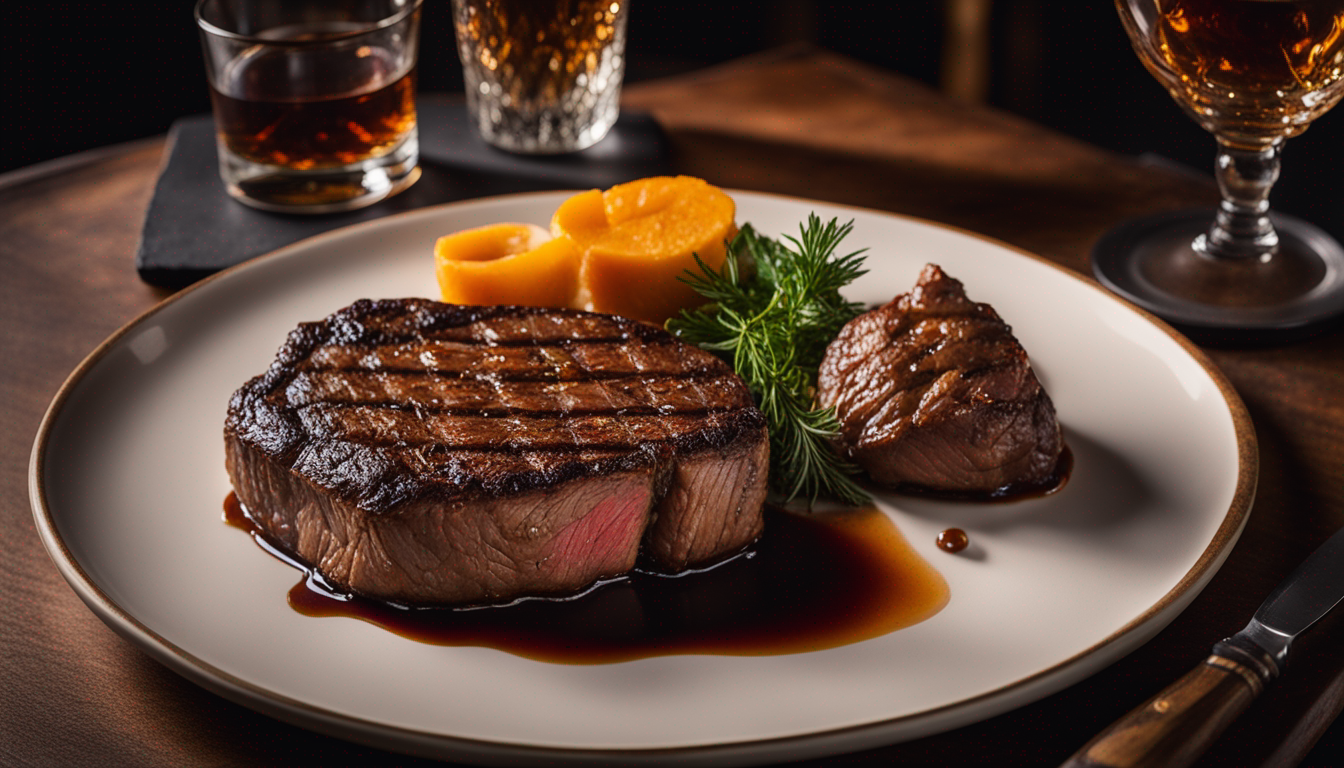
I've eaten a lot of steaks with a lot of bourbon. Most of the time I just grabbed whatever bottle was open and whatever cut looked good at the butcher. And honestly? It was fine. Steak and bourbon is one of those pairings that's hard to screw up entirely—like pizza and beer or coffee and a bad morning.
This guide is part of our Food & Drink Pairings series, where we explore the best combinations for every palate.
But "fine" isn't what we're after. There's actual chemistry behind why certain bourbons sing with certain cuts, and once you understand the three flavor bridges at work, you'll never look at a ribeye the same way again.
The Three Flavor Bridges
Every great pairing works because of shared or complementary flavor compounds. Bourbon and steak connect through three specific bridges, and understanding them turns dinner into an event.
Bridge 1: Char Meets Char (The Maillard Connection)
When you sear a steak, the Maillard reaction creates hundreds of flavor compounds—nutty, roasted, caramelized. Bourbon aged in charred oak barrels develops nearly identical compounds through a different process. The lactones, vanillins, and furanones in charred barrel bourbon mirror the flavors in a properly crusted steak. They're speaking the same chemical language.
This is why a well-charred steak with a high-char bourbon (think Wild Turkey products, which use #4 "alligator" char) creates that seamless, "where does the steak end and the bourbon begin?" sensation. The flavor bridge is literally built on the same molecular foundations.
Bridge 2: Fat Cuts Proof (The Texture Play)
Here's the practical magic: the fat in a well-marbled steak coats your palate and softens the alcohol heat in bourbon. A 120-proof barrel-proof bourbon that might singe your eyebrows on its own becomes downright mellow after a bite of fatty ribeye. The lipids physically interfere with your perception of alcohol burn.
This means fattier cuts can handle higher-proof bourbons, and leaner cuts pair better with gentler proofs. It's not a suggestion—it's how your taste buds work.
Bridge 3: Sweetness Balance (The Hidden Key)
Bourbon's residual sweetness—caramel, vanilla, butterscotch—acts as a counterpoint to the savory umami of beef. It's the same principle behind why a sweet glaze on ham works, or why teriyaki sauce (sugar + soy) makes everything taste better. The sweet-savory interplay keeps your palate engaged bite after bite, sip after sip.
Wheated bourbons, with their softer sweetness profile, bridge this gap most naturally. High-rye bourbons add spice to the equation, which can either complement a peppercorn crust or compete with it—more on that below.
The Cut-by-Cut Pairing Guide
Not all steaks are built the same, and neither are all bourbons. Here's what actually works, based on roughly three years of very dedicated "research."
Ribeye → High-Rye Bourbon
Why it works: Ribeye's aggressive marbling and rich fat cap need a bourbon with backbone. High-rye mashbills (think 20-35% rye) bring pepper, baking spice, and enough structure to cut through all that richness without getting lost.
Reach for: Four Roses Single Barrel OBSV ($50), Wild Turkey Rare Breed ($45), or Bulleit Bourbon ($28). The rye spice acts like freshly cracked black pepper on the steak—it amplifies rather than competes.
Avoid: Delicate, low-proof wheated bourbons. They'll disappear behind the ribeye's fat content like a whisper at a concert.
Filet Mignon → Wheated Bourbon
Why it works: Filet is lean, tender, and subtle. It needs a bourbon that matches its elegance without steamrolling the delicate beef flavor. Wheated bourbons—Maker's Mark, Weller, Larceny—deliver soft caramel and vanilla that complement rather than compete.
Reach for: Maker's Mark 46 ($40), Larceny Small Batch ($25), or if you've got the allocation luck, Weller Special Reserve ($25). The wheat in the mashbill creates a rounder, gentler spirit that lets the filet's buttery texture shine.
Avoid: Barrel-proof anything. A 130-proof cask-strength bourbon will obliterate the subtle flavors you're paying $40/lb for.
New York Strip → Bottled-in-Bond
Why it works: The strip steak lives in the middle ground—good marbling, solid beef flavor, a satisfying chew. It needs a bourbon with comparable balance: flavorful but not extreme, structured but not harsh. Bottled-in-bond expressions at exactly 100 proof hit that sweet spot perfectly.
Reach for: Evan Williams Bottled-in-Bond ($18), Old Grand-Dad Bonded ($25), or Henry McKenna 10 Year BiB ($40). The 100-proof standard gives you enough intensity to match the strip's flavor without overwhelming it. Looking for something to sip alongside? Check out our Old Fashioned variations for the perfect pre-dinner cocktail.
Avoid: Flavored or excessively sweet bourbons. The strip doesn't need a crutch.
T-Bone / Porterhouse → Single Barrel
Why it works: You're getting two steaks in one—the strip side and the filet side. You need a bourbon with enough complexity to match both personalities. Single barrel selections offer unique character and depth that keeps pace with the T-bone's dual nature.
Reach for: Knob Creek Single Barrel ($50), Russell's Reserve Single Barrel ($60), or Blanton's ($60 if you find it at retail). Each barrel is different, and that individuality matches the T-bone's split personality.
Temperature and Timing
Two practical details that most pairing guides skip:
Bourbon temperature: Serve at 60-65°F, slightly below room temperature. Too cold and you lose aromatics that bridge with the steak flavors. Too warm and the alcohol becomes the loudest voice in the room. Pull the bottle from the cabinet, don't chill it, don't warm it.
Serving order: Nose the bourbon first. Take a small sip. Then eat a bite of steak. Then sip again. That second sip is where the magic happens—the residual fat and flavor on your palate transform how you experience the bourbon. I can't overstate how different the bourbon tastes after the steak versus before it.
Let the steak rest 8-10 minutes after cooking (you're already doing this, right?) and let the bourbon sit in the glass for about the same time. Both benefit from a few minutes of patience.
The Steak Preparation Variable
How you cook the steak matters as much as the cut.
Charcoal-grilled: Amplifies the char bridge. Go bolder with the bourbon—barrel proof, heavy char, lots of oak. Rare Breed, Booker's, or Old Forester 1920 all thrive here.
Cast-iron seared: Creates a more uniform Maillard crust. The even caramelization pairs beautifully with balanced bourbons. Woodford Reserve, Buffalo Trace, or Eagle Rare are ideal.
Reverse-seared: The gentle oven-to-sear method preserves more of the beef's natural sweetness. Match it with something equally nuanced—Four Roses Small Batch Select or Wilderness Trail Single Barrel.
Sous vide + sear: Precise temperature control gives you maximum tenderness with a thin crust. This method plays well with more complex bourbons since nothing's fighting for attention. Break out the Russell's Reserve 13 or a store pick single barrel.
The One Rule That Matters
If you remember nothing else: match intensity to intensity. A delicate steak needs a delicate bourbon. A massive, fatty, aggressively seasoned steak needs a bourbon that can stand toe-to-toe. Everything else is detail—enjoyable, useful detail, but detail.
The best pairing I ever had was a bone-in ribeye I overcooked slightly on a charcoal grill in my backyard, paired with Wild Turkey 101 poured into whatever glass was clean. The flavor science was all wrong by these guidelines. Didn't matter. Sometimes the company and the evening do more work than the mashbill.
But when you want to do it right? The chemistry is on your side.
More Pairing Guides
Explore more from our pairings collection: