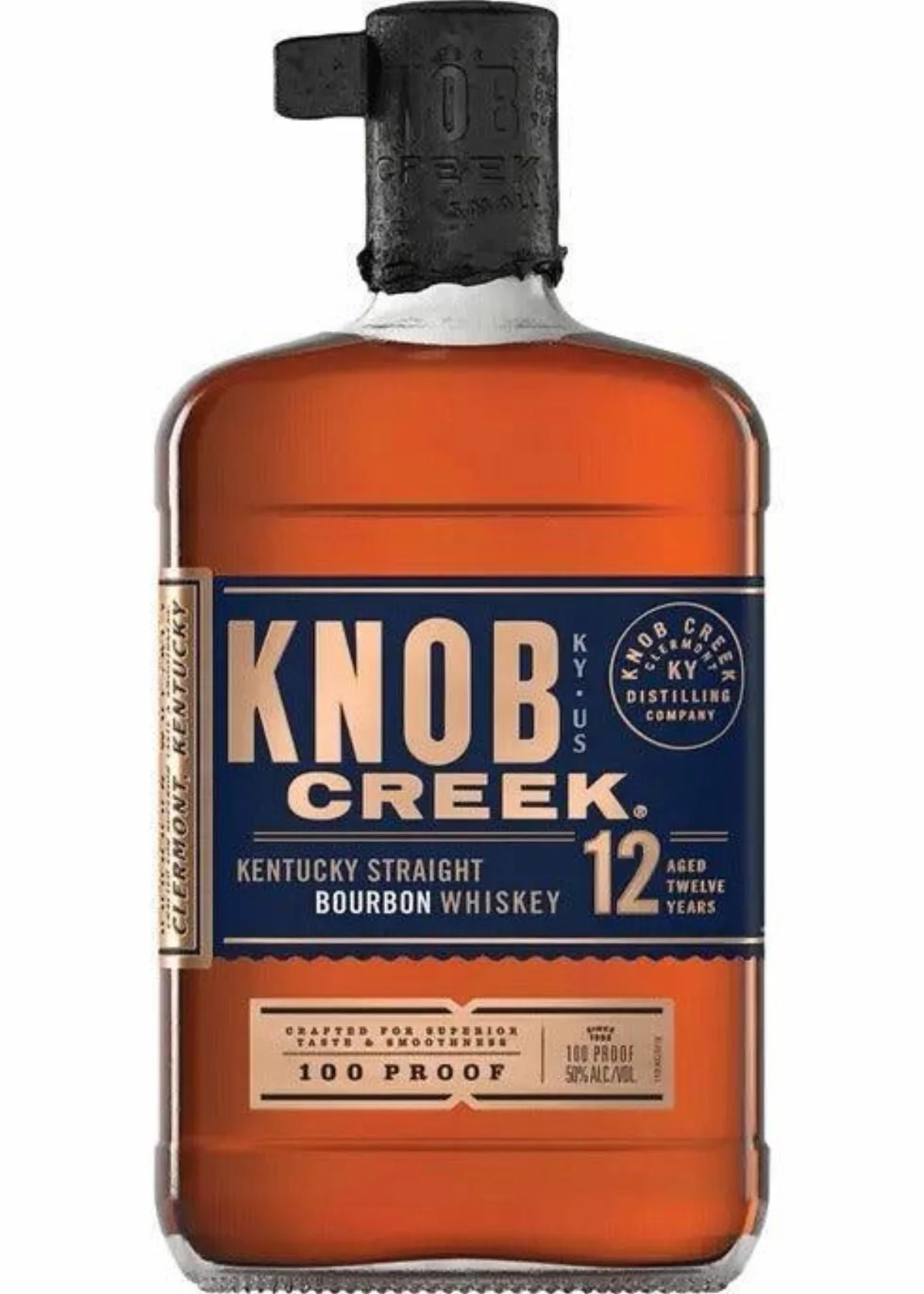
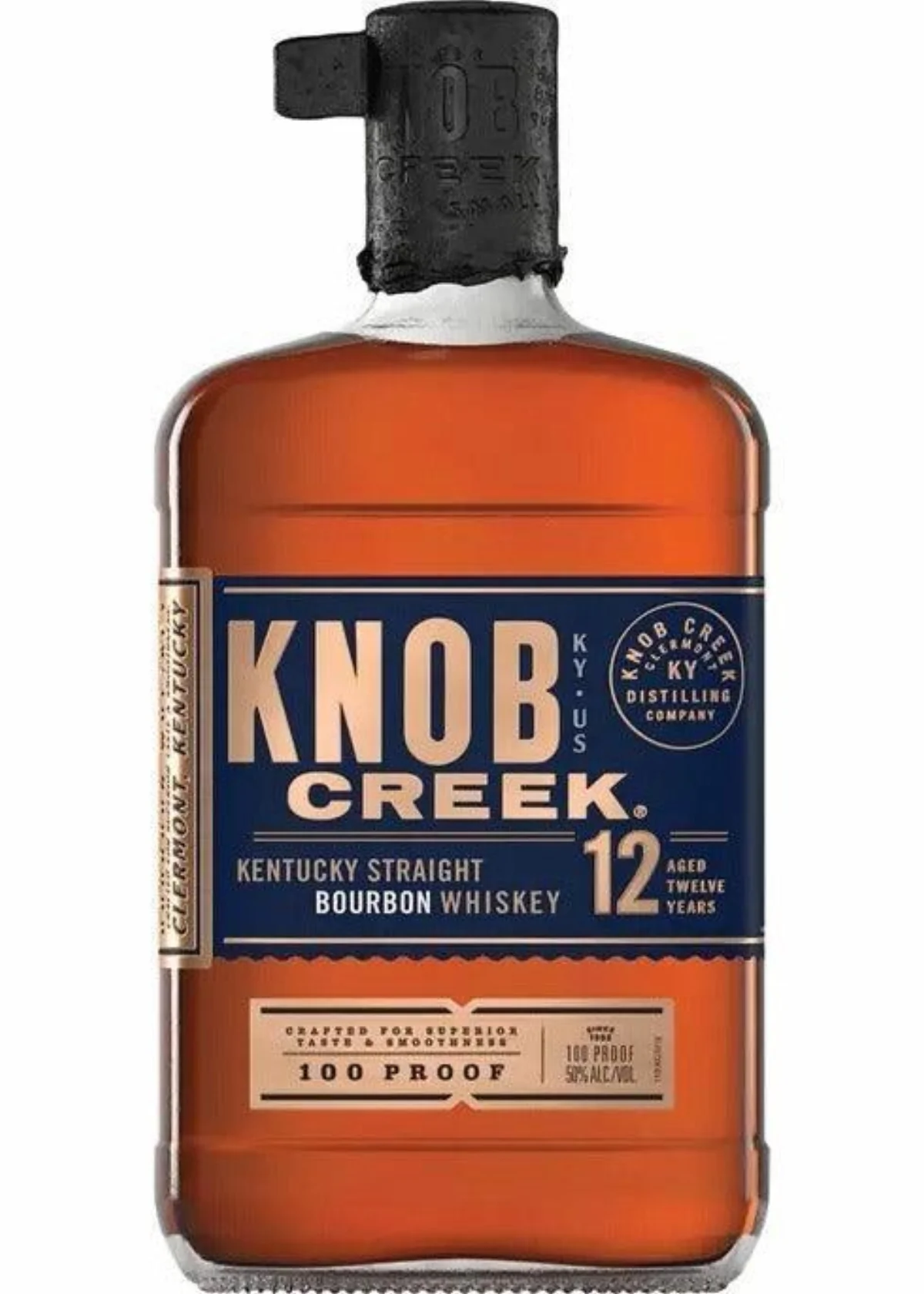
## Why I Reached For This Bottle Twice
The first pour, in early February, was supposed to be a quick comparison sip alongside the standard Knob Creek 9. I had both bottles open on the bar, a Glencairn for each, and twenty minutes between meetings. The 9 went first — familiar, oily, that signature peanut-and-vanilla Beam profile I've been drinking for fifteen years. Then the 12.
I poured a second measure of the 12 and let the comparison go cold. The meeting got pushed.
That's the headline for this whole review: at 100 proof and twelve years in oak, Knob Creek 12 is the bottle that makes you forget what you were doing. Same Jim Beam mash bill (77% corn, 13% rye, 10% malted barley), same Beam Suntory parent, same Knob Creek lineage — but three extra years in a charred American oak rickhouse turn it into a legitimately different whiskey.
## What's In the Glass
The color tells you the age before you smell it. Knob Creek 9 pours a medium amber. The 12 is a deep auburn copper, the kind of shade that makes you reflexively tilt the glass to watch the legs run. They're slow, beaded, oily — exactly what a 100-proof, well-aged bourbon should look like.
On the nose: dark caramel up front, then toasted oak that's clearly there but not aggressive. Vanilla extract instead of pastry vanilla. A puff of nutmeg, a hint of dried cherry, and the rye spice sitting underneath everything rather than on top. There's no ethanol burn at the rim of the glass — at 100 proof, that's a function of age more than dilution.
The palate hits oak first, but in a structured way: it's the wood you taste in old furniture, not the splinters from a fresh stave. Toffee and peanut brittle (that's the Beam yeast doing its work), then black pepper and cinnamon halfway through, then dried fruit and a touch of dark honey on the back end. The mid-palate has weight. You notice it.
The finish runs long — easily forty seconds of warmth — with lingering oak, baking spice, and a pleasant tannic dryness that wants you to take another sip. This is the part the 9-year doesn't do. The standard release finishes clean and short; the 12 finishes like it has somewhere to be.
## How It Stacks Up Against the Knob Creek Lineup
If you're already a Knob Creek drinker, here's the straight comparison from a side-by-side I ran:
- **Knob Creek 9 ($35)** — The reference point. Younger, brighter, more peanut and vanilla, less oak structure. Workhorse pour. If you make Manhattans every Friday, the 9 is plenty.
- **Knob Creek 12 ($60)** — Same DNA, more depth. The oak takes over without smothering. This is the bottle for the slow Sunday sip, the one you pour after dinner.
- **Knob Creek Single Barrel Reserve 9, 120 proof ($55)** — The high-proof variant of the 9. Bigger but not deeper. If you want intensity, this. If you want maturity, the 12.
- **Knob Creek 18 Year ($170)** — I've tasted this one at a friend's bar; gorgeous but pricey. The 12 captures most of what makes age special at a third of the cost.
For sixty bucks, the 12 sits in a strange middle ground in the Beam Suntory lineup. It's twice the price of the 9 but a quarter the price of the 18. What you're paying for is the 36 months between bottle 9's age and this one's — and on a per-month basis, those particular 36 months in an aging warehouse are the ones that change everything about a bourbon.
## Where It Earns Its 87/100
The category Knob Creek 12 dominates is value-for-age. There aren't many 12-year bourbons at $60. Most age-stated bourbons in the over-decade range either run $90+ (Eagle Rare 17 territory) or carry the 4 Roses Single Barrel premium tax. Henry McKenna 10 BiB used to be the value-aged king at $40 before allocations made it impossible to find at MSRP. Russell's Reserve 10 is similar money. Elijah Craig Small Batch (NAS, but historically 8–12 years) is around $35.
What the 12 gives you that those don't: 100 proof + 12 years + a stable enough release that you can actually buy a bottle at sticker. I picked mine up at a Total Wine in Birmingham for $57.99 the week of release. That's the price.
The score lands at 87/100 because of three things. First, the oak management is excellent — twelve years in new charred American oak is the upper edge of what bourbon should tolerate before it tips into "drinking a barrel." Knob Creek 12 stops just short of that line. Second, the proof is exactly right. At 100 proof you get the structural backbone without the burn that pushes single-barrel cask-strength offerings into a different drinking experience. Third, the price-to-experience ratio is hard to beat for a daily-drinkable, age-stated bourbon.
What keeps it out of the 90s: it doesn't surprise you. Every flavor is what you'd expect from twelve years in oak with a Beam mash bill — there's no off-script note that makes you stop and turn the glass. That's a feature for a workhorse bottle, but it's the difference between an excellent everyday pour and a transcendent one.
## How I Drink It
Neat for the first pour, every time. The Glencairn opens up the oak and lets the tannic dryness register, which is the part that distinguishes a 12-year from a 9-year. After that, a single ice cube is fine — at 100 proof, dilution doesn't strip anything important.
For cocktails: an Old Fashioned built with this bourbon is excellent (the oak depth holds up to bitters and orange peel), but I wouldn't waste it in a Manhattan that wants a brighter spirit. Think of it the way you'd think about cooking with a $40 bottle of olive oil — it's worth using straight, save your blends for the mixed work.
For pairings: BBQ ribs, sharp aged cheddar, brown butter desserts, roasted pecans. The oak character matches caramelized and roasted flavors better than fresh or bright ones.
## The Verdict
Knob Creek 12 delivers serious age and proof at a fair price. The extra three years in the barrel give it depth and oak richness the 9-year can't match. If you've been a Knob Creek drinker and never moved up the ladder, this is the one to try — it's the same family identity with another decade of conversation. One of the better values in the bourbon aisle for a well-aged, 100-proof sipper.
If you can't find this one in your area, the closest comparisons at this price band are Russell's Reserve 10, Eagle Rare 10, and Henry McKenna 10 BiB (if you can find it at MSRP). The 12 sits at the top of that group for me on the strength of the oak alone.
**Bottom line:** The bottle that turned a fifteen-minute side-by-side into a forty-minute one. Worth the $60.