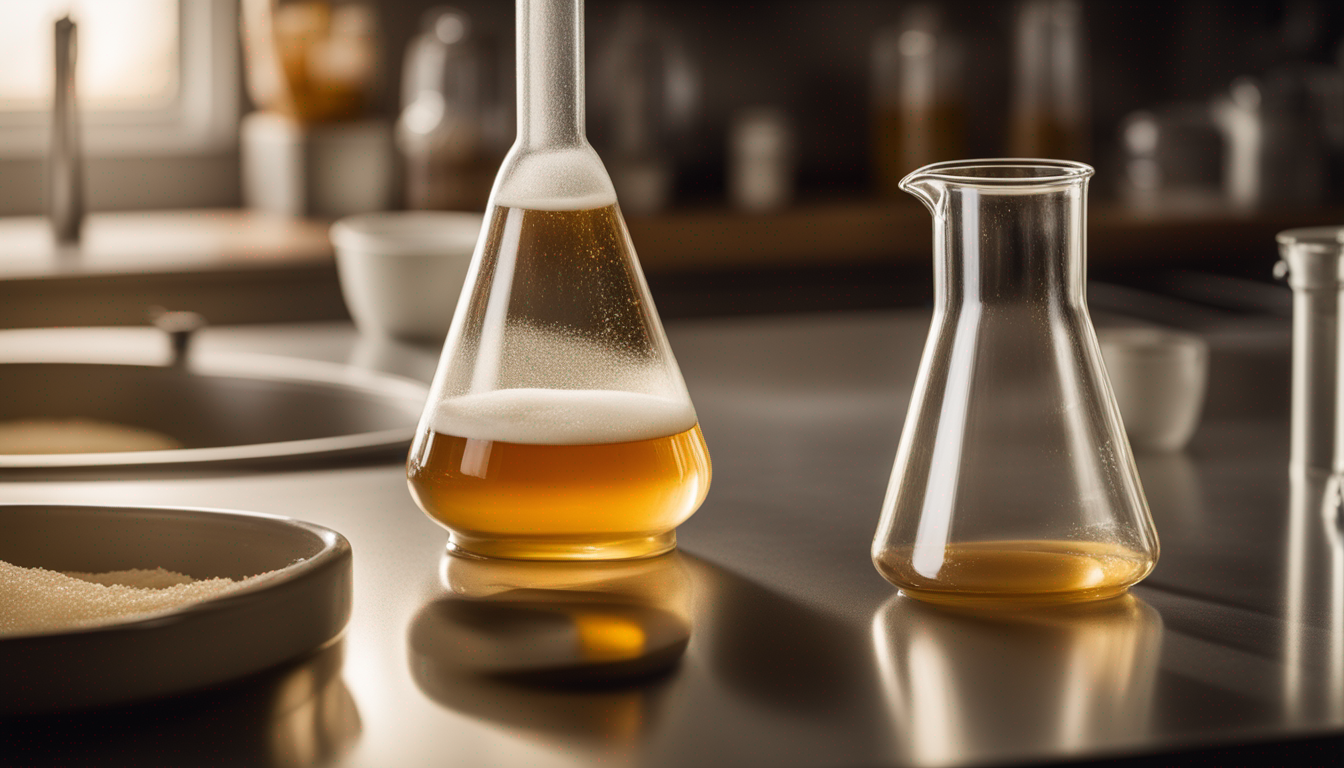
Making a yeast starter is one of the highest-value habits a home brewer can pick up. A starter grows the number of healthy yeast cells you have on hand before you pitch them into the fermenter — and that does three things at once: it proves your yeast is alive before it's committed to a full batch, it produces cleaner-tasting beer, and it kicks off fermentation faster so there's less time for anything nasty to take hold.
This guide is part of our Homebrewing Hub — your complete resource for brewing at home.
Under-pitching — dropping too few or too many stressed cells into your wort — is behind a surprising share of homebrew problems: long lag times before fermentation starts, stuck or incomplete fermentation, sluggish carbonation, and harsh, estery off-flavors. Yeast is a living thing. Give it a healthy start and it returns the favor.
When you actually need a starter
You don't need one every time. Make a starter when:
- You're using liquid yeast (a vial or smack pack). A single pack contains roughly 100 billion cells — often short of what a standard 5-gallon batch wants, and fewer still if the pack is more than a month or two old.
- You're brewing a high-gravity beer (a big IPA, imperial stout, or anything over ~1.060). More sugar demands more yeast.
- You're brewing a lager, which needs roughly double the pitch rate of an ale.
If you're using fresh dry yeast, you can usually skip the starter — a packet of dry yeast already holds plenty of viable cells and is engineered to be rehydrated and pitched directly. This is why kit brewers rarely bother.
What you'll need
- A large PET bottle or flask (1.25L or 2L)
- Light dry malt extract (DME) — about 100g per litre of water for a ~1.040 wort
- A liquid yeast vial or smack pack
- Water (roughly 850ml for a 1L starter)
Making the starter wort
It's essentially brewing a tiny batch of beer. Add the DME to a saucepan with about 850ml of water — aim for a 10:1 water-to-DME ratio by weight, which lands near the ideal 1.040 gravity — and bring it to a boil, stirring until the malt fully dissolves. Boil gently for about 10 minutes to sanitize it, then take it off the heat and cool the wort to room temperature. The fastest way is to partially submerge the covered saucepan in an ice-water bath in the sink. Once it reaches around 21–22°C, pour it into your cleaned and sanitized bottle. Water quality matters here just as much as it does in the main batch — see our water chemistry guide.
Pitching and growing the yeast
If you're using a smack pack, smack it, wait for it to swell, then cut it open with sanitized scissors and pour it in. For a vial, sanitize the outside, open, and pour. Cover the top loosely with sanitized foil — the yeast needs to breathe.
Now give it oxygen and warmth. Yeast replicate fastest with oxygen, so swirl the bottle firmly every time you walk past it (a stir plate does this continuously and grows noticeably more cells, which is why serious brewers use one). Keep it out of direct light at a steady room temperature near 21°C. Within 6–12 hours you'll see a dirty foam form on top — that's krausen, and it's the sign your yeast is alive and multiplying.
Timing and the decanting trick
The starter is pitch-ready in about 18–36 hours and stays usable for up to a week if you refrigerate it. There are two ways to use it. Pitch the whole thing at high krausen (peak activity) for the fastest start. Or — the cleaner option — chill it in the fridge for a day so the yeast drops to the bottom, pour off most of the spent grey starter beer (which tastes flat and can dull your batch), then swirl the remaining slurry and pitch just that. Either way: swirl, pitch into your fermenter, and you're off. Happy days.
Keep Reading
More from the Homebrewing Hub: