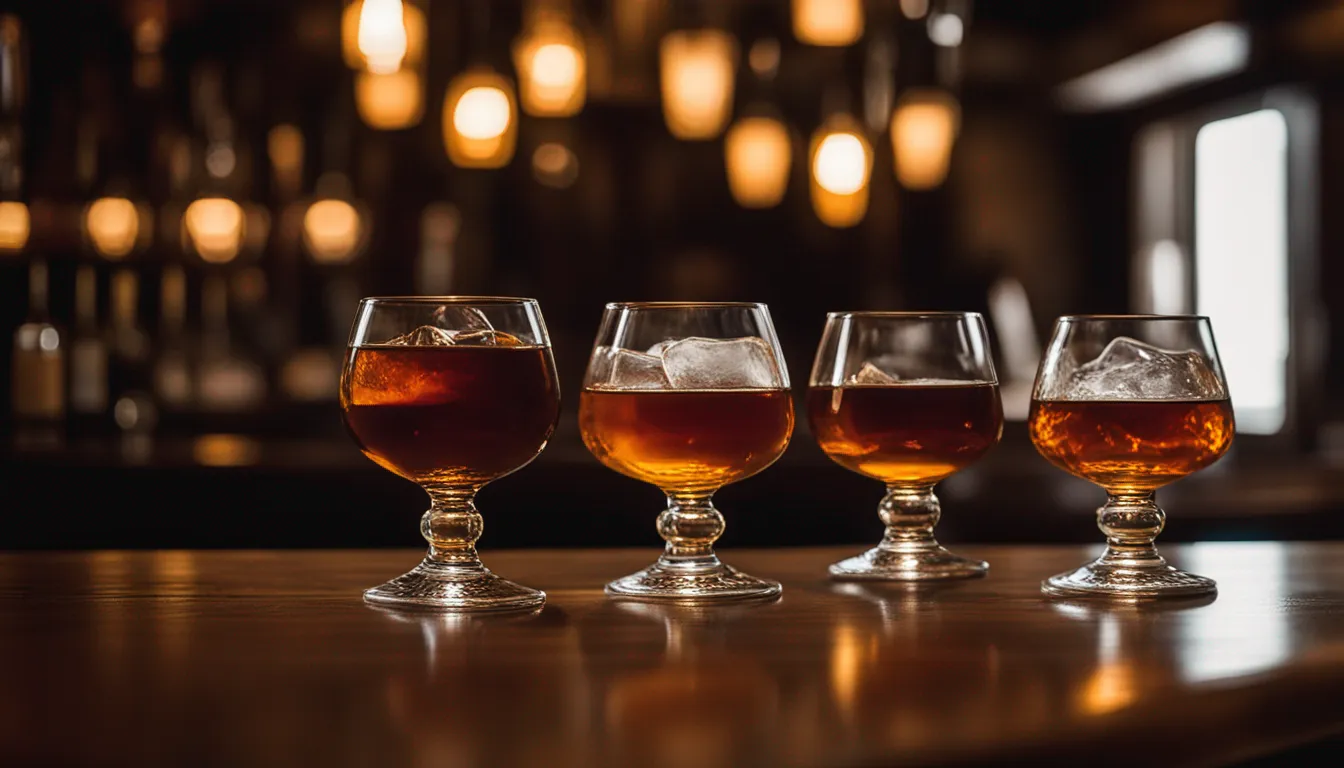
Barrel proof, cask strength, and bottled-in-bond are three different things — but good luck figuring that out from most bourbon shelves. I've watched bartenders use them interchangeably. I've seen whiskey blogs treat "barrel proof" and "cask strength" as identical while ignoring bottled-in-bond entirely. And I've stood in liquor stores listening to well-meaning staff tell customers that bottled-in-bond just means "high proof." None of that is right. Each term carries a specific meaning, and once you understand what they actually guarantee about the liquid in your glass, you'll make sharper buying decisions — whether you're hunting allocated bottles or grabbing a weeknight sipper.
If you're still building your foundation on how bourbon is made, start there. This piece assumes you know the basics and want to understand the label language that separates a $20 daily pour from a $70 barrel pick.
What Does Barrel Proof Mean?
Barrel proof means the whiskey was bottled at whatever proof it reached inside the barrel — no water added to dilute it down. That's it. The distillery dumps the barrel, runs it through filtration (or doesn't), and puts it straight into the bottle at full strength.
The key detail most people miss: barrel proof varies from barrel to barrel. A bourbon might enter the barrel at 125 proof (the legal maximum for new-make bourbon entering charred oak), but what comes out four, eight, or twelve years later depends on a stack of variables. Where the barrel sat in the rickhouse matters enormously. Upper floors run hotter, which drives more evaporation and typically pushes proof higher. Lower floors stay cooler, and barrels there sometimes actually drop in proof over time as water evaporates more slowly than alcohol. Kentucky's wild temperature swings — 95F summers, 15F winters — push liquid in and out of the wood, which is why bourbon picks up so much age character compared to spirits aged in milder climates.
Elijah Craig Barrel Proof (ECBP) is the textbook example. Each batch release lands at a different proof — the January 2024 B524 release came in at 129.4 proof, while the September 2023 A124 was 127 proof. Stagg Jr. (now just called Stagg) follows the same pattern, with batches ranging from about 125 to 138 proof across its various releases. Booker's does too: every batch has a unique name, proof, and age statement. The Spring 2024 "Springfield Batch" hit 124.2 proof. The previous batch was different. The next one will be different again.
Other bottles worth knowing: Knob Creek Cask Strength Rye (which actually uses the "cask strength" label despite being American — more on that in a second), Jack Daniel's Single Barrel Barrel Proof, and Wild Turkey Rare Breed, which blends barrels at their natural proof without proofing down. Rare Breed typically lands around 116 proof, though it has fluctuated over the years.
What Does Cask Strength Mean?
Cask strength is functionally the same concept as barrel proof: whiskey bottled at the strength it naturally reached during maturation, without water added to reduce the proof. The difference is almost entirely linguistic. "Barrel proof" is the American bourbon term. "Cask strength" is what you'll hear in Scotland, Ireland, Japan, and most of the international whiskey world.
Scotch distilleries have used "cask strength" for decades. Aberlour A'bunadh (typically 118-124 proof, or 59-62% ABV) is one of the most well-known cask strength scotches. Laphroaig 10 Cask Strength runs around 116-120 proof depending on the batch. Glenfarclas 105, named for its 105 British proof (which converts to 60% ABV or 120 American proof), has been a cask-strength staple since the 1960s.
Now, there's a minor technical debate that whiskey nerds enjoy arguing about. Some purists claim "barrel proof" means absolutely no water was added after the barrel was dumped — truly untouched — while "cask strength" allows for minor proofing adjustments within a batch for consistency. The idea is that when a distillery combines 200 barrels ranging from 126 to 134 proof, they might add a small amount of water to standardize the batch at, say, 130 proof, and still call it "cask strength" since it's within the natural range of the barrels.
In practice? Most producers use the terms interchangeably and nobody is getting fined by the TTB over it. Jack Daniel's sells a "Cask Strength" single barrel, and they're a Tennessee distillery. Knob Creek uses "Cask Strength" on an American rye. The labels follow marketing preferences more than legal definitions. If the bottle says barrel proof or cask strength, you're getting whiskey that hasn't been meaningfully diluted. Expect proofs north of 110 and occasionally pushing past 140.
What Does Bottled-in-Bond Mean?
Bottled-in-bond is a completely different animal. It has nothing to do with being at barrel strength. Instead, it's a federal legal standard — arguably the oldest consumer protection law in American spirits — and it guarantees four specific things about the whiskey inside the bottle.
The Bottled-in-Bond Act of 1897 was Congress's answer to a genuinely dangerous problem. In the late 1800s, rectifiers were buying cheap whiskey (or grain neutral spirits), adulterating it with tobacco juice, iodine, and other additives for color and flavor, then selling it as premium bourbon. People were getting sick. Some died. Colonel E.H. Taylor Jr., a distiller whose name now graces several Buffalo Trace releases, was one of the loudest advocates for regulation. The law he helped push through established four non-negotiable requirements:
- One distillery, one distilling season. The whiskey must be the product of a single distillery during a single distilling season (defined as January-June or July-December of one calendar year). No blending spirits from different distilleries or different seasons.
- Aged at least four years. The whiskey must spend a minimum of four years maturing. This predates the "straight" bourbon requirement of two years and was radical for its time.
- Stored in a federally bonded warehouse. The government literally supervises the storage. This is where the "bonded" part comes from — the warehouse is under a federal bond.
- Bottled at exactly 100 proof. Not 99. Not 101. One hundred proof, every time. (Wild Turkey 101 is not bottled-in-bond, despite being close — it's 101 proof and doesn't meet the other requirements on every release.)
The label also must identify the distillery where it was produced and, if different, where it was bottled. This transparency was revolutionary in 1897 and still matters today, since mash bills and distillery character vary so widely.
Here's why bottled-in-bond deserves your attention: the BiB designation is essentially a quality floor. Four years of aging, 100 proof, single-source production — that's a real commitment from the distillery. And many BiB bourbons are priced aggressively because they compete in the value tier. Evan Williams Bottled-in-Bond runs $15-18 in most markets and consistently ranks among the best values in bourbon. Heaven Hill Bottled-in-Bond 7-Year typically sits around $35-40 and carries three extra years of age beyond the minimum. Old Grand-Dad Bonded (100 proof, high-rye mash bill) is a bartender favorite at $22-28. Old Forester 1897 Bottled in Bond pays tribute to the Act's origin year and usually goes for $40-50. Early Times Bottled-in-Bond, which quietly became a Kentucky straight bourbon (Early Times was previously not a straight bourbon), offers solid quality at around $22.
The BiB designation applies beyond bourbon too. Rittenhouse Rye Bottled-in-Bond is one of the most popular rye whiskeys in cocktail bars across the country, and Laird's Bottled-in-Bond Apple Brandy proves the law covers American spirits broadly.
How They Actually Compare
Lining up these three categories side by side makes the differences concrete:
Barrel proof / cask strength whiskeys come off the barrel at whatever proof the aging process produced — typically 110-140 proof for bourbon. There's no mandated minimum age, no single-distillery requirement, and no proof standard. You're paying for intensity and the experience of tasting whiskey in its rawest drinkable form. Expect to pay $40-80 for widely available bottles like ECBP or Stagg, with single-barrel store picks ranging even higher.
Bottled-in-bond whiskeys are always exactly 100 proof, always at least four years old, always from one distillery and one distilling season. The proof is lower than barrel-proof releases, but it's standardized — you know exactly what you're getting every time. Prices typically run $15-50, making BiB one of the best value propositions in American whiskey.
Standard proof whiskeys — the majority of what's on shelves — are typically proofed down to 80-90 proof with water. They're the most approachable, the most mixable, and the most affordable. But "standard" doesn't mean bad. Buffalo Trace at 90 proof, Four Roses Small Batch at 90 proof, and Woodford Reserve at 90.4 proof are all excellent whiskeys that happen to be proofed for broad appeal.
Why Proof Matters for What You Taste
Proof isn't just a number on a label — it directly shapes your drinking experience. Higher proof concentrates flavor compounds extracted from the barrel: vanillin, tannins, caramel and toffee notes, the char and oak backbone that defines bourbon. A 130-proof barrel-proof bourbon carries roughly 60% more alcohol (and the flavors dissolved in it) than an 80-proof standard bottle. You're not just getting "stronger" whiskey. You're getting more barrel character per sip.
This is why barrel-proof fans make the "add your own water" argument, and it's legitimate. If you buy a barrel proof bourbon at 128 proof, you can sip it neat at full strength when you want intensity. You can add a splash of water — even a few drops changes the experience — and open up softer, sweeter notes that the alcohol was masking. Or you can add enough water to bring it down to 90 proof and essentially create your own "standard" version with more depth than most off-the-shelf 90-proof bottles. One bottle, multiple experiences. You can't add barrel character back to a bourbon that's already been proofed down at the distillery.
At 100 proof, bottled-in-bond sits in a sweet spot. It's strong enough to carry flavor assertively — especially in cocktails, where an 80-proof bourbon can get buried under vermouth and bitters — but approachable enough to drink neat without adding water. There's a reason bartenders reach for Evan Williams BiB and Rittenhouse Rye: they hold up in a Manhattan or Old Fashioned without overpowering anything. Check our how we score spirits methodology for more on how we evaluate proof's impact on overall quality.
Which One Should You Buy?
This depends on what you're after, and honestly, a well-stocked home bar benefits from having all three styles represented.
Buy barrel proof if you want maximum flavor, enjoy experimenting with water, and appreciate variation between batches. These bottles reward patience and attention. They're not better than lower-proof options — they're different, and they give you control over the final proof in your glass. Start with Rare Breed (around 116 proof) if full barrel-proof intimidates you, then work up to ECBP or Stagg.
Buy bottled-in-bond if you want a guaranteed quality floor at a fair price. BiB is the best value play in American whiskey right now. You're getting a federally regulated product with meaningful age, proper proof, and single-distillery provenance — often for under $25. Evan Williams BiB might be the best dollar-per-quality-point bottle in bourbon. Old Grand-Dad Bonded is right there with it.
Buy standard proof if you're mixing cocktails that call for balance over punch, introducing someone to bourbon, or just want an easy weeknight pour that doesn't demand your full attention. Nothing wrong with that. Not every glass of whiskey needs to be an event.
One more thing worth mentioning: these categories aren't mutually exclusive. A bourbon could theoretically be both barrel proof and bottled-in-bond — if a barrel happened to come out at exactly 100 proof after four-plus years, from a single distillery and distilling season, stored in a bonded warehouse. It's rare, but the bourbon glossary keeps growing. The label language keeps evolving. Understanding what the words actually promise — and what they don't — puts you ahead of most people standing in the whiskey aisle.