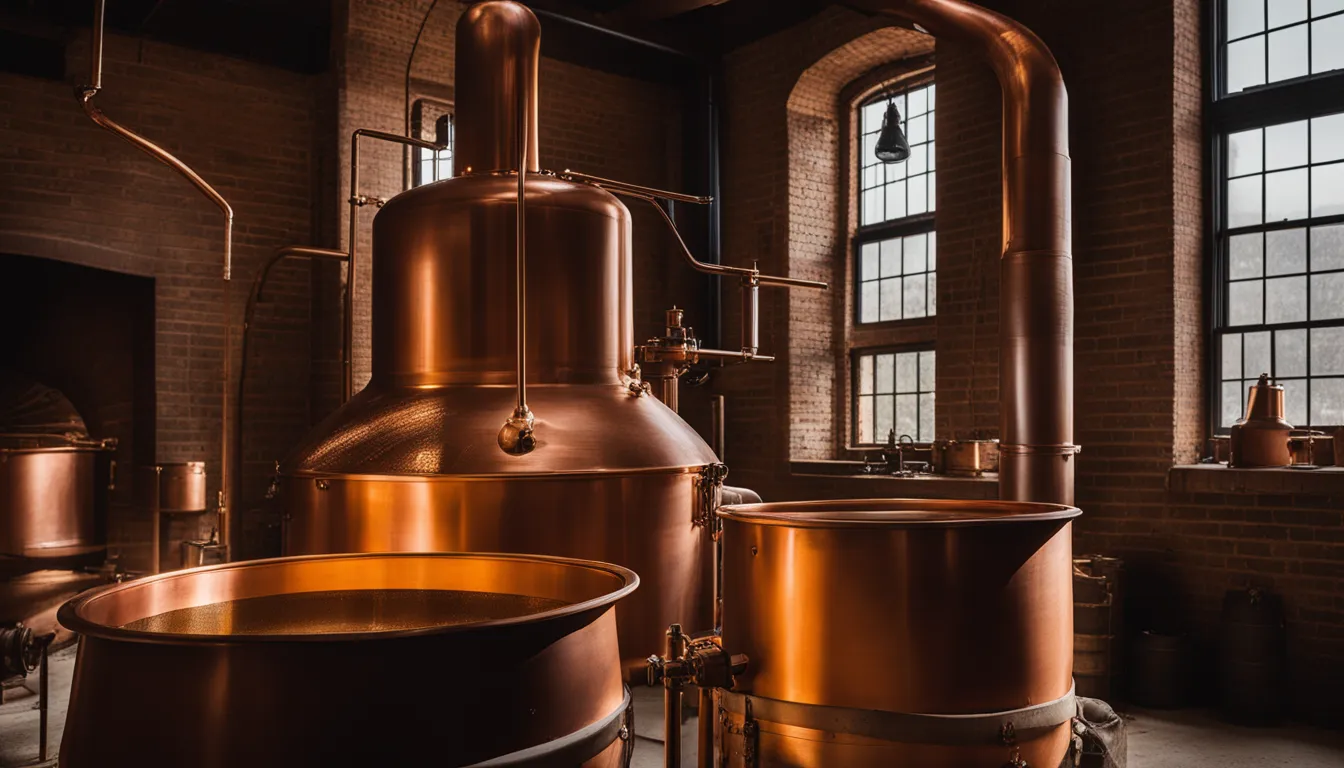
Bourbon starts as corn, water, and yeast — and becomes America's native spirit through a precisely regulated sequence of cooking, fermenting, distilling, and aging in new charred oak barrels. Every bottle on your shelf followed the same fundamental path, whether it's a $20 Jim Beam White Label or a $2,000 Pappy Van Winkle. The differences that matter — the ones you taste — come down to mashbill ratios, yeast strains, distillation proofs, char levels, barrel placement, and the patience to let Kentucky weather do its work. I've walked the rickhouses at Buffalo Trace, watched the fermenters bubble at Four Roses, and stood next to a 600-degree charring flame at an Independent Stave Company cooperage. The process is simultaneously simple and endlessly complex.
Here's every step, from raw grain to your glass.
The Legal Definition: What Makes Bourbon Bourbon
Bourbon isn't just whiskey with good marketing. Federal regulations (27 CFR 5.143, formerly the Standards of Identity) define it with unusual specificity. To legally carry the name "bourbon," a whiskey must meet every one of these requirements:
- Made in the United States — not just Kentucky, despite popular belief. Bourbon is produced in all 50 states, from New York to Texas to Oregon.
- Mashbill of at least 51% corn — most range from 60-80%, with the remaining grains typically rye, wheat, and malted barley.
- Distilled to no more than 160 proof (80% ABV) — this preserves grain character. Distill higher and you strip out flavor, moving toward vodka territory.
- Entered into the barrel at no more than 125 proof (62.5% ABV) — water is added post-distillation if necessary to bring the proof down before barreling.
- Aged in new, charred oak containers — "new" is the critical word. Scotch, Irish whiskey, and tequila reuse barrels. Bourbon requires a fresh one every time, which is why the used barrel market exists at all.
- No added coloring, flavoring, or blending materials — what comes out of the barrel is what goes in the bottle, plus water to adjust proof.
- Bottled at a minimum of 80 proof (40% ABV).
There's no minimum aging requirement for bourbon (that's a common misconception). However, straight bourbon must age at least two years, and any straight bourbon aged less than four years must carry an age statement. Bourbon age statements tell you more than most people realize about what's in the bottle. And bottled-in-bond bourbon follows even stricter rules: four years minimum, 100 proof, single distillery, single distilling season. For the full breakdown, see our comparison of barrel proof vs cask strength vs bottled-in-bond.
The Grain: Mashbills and Why They Matter
Every bourbon begins with a grain recipe called a mashbill — the percentage breakdown of corn, rye or wheat, and malted barley that defines the whiskey's foundational flavor profile. Corn provides sweetness. Rye adds spice and complexity. Wheat contributes softness. Malted barley supplies the enzymes that convert starch to fermentable sugar.
Most bourbon mashbills fall into two camps:
Traditional (High-Rye) Bourbon
Rye as the secondary grain, typically 8-35% of the mashbill. This produces bourbon with spice, pepper, and baking spice notes. Examples:
- Four Roses uses two mashbills — "B" at 60% corn / 35% rye / 5% malted barley (one of the highest rye percentages in bourbon), and "E" at 75% corn / 20% rye / 5% malted barley.
- Wild Turkey runs roughly 75% corn / 13% rye / 12% malted barley — that high barley percentage is unusual and contributes to their distinctive nuttiness.
- Woodford Reserve uses 72% corn / 18% rye / 10% malted barley.
Wheated Bourbon
Wheat replaces rye as the secondary grain, producing softer, sweeter, more approachable bourbon:
- Maker's Mark runs 70% corn / 16% red winter wheat / 14% malted barley.
- Buffalo Trace's wheated mashbill (used for W.L. Weller and Pappy Van Winkle) is undisclosed but estimated at roughly 70% corn / 16% wheat / 14% malted barley.
- Heaven Hill's wheated recipe (Larceny, Old Fitzgerald) uses 68% corn / 20% wheat / 12% malted barley.
For a deeper dive into how grain ratios shape flavor, our guide to bourbon mash bills explained covers the full spectrum. And if you're new to bourbon terminology, our bourbon glossary defines every term you'll encounter.
Mashing and Cooking: Converting Starch to Sugar
Raw grain is mostly starch, and yeast can't ferment starch. The mashing process cooks the grains to break down their starches into fermentable sugars — the same basic principle behind brewing beer, just at a larger scale and with different grains.
Distilleries cook their grains in stages because each grain gelatinizes (releases its starch) at a different temperature:
- Corn goes in first at around 212°F (100°C), cooking for 15-25 minutes under pressure. Corn starch is tough and requires the most heat.
- Rye or wheat is added after the mash cools to roughly 150-160°F (65-71°C). Rye is notoriously sticky — distillers who've dealt with a rye mash that "set up" (basically turned to cement) in the cooker don't forget the experience.
- Malted barley enters last at around 148-152°F (64-67°C). The barley's natural enzymes (primarily alpha- and beta-amylase) do the real work, converting the starches from all three grains into simple sugars.
The Sour Mash Process
Nearly every bourbon you've ever tasted is a sour mash whiskey, though the term is so ubiquitous it barely means anything as a marketing distinction anymore. "Sour mash" means the distillery takes spent mash from the previous distillation run — called setback or backset, essentially the liquid left in the still after distilling — and adds it to the new batch. Typically 25-30% of the new mash volume is setback.
The setback is acidic (pH around 3.7-4.0), which drops the new mash's pH to the right range for healthy yeast activity while discouraging unwanted bacterial growth. It also provides consistency between batches — the same reason sourdough bakers maintain a starter. Jim Beam has used a continuous sour mash process for generations. Wild Turkey's setback ratio has remained virtually unchanged for decades.
Fermentation: Where Alcohol Is Born
The cooked mash — now a warm, sweet porridge called "distiller's beer" once fermented — gets pumped into fermentation vessels and inoculated with yeast. This is where sugar becomes alcohol and carbon dioxide, along with hundreds of congener compounds that contribute to flavor.
Fermentation typically runs 3 to 5 days, producing a "beer" of roughly 8-10% ABV. Two styles of fermenters dominate:
- Open-top fermenters — the traditional approach, used at Woodford Reserve, Four Roses, and Wild Turkey. These massive cypress wood or stainless steel tanks sit open to the ambient environment, allowing CO2 to escape naturally. The visual is dramatic: a roiling, bubbling surface that looks volcanic at peak activity. Open fermentation exposes the mash to wild yeasts and bacteria in the environment, which some distillers believe adds character.
- Closed fermenters — more common at high-volume operations like Jim Beam and Heaven Hill. These sealed stainless steel tanks offer better temperature control and more consistent results.
The Yeast Factor
Yeast is bourbon's most closely guarded secret. While grain recipes and aging conditions are widely discussed, yeast strains receive far less attention — yet they contribute up to 50-60% of the flavor compounds in the finished whiskey.
Wild Turkey's yeast strain has been in continuous use since the 1940s and produces their signature ripe fruit and vanilla notes. Distiller Eddie Russell maintains it like an heirloom. Four Roses takes yeast further than any other major distillery, using five proprietary yeast strains (designated V, K, O, F, and Q) combined with their two mashbills to create ten distinct bourbon recipes. Each strain emphasizes different flavor characteristics — floral, spice, fruit, herbal, or rich. Jim Beam's jug yeast has been continuously propagated from the same culture for over 75 years.
Fermentation temperature matters enormously. Warmer fermentation (80-90°F) produces more fruity esters but risks off-flavors. Cooler fermentation (60-70°F) is slower but cleaner. Most distilleries target somewhere in between, around 75-80°F, and monitor temperature closely throughout the cycle.
Distillation: Separating Alcohol from Beer
The fermented distiller's beer at 8-10% ABV enters the still, and what emerges is clear, high-proof "white dog" — unaged bourbon. Most Kentucky distilleries use a two-stage system.
The Column Still (Beer Still)
The first stage is a continuous column still (also called a beer still), typically 3-5 stories tall. Distiller's beer feeds in near the top and flows down through a series of perforated copper plates while steam rises from the bottom. The steam strips the alcohol from the beer as it descends. What comes off the top is called "low wine" — roughly 125-130 proof (62-65% ABV).
Column stills run continuously, making them efficient for high-volume production. Buffalo Trace processes about 300 gallons of mash per minute through their column still. The spent grain (stillage) exits the bottom and either becomes animal feed or gets recycled as setback for the sour mash process.
The Doubler (or Thumper)
The second stage redistills the low wine for further purification and concentration. Two designs exist:
- A doubler is essentially a large pot still. The low wine flows in, gets heated, and the vapor is condensed. This is the more common setup — used at Jim Beam, Heaven Hill, and Buffalo Trace.
- A thumper uses steam from the column still to heat the low wine, making a distinctive thumping sound as the vapor bubbles through the liquid. Wild Turkey uses a thumper and credits it for some of their spirit's heavier, richer body.
What comes off the doubler or thumper is high wine or white dog, typically between 130-140 proof (65-70% ABV). Remember, federal law caps distillation at 160 proof to preserve grain character — most distilleries deliberately stay well below that limit. Wild Turkey distills to only about 130 proof, one of the lowest in the industry, which retains more of the heavy, flavorful congeners.
Woodford Reserve is the notable exception to the column-still norm. They use traditional copper pot stills — three of them, in the old Scottish triple-distillation tradition — which produce a distinctly different spirit character. Pot distillation is batch-based, slower, and less efficient, but produces a heavier, more complex distillate.
Barrel Entry: The New Charred Oak Requirement
Federal law mandates new, charred oak barrels — and this single requirement is arguably what makes bourbon taste like bourbon. American white oak (Quercus alba) is the standard species, chosen for its tight grain, waterproof tyloses, and rich vanillin content.
Cooperage and Char Levels
Standard bourbon barrels hold 53 gallons and are assembled by coopers from oak staves that have been air-dried (seasoned) for 3-6 months. The inside of each barrel is charred — exposed to direct flame for a controlled duration:
- Char #1 (light): 15 seconds of flame. Barely blackened. Rarely used for bourbon.
- Char #2 (medium): 30 seconds. Moderate caramelization. Used by some craft producers.
- Char #3 (medium-heavy): 35-40 seconds. The most common char level in the bourbon industry. Balances caramel sweetness with smoky depth. Jim Beam, Wild Turkey, and Four Roses all use #3.
- Char #4 ("alligator char"): 55+ seconds. The surface fractures into a pattern resembling alligator skin. Deep caramelization, heavy vanilla extraction. Buffalo Trace and Maker's Mark use #4.
Beneath the char layer sits the "red layer" — a thin band of caramelized wood sugar created by the charring heat. This layer is where much of bourbon's vanilla and caramel character originates. The char itself acts as an activated carbon filter, stripping harsh sulfur compounds from the spirit.
Entry Proof
The white dog must enter the barrel at no more than 125 proof (62.5% ABV). Most distilleries add water after distillation to bring the proof down to their target entry point. This number varies significantly between producers and has a major impact on the final product:
- Wild Turkey enters barrels at 110 proof — one of the lowest in the industry. Lower entry proof means more water, which some believe allows better interaction with the wood and produces a richer, fuller bourbon.
- Maker's Mark enters at 110 proof as well.
- Heaven Hill uses 125 proof — the legal maximum. Higher entry proof is more economical (you need fewer barrels) but produces a different flavor profile.
- Jim Beam enters at 125 proof for most of their lineup.
A lower barrel entry proof generally means the spirit is less extractive — it pulls different compounds from the wood at a different rate than a higher-proof spirit does. This is one reason Wild Turkey and Maker's Mark have a distinctly different wood interaction character than Heaven Hill and Beam products, even at similar ages.
Aging: Kentucky Weather Does the Heavy Lifting
Once filled, barrels go into a rickhouse (also called a rackhouse or barrel warehouse) — a massive multi-story structure designed to expose barrels to temperature fluctuation. This is where the real transformation happens. Clear, harsh white dog enters the barrel. Over years, it emerges as amber, complex bourbon.
How Aging Works
Kentucky's extreme temperature swings drive the process. Summer temperatures inside a top-floor rickhouse can exceed 140°F (60°C). Winter temperatures drop below freezing. This seasonal cycling pushes the spirit into the charred wood during summer heat (where it absorbs vanillin, tannins, and caramelized sugars) and pulls it back out during winter contraction. Each annual cycle adds another layer of flavor and deepens the color.
The chemistry is real and measurable. Fresh white dog contains almost no vanillin. After four years in a barrel, bourbon typically contains 3-5 mg/L of vanillin. After eight years, 5-8 mg/L. The color deepens from water-clear to deep amber primarily through the extraction of lignin-derived compounds from the oak.
Rickhouse Placement
Where a barrel sits in the rickhouse dramatically affects how it ages. The top floors ("penthouse") experience the most extreme temperature swings — sometimes 30-40 degrees hotter in summer than the ground floor. Barrels aged there mature faster, develop bolder flavors, and lose more volume to evaporation. Ground-floor barrels age more gently, producing mellower, softer bourbon.
This is why rickhouse rotation matters. Maker's Mark manually rotates every barrel during aging — moving it from upper to lower floors and vice versa — to ensure consistency across their product. Most other distilleries don't rotate; instead, they select barrels from specific floors for specific products. Buffalo Trace deliberately uses different rickhouse locations for their various brands, with Blanton's typically pulled from choice warehouse positions.
The Angel's Share
Every year, roughly 2-4% of each barrel's contents evaporate through the wood — a loss the industry romantically calls the angel's share. In Kentucky's hot summers, this rate accelerates. After 10 years, a 53-gallon barrel might contain only 30-35 gallons. After 20 years, you might be down to 15-20 gallons — which partly explains why extra-aged bourbon commands extraordinary prices. You're paying for both time and loss.
The angel's share contributes to the distinctive smell around bourbon rickhouses — a sweet, ethanolic funk that coats everything nearby, including the Baudoinia compniacensis fungus (whiskey fungus) that blackens buildings, trees, and fences near aging warehouses.
Aging Requirements
Standard bourbon has no minimum age. Straight bourbon requires a minimum of two years. Bottled-in-bond requires four years. Most premium bourbons age 4-12 years, with the sweet spot generally falling around 6-9 years for traditional mashbills. Wheated bourbons often benefit from longer aging (8-15 years) because the absence of rye spice allows the wood character to integrate more gradually. For more on how age claims translate to quality, our guide to bourbon age statements covers the nuances.
Proofing and Bottling: The Final Steps
When the master distiller decides a barrel or set of barrels is ready, the bourbon is dumped (emptied) and enters the final stage before it reaches your shelf.
Proofing
Most bourbon comes out of the barrel between 120-140 proof, depending on how much water evaporated versus alcohol during aging (and yes, the ratio shifts — in dry climates, water evaporates faster, so proof climbs; in humid Kentucky, proof tends to drop slightly or hold steady). To reach the target bottling proof, distillers add limestone-filtered water — usually the same water source used in production.
The alternative is bottling at barrel strength — barrel proof (or cask strength), meaning no water is added after the barrel. What you taste is exactly what came out of the wood. Booker's from Jim Beam, Elijah Craig Barrel Proof from Heaven Hill, and Stagg Jr. from Buffalo Trace are popular barrel-proof bourbons, typically ranging from 120-135 proof.
Mingling, Single Barrel, and Small Batch
Before bottling, most bourbon is mingled — multiple barrels are combined (or "married") in a large tank to create a consistent flavor profile. Your bottle of Maker's Mark tastes the same every time because the distillery combines hundreds of barrels per batch, averaging out barrel-to-barrel variation.
Single barrel bourbon — like Blanton's, Four Roses Single Barrel, or Evan Williams Single Barrel — comes from one individual barrel, meaning each bottle is unique. The master distiller selects barrels that meet a flavor standard, but every barrel has its own personality. This is why two bottles of Blanton's purchased a month apart might taste noticeably different.
Small batch is an unregulated term with no legal definition. It typically means the bourbon was mingled from a relatively small number of barrels — anywhere from 10 to 200, depending on the producer. Knob Creek, Woodford Reserve, and Four Roses Small Batch all use the term, each with different batch sizes.
After mingling (or not), the bourbon is chill-filtered to remove fatty acids and proteins that cause cloudiness at low temperatures, then bottled. Some premium releases skip chill-filtration to preserve body and texture — these are often labeled "non-chill filtered." For the complete breakdown of proof designations, our guide to barrel proof vs cask strength vs bottled-in-bond covers every category.
From Grain to Glass
The next time you pour a bourbon — any bourbon — consider the sequence that got it to your glass. Corn harvested from Midwestern farms. Water drawn from limestone aquifers. Yeast strains maintained for decades. Grains cooked, mashed, and fermented over five days. Spirit distilled twice and reduced with water. Fresh American white oak barrels charred at 600+ degrees. Years of patient aging in rickhouses where summer and winter take turns shaping the whiskey. Water added one final time to bring it to proof. Millions of tiny decisions made by distillers, coopers, and master tasters along the way.
Every step is governed by federal law, but within those constraints, the variation is extraordinary. That's why Wild Turkey tastes nothing like Maker's Mark, which tastes nothing like Four Roses, despite all three following the same fundamental process. The rules define bourbon. The choices define the brand. And both end up in your glass.
Want to understand how we review spirits at BoozeMakers? Our process evaluates every dimension of the bourbon experience — from nose to finish — using the same attention to craft that distillers bring to making it.
Frequently Asked Questions
What is bourbon made from?
Bourbon must be made from a grain mash of at least 51% corn, with the rest usually rye, wheat, and malted barley — the mashbill shapes the flavor.
How long does bourbon have to be aged?
Bourbon has no minimum aging requirement, but to be called "straight" bourbon it must age at least two years in new charred oak. Age statements explained here.
Does bourbon have to be made in Kentucky?
No — bourbon can legally be made anywhere in the United States. Kentucky makes the vast majority, but it's a national designation, not a regional one. See bourbon vs. whiskey.
What gives bourbon its flavor and color?
The new charred oak barrel. All of bourbon's color and much of its flavor — vanilla, caramel, spice — come from the spirit interacting with the charred wood as it ages.