Last month I poured three bourbons blind for two friends who both consider themselves "bourbon people": Wild Turkey 101 (a traditional 75/13/12 corn-rye-barley mash bill), Maker's Mark 46 (wheated, roughly 70/16 wheat/14), and Old Forester 86 Proof (traditional, ~72/18/10). Same Glencairn, same neat pour, no ice, blind. I asked one question: identify which one is wheated. Both got it wrong. The wheated bourbon — the one with no rye, supposedly the "soft" outlier — fooled them because they were chasing sweetness, and Wild Turkey 101's traditional mash bill was hitting them with so much corn caramel and proof-driven richness that they assumed it had to be the wheated one.
That experiment is what I want you to take from this article: mash bill matters, but it matters in ways most "explainers" oversimplify. The grain recipe is the foundation under every bourbon you'll ever drink — but understanding it well enough to predict what you'll like requires actually pouring bottles side by side and noticing what happens when you do. What follows is the mash bill framework I've built across years of side-by-side tastings, with the specific bottles I keep returning to as reference points.
The Legal Minimum: 51% Corn and the Rest Is Up to the Distiller
Federal regulations require bourbon to contain at least 51% corn in its mash bill. That's the floor. Beyond that single requirement (along with new charred oak barrels, distillation below 160 proof, and barrel entry below 125 proof — see our full breakdown of how bourbon is made), the distiller decides everything. Some push corn to 80%. Others keep it barely above the legal minimum at 60%. The remaining grain slots — typically filled by rye, wheat, and malted barley — define the bourbon's personality.
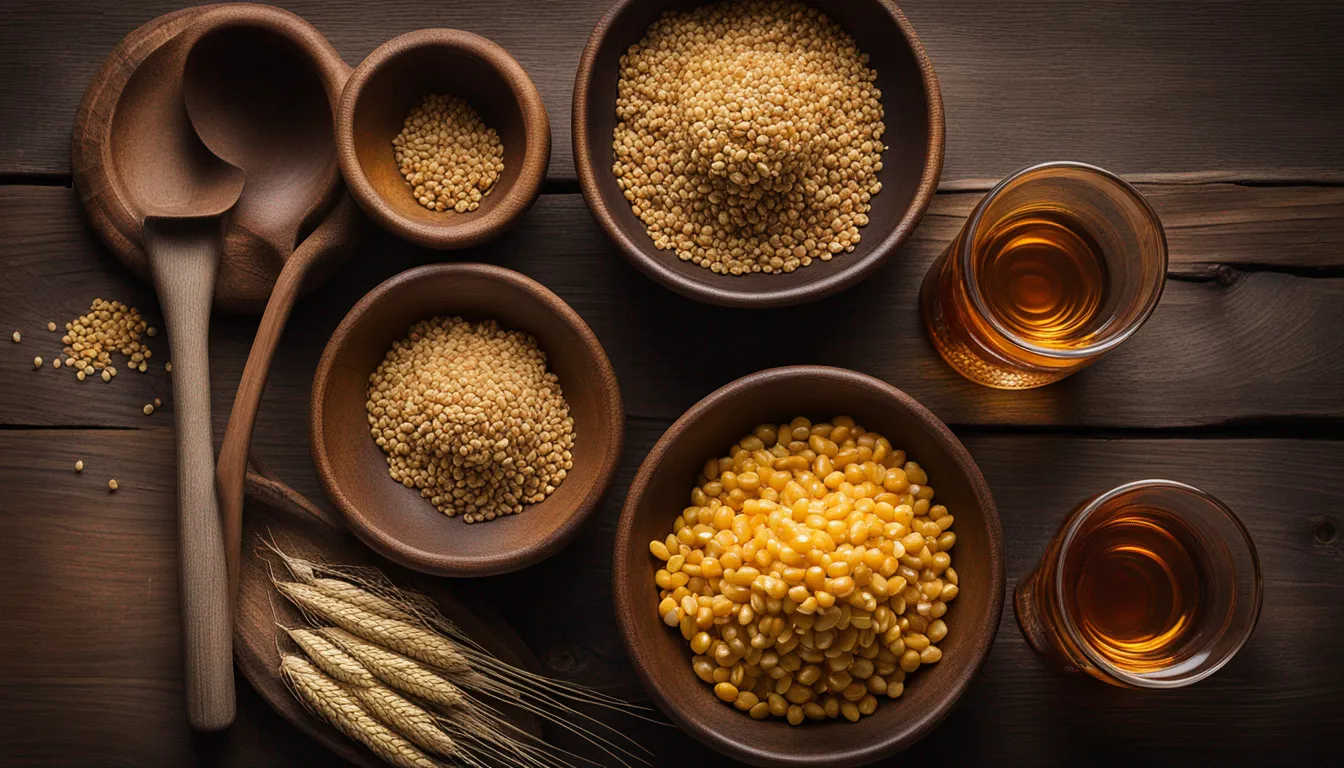
Think of corn as the canvas. It provides the base sweetness, the body, the round fullness that makes bourbon taste like bourbon rather than rye whiskey. The secondary grains are the brushstrokes. Rye adds spice, pepper, and bite. Wheat adds softness, bread, and honey. Malted barley handles the enzymatic heavy lifting during mashing and contributes biscuity, nutty undertones. The interplay between these grains, before yeast, barrel, or time ever enter the picture, establishes the spirit's fundamental character.
Traditional Mash Bills: The Bourbon Baseline
Most bourbon on the market follows a standard mash bill formula: 70-80% corn, 8-15% rye, and 5-15% malted barley. This is the template that built the category, and it produces the classic bourbon flavor profile — sweet corn and caramel on the front, moderate spice in the middle, and oak-driven vanilla on the finish.
Buffalo Trace's flagship uses approximately 75% corn, 10% rye, and 15% malted barley (they've never officially confirmed exact numbers, but this is the widely accepted breakdown based on patent filings and industry reporting). Jim Beam's standard mash bill runs about 77% corn, 13% rye, and 10% malted barley. Wild Turkey uses roughly 75% corn, 13% rye, and 12% malted barley — slightly rye-forward for a "traditional" bill, which partly explains why Wild Turkey 101 punches above its price point with that distinctive peppery kick.
The traditional bottle that lives on my shelf is Wild Turkey 101 (75/13/12). I've used it as a reference point for every other bourbon I've tasted in the last five years. At about $25 it's the most honest dollar-per-flavor pour in the category — that 13% rye gives it more pepper than the percentage alone suggests, and the 101 proof concentrates everything. When I'm trying to teach someone what "traditional mash bill" actually tastes like, this is the bottle I open. Buffalo Trace works for the same purpose at a lower proof if 101 is too hot for the drinker.
If you're new to bourbon, traditional mash bills are the center of the flavor map. They balance sweetness and spice without leaning hard in either direction. Master the baseline, and deviations become easy to spot and appreciate.
High-Rye Mash Bills: Where the Spice Lives
Bump the rye content above 18% and you enter high-rye territory. These bourbons trade some of that corn sweetness for assertive spice — black pepper, cinnamon bark, clove, and the dry, biting warmth that rye grain delivers. The finish tends to linger longer and the palate has more angular structure. Less round, more architecture.
Four Roses is the best classroom for studying rye's influence because they produce bourbon from two distinct mash bills under the same roof. Their "B" mash bill contains 60% corn, 35% rye, and 5% malted barley — one of the highest rye percentages in any bourbon on the market. Their "E" mash bill is more moderate at 75% corn, 20% rye, and 5% malted barley.
I ran this exact comparison last summer: Four Roses Single Barrel (all "B" mash bill, OBSV recipe) against Four Roses Small Batch (blended from both). The Single Barrel had baking spice that practically crackled across my tongue — clove on the front, dry pepper through the middle, a finish that wouldn't quit. The Small Batch poured next to it tasted almost wheated by comparison: rounder, more approachable, the rye softened by the lower-proportion grain in the blend. Same distillery, same warehouse, same yeast house. Only the mash bill ratio changed, and the difference was unmistakable.
Old Grand-Dad runs approximately 27% rye, which is why it's been a bartender favorite for decades — that spice cuts through cocktail ingredients without getting buried. Bulleit Bourbon's 28% rye content drives its bold, dry profile. 1792 Small Batch from Barton 1792 Distillery uses a high-rye recipe that gives it a cinnamon-forward character you'll either love immediately or need a few pours to warm up to.
If you prefer your bourbon with backbone and bite — or if you love Manhattans and Old Fashioneds where the whiskey needs to assert itself against vermouth or sugar — high-rye is your lane.
Wheated Bourbon: The Soft Side of the Spectrum
Replace the rye with wheat and everything changes. Wheated bourbons swap out that peppery grain for soft red winter wheat, which contributes a gentler, rounder flavor: fresh bread, honey, butterscotch, and a creamy mouthfeel that rye-heavy bourbons simply don't deliver. The finish tends to be shorter and smoother. Less fire, more silk.
Maker's Mark is the most famous wheated bourbon on earth, using approximately 70% corn, 16% soft red winter wheat, and 14% malted barley. Bill Samuels Sr. chose wheat specifically because he wanted a bourbon you could sip without wincing. He burned the family's 170-year-old rye-based recipe and started over. That decision built a billion-dollar brand.
The most coveted wheated bourbon is, of course, Pappy Van Winkle — which shares the exact same mash bill as W.L. Weller. Both come from Buffalo Trace's wheated recipe (roughly 70% corn, 16% wheat, 14% malted barley). The difference between a $30 bottle of Weller Special Reserve and a $3,000+ secondary-market Pappy 23 Year is age, barrel selection, and hype — not grain recipe. Understanding that distinction is worth knowing before you overpay. For more on how aging transforms bourbon, our piece on age statements explains what those numbers actually mean.
Larceny from Heaven Hill is another accessible wheated option. Its mash bill uses 68% corn, 20% wheat, and 12% malted barley — a higher wheat percentage than Maker's or Weller, which gives it a distinctly bread-dough sweetness. At around $25, it's one of the best ways to explore what wheat does in bourbon without chasing allocated bottles.
One thing I noticed running Maker's 46 against Wild Turkey 101 over a steak dinner last winter: the wheated bottle drank smaller. Same 1.5oz pour, same glass, but the Maker's disappeared faster because there's no rye spice telling your palate to slow down. That's the wheated trade-off — easier to drink, easier to over-pour. Worth knowing if you're hosting.
Four-Grain Mash Bills: Having It Both Ways
Some distillers refuse to choose. Four-grain mash bills include corn, rye, wheat, and malted barley — all four in the same recipe. The goal is to capture rye's spice and wheat's softness simultaneously, producing a bourbon with unusual complexity and balance.
Wilderness Trail Distillery in Danville, Kentucky uses a four-grain mash bill with 64% corn, 24% wheat, 4% rye, and 8% malted barley. The result is distinctly different from anything in the traditional, high-rye, or wheated categories. You get honey sweetness from the wheat alongside a faint rye snap on the finish. It's subtle, but once you identify it, you can't un-taste it.
Woodford Reserve has released four-grain expressions as limited editions, and several craft distilleries have embraced the approach as a way to differentiate from the Kentucky giants. The challenge is balance — too little rye and you've basically made a wheated bourbon with an asterisk. Too little wheat and you've got a traditional mash bill with unnecessary complexity in the grain sourcing. Getting the ratios right takes serious experimentation, which is one reason established distilleries with decades of production data have an advantage over newcomers.
How Corn Percentage Shapes the Base
Corn is bourbon's backbone, but more isn't always better. At the legal minimum of 51%, the corn provides sweetness without dominating — more grain character comes through from the secondary ingredients. At 60-70%, you get a balanced interplay. Push corn above 80% and the bourbon becomes noticeably sweeter, with pronounced caramel, vanilla, and buttered popcorn notes. The grain complexity fades because there's simply less room for rye or wheat to contribute.
Hudson Baby Bourbon (Tuthilltown Spirits) uses 100% corn — technically allowed under bourbon regulations, though unusual. The result tastes markedly different from a standard bourbon. It's sweet, one-dimensional by comparison, and lacks the spice or grain depth that secondary grains provide. That's not a criticism; it's a data point. It shows you exactly what corn does when it runs the show alone.
Mellow Corn, the cult-favorite Kentucky straight corn whiskey from Heaven Hill, is technically not a bourbon (it's aged in used barrels, not new charred oak), but its 80%+ corn mash bill demonstrates the upper range of corn sweetness. If you've had Mellow Corn, you understand the flavor ceiling corn hits without rye or wheat to add dimension.
Malted Barley: The Unsung Workhorse
Every bourbon mash bill includes malted barley, typically at 5-15% of the grain bill. Most drinkers overlook it. They shouldn't.
Malted barley exists in the mash bill primarily for its enzymes — specifically amylase, which converts the starches in corn (and rye and wheat) into fermentable sugars during the mashing process. Without those enzymes, the yeast has nothing to eat, and you get no alcohol. Raw corn kernels contain starch, not sugar. The malted barley's enzymatic activity is what unlocks that starch and turns it into something yeast can ferment.
Beyond its functional role, malted barley contributes flavor: biscuit, toast, nuttiness, and a dry cereal character that adds depth to the finished bourbon. Some distillers have experimented with specialty malts — chocolate malt, smoked malt, honey malt — to introduce additional flavor dimensions. These experiments are more common in craft distilling than at major Kentucky operations, but they demonstrate that malted barley is more than just an enzyme delivery system.
If a distiller drops malted barley too low, they risk incomplete starch conversion and lower yields. Some modern producers supplement with commercially produced enzymes, which lets them reduce barley percentages below 5%, but traditionalists argue (and I agree based on tasting) that the barley's flavor contribution is worth keeping it in the 8-15% range.
Reading Mash Bills: Why Labels Won't Help You
Here's the frustrating reality: most bourbon producers don't print their mash bill on the label. The TTB (Alcohol and Tobacco Tax and Trade Bureau) requires proof, volume, and class/type designation. Grain percentages are optional. Some brands — Four Roses, Maker's Mark, Wilderness Trail — voluntarily disclose their recipes. Most don't. Buffalo Trace famously guards its exact percentages despite industry-wide speculation.
So how do you figure out what you're drinking? A few strategies actually work:
- Check the distillery's website. An increasing number of producers publish mash bill information on brand pages, especially craft distillers who view transparency as a marketing advantage.
- Look for "wheated" or "high-rye" on the label. While exact percentages are rare, categorical descriptors appear more often. If a label says "wheated bourbon," you know wheat replaced rye as the secondary grain.
- Cross-reference with enthusiast databases. Sites like Breaking Bourbon and the Bourbon Culture maintain extensive mash bill databases compiled from interviews, press releases, and TTB filings.
- Read the TTB COLA (Certificate of Label Approval) database. This won't give you mash bills directly, but it confirms which DSP (Distilled Spirits Plant) produced a bourbon — which tells you which mash bill family it belongs to.
- Taste and compare. After you've tried a confirmed wheated bourbon and a confirmed high-rye bourbon side by side, your palate becomes a surprisingly reliable mash bill detector. Pepper and dry spice means rye. Soft bread and honey means wheat. It's not scientific, but it's effective.
Our bourbon glossary breaks down terminology like DSP numbers, barrel proof vs cask strength, and other label language that helps you decode what's in the bottle.
The Three Bottles I Recommend for Your Own Side-by-Side
The grain recipe won't tell you everything. Yeast strain, fermentation length, distillation proof, barrel char level, warehouse placement, aging duration, and proof at bottling all shape the final product. But mash bill is the foundation — the decision that comes before every other decision. Two bourbons made with identical processes but different mash bills will taste fundamentally different. Two bourbons with the same mash bill but different aging will taste like variations on a theme.
If you do nothing else with this article, do this: buy three bottles and run the same comparison I run for friends every few months. A traditional mash bill (Wild Turkey 101, ~$25), a high-rye (Four Roses Single Barrel, $40-45), and a wheated (Maker's Mark or Larceny, $25-30). Three Glencairns. Neat pours, no ice, no water. Nose each one for a full minute before sipping. Sip each one. Then, and only then, switch the order and sip again.
The differences aren't subtle once your palate has the framework. Corn sweetness up front. Rye pepper through the middle. Wheat softness on the finish. After you've mapped those three reference points, every bourbon you taste afterward clicks into the framework. You stop guessing and start understanding.
For what it's worth, after years of running these tastings: my own preference is high-rye. I reach for Four Roses Single Barrel or Wild Turkey Rare Breed more often than I reach for the wheated bottles in the cabinet. The pepper-and-spice profile pairs better with the way I drink — usually neat, usually after dinner, usually with the goal of making the whiskey work for its place in the glass. Your mileage will vary. That's the point.
What the grain recipe gives you is a vocabulary for your own preferences. Not a ranking. Not a score. A map.