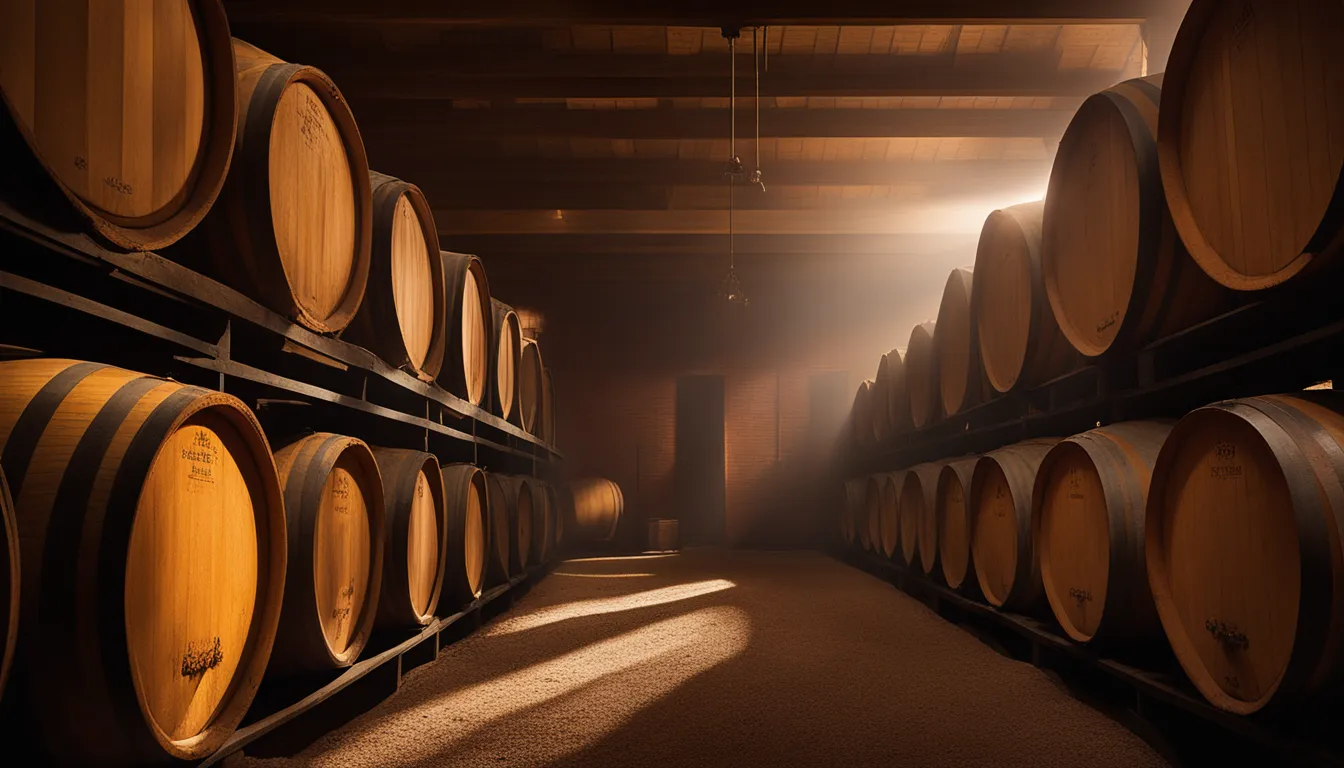
No, older bourbon is not automatically better bourbon. The sweet spot for most bourbon sits between 6 and 12 years — a range where the oak has contributed rich vanilla, caramel, and baking spice without overwhelming the grain character that makes bourbon taste like bourbon. I've tasted enough 20-year-old bottles that tasted like licking a lumber yard to say this with confidence. And I've had 6-year-old barrels that stopped me mid-conversation. Age is one variable. It is not the only variable, and it's frequently not the most important one.
That said, age statements aren't meaningless marketing. They tell you something real about what happened to that liquid before it hit your glass. Understanding how to read them — and what they actually guarantee — gives you a genuine edge when you're standing in front of a wall of bourbon bottles trying to decide where to spend your $50.
What an Age Statement Actually Means
The number on a bourbon label represents the youngest whiskey in the bottle. Not the oldest. Not the average. The youngest. So when you pick up a bottle of Knob Creek 12, every drop of whiskey inside that bottle has spent a minimum of 12 years in a charred new oak barrel. Some of it might be 14 years old. Some might be 15. But nothing in there is younger than 12.
This is a TTB (Alcohol and Tobacco Tax and Trade Bureau) regulation, not a distillery courtesy. Federal labeling law requires that any age statement on an American whiskey label must reflect the youngest component in the blend. The rule exists because most bourbons are batched — meaning the master distiller combines whiskey from multiple barrels of varying ages to achieve a consistent flavor profile. Jim Beam White Label, for instance, might blend barrels ranging from 4 to 7 years old. If they chose to put an age statement on it, they'd have to print "4 years" — the youngest barrel in the batch.
This is worth understanding because it changes how you interpret the number. A "10-year" bourbon isn't necessarily a one-note product that sat in a warehouse for exactly a decade. It's often a carefully constructed blend where the youngest contributor happens to be 10 years old, and the older components add depth and complexity that a single-age barrel might not achieve on its own.
Why Age Matters: What Happens Inside the Barrel
Bourbon gets 60-70% of its final flavor from the barrel. That's not an estimate — it's a figure widely cited by distillers at Buffalo Trace, Four Roses, and Heaven Hill based on chemical analysis of their aged stocks. Fresh-off-the-still bourbon (called "white dog" or "new make") tastes like sweet corn moonshine. The transformation into something you'd actually want to sip happens entirely through wood interaction.
During aging, three main processes reshape the spirit. Extraction pulls vanillin, lactones, tannins, and caramelized sugars directly from the charred oak. Oxidation mellows harsh compounds as micro-amounts of air seep through the barrel staves. Filtration through the charcoal layer (the "red line" inside a charred barrel) strips out sulfur compounds and other unpleasant congeners. If you want the full breakdown of this process, our guide on how bourbon is made walks through it step by step.
Here's the critical factor that separates bourbon aging from Scotch aging: Kentucky's climate. Central Kentucky experiences temperature swings from below 0°F in January to above 100°F in July and August. Those extremes cause the wood staves to expand and contract dramatically. When summer heat pushes barrel temperatures past 130°F inside a rickhouse, the whiskey physically penetrates deeper into the wood grain, absorbing flavor compounds. When winter arrives and the wood contracts, it pushes that now-flavored whiskey back out.
Scotland, by comparison, has a mild maritime climate. Temperatures rarely exceed 70°F or drop below 25°F. The wood barely moves. That's why a Scotch whisky often needs 12 to 18 years to develop the same depth of oak character that a bourbon achieves in 6 to 8. It's not that bourbon distillers are impatient — their climate simply does the work faster.
The Sweet Spot: 6 to 12 Years
Ask ten master distillers where bourbon peaks and eight of them will point to the 6-to-12-year window. Jimmy Russell of Wild Turkey (who has been making bourbon since 1954) has said publicly that 8 years is his ideal age for most barrels. Chris Morris at Woodford Reserve targets a similar range. Fred Noe at Jim Beam has put the sweet spot at 9 years for Knob Creek's profile.
Within this range, the bourbon has had enough time to develop deep caramel, vanilla, toasted oak, and baking spice notes while retaining enough grain sweetness and fruity esters to stay balanced. The tannins are present but integrated — they add structure without astringency.
Some specific bottles that demonstrate this range exceptionally well:
- Knob Creek 12 Year (~$50) — Rich, full-bodied, with dark caramel and toasted walnut. One of the best values in aged bourbon. The extra four years beyond standard Knob Creek 9 adds noticeable depth without tipping into over-oaked territory.
- Wild Turkey Rare Breed (NAS, blend of 6, 8, and 12 year) — A masterclass in batching. The 6-year component brings grain sweetness and spice; the 12-year component brings oak depth. The result is more complex than any single-age barrel could be. Bottled at barrel proof, which makes it even more interesting.
- Elijah Craig Small Batch (NAS, estimated 8-12 year) — Heaven Hill dropped the "12 Year" age statement in 2016 to gain blending flexibility, but the stock still skews heavily into that range. Consistently one of the best sub-$35 bourbons on the shelf.
- Henry McKenna Single Barrel 10 Year Bottled-in-Bond (~$40) — Single barrel, so there's variation, but the best barrels at this age are stunning. Won "Best in Show Whiskey" at the San Francisco World Spirits Competition in 2019.
Under 4 years, bourbon tends to taste hot, grainy, and one-dimensional. You'll notice an aggressive ethanol burn and a raw cereal character that hasn't been softened by enough wood contact. There are exceptions — some craft distillers like New Riff in Newport, Kentucky, have produced surprisingly good 4-year bourbon by using smaller barrels and specific rickhouse placements — but they're exceptions, not the rule.
NAS Bourbon: No Age Statement, No Problem?
Walk into any liquor store and you'll notice that most bourbon bottles don't carry an age statement at all. Buffalo Trace, Maker's Mark, Woodford Reserve, Four Roses Small Batch, Wild Turkey 101 — all NAS. This doesn't mean the whiskey is young. It means the distiller chose not to commit to a specific number on the label.
There's one legal guarantee with NAS bourbon: if the label says "straight bourbon" (and most do), the youngest whiskey inside is at least 4 years old. That's the TTB minimum for using the "straight" designation without an age statement. If a bourbon is younger than 4 years, the label must disclose the age. You can find more label terminology decoded in our bourbon glossary.
So why do major producers skip the age statement? Three reasons:
- Blending flexibility. Without an age statement, a master distiller can adjust the barrel composition batch to batch. If a particular run of 7-year barrels tastes better than the 9-year barrels that month, they can lean heavier on the 7-year stock without violating a label promise. This is the reason Maker's Mark has never carried an age statement in its entire history — they want the freedom to pull barrels whenever they taste ready, which is typically around 6 to 7 years.
- Supply management. Bourbon demand exploded after 2010. Distilleries that had age statements suddenly faced a painful choice: raise prices dramatically, reduce bottle count, or drop the age statement and blend in some younger stock to meet demand. Many chose option three. Elijah Craig's shift from 12-year to NAS in 2016 was the most visible example.
- Marketing simplicity. A "12 Year" on the label can actually hurt sales with casual buyers who don't know what it means. Some consumers assume age statements indicate a dusty, old-fashioned product. Removing them makes the bottle feel more approachable.
Industry estimates for popular NAS bourbons: Buffalo Trace runs approximately 7 to 9 years. Woodford Reserve sits around 6 to 7 years. Maker's Mark typically hits 6 to 7 years. Wild Turkey 101 is estimated at 6 to 8 years. All of these fall comfortably inside the sweet spot, which is why they taste as good as they do despite lacking a number on the label.
The controversial side: some smaller producers use NAS labeling to hide genuinely young whiskey. A "straight bourbon" with no age statement could legally contain 4-year-old whiskey, and a few bottles on the market are exactly that — $45 craft bourbons with nice labels and mediocre, underaged juice inside. Reading reviews and knowing the distillery's reputation helps you avoid these.
Over-Aged Bourbon: When More Isn't Better
I opened a bottle of Pappy Van Winkle 23 Year at a tasting last year. Half the table loved it. The other half described it as "drinking a two-by-four." Both reactions were completely valid.
After 15-plus years in Kentucky's aggressive climate, bourbon starts to accumulate tannins and wood-extractive compounds at a rate that can overpower everything else. The vanilla and caramel are still there, buried somewhere, but the dominant notes become dry oak, bitter tannin, and a woody astringency that dries out your palate. Some people genuinely enjoy that profile. They describe it as complex and contemplative. Others find it unbalanced and punishing.
The science is straightforward. After a certain point, the desirable flavor compounds have been fully extracted from the wood, and what remains are increasingly harsh tannins (primarily ellagitannins) and excessively woody lactones. The Kentucky climate accelerates this. A 23-year bourbon aged in Kentucky has experienced roughly 23 full cycles of extreme expansion and contraction — that's far more wood interaction than a 23-year Scotch aged in the Highlands, where temperature swings are minimal.
This is why ultra-aged bourbon commands high prices primarily because of scarcity, not because every bottle is objectively superior. Significant amounts of whiskey evaporate during aging — the "angel's share" runs about 2-4% per year in Kentucky. A 20-year barrel might have lost 40-60% of its original volume. What's left is concentrated and rare, which justifies the price tag, but "rare" and "better" are different words.
Bottles in the 15-to-20-year range that manage to stay balanced — like Eagle Rare 17, Elijah Craig 18, or certain Old Fitzgerald Bottled-in-Bond releases — tend to come from specific rickhouse locations (often lower floors where temperature swings are less extreme) and from barrels that were selected specifically because they hadn't gone too far into over-oaked territory.
Age vs. Quality: What Really Matters
Time in the barrel is one ingredient in a much longer recipe. Here's what matters just as much — sometimes more:
- Rickhouse placement. The top floors of a multi-story rickhouse can be 20-30°F hotter than the ground floor in summer. Barrels stored high age faster and develop bolder, spicier profiles. Ground-floor barrels age slower and tend toward softer, sweeter flavors. A well-placed 8-year barrel from the fifth floor of a Wild Turkey rickhouse might have more flavor development than a 12-year barrel sitting on the ground level.
- Barrel selection. Master distillers taste thousands of barrels before selecting which ones go into premium products. The difference between a "honey barrel" and an average barrel from the same batch, same age, same rickhouse is enormous. This is why single barrel products vary so much bottle to bottle.
- Mash bill composition. A high-rye bourbon (like Four Roses' 35% rye recipes) will develop spice and fruit notes differently over time than a wheated bourbon (like Maker's Mark's 16% wheat recipe). The grain recipe and the aging interact — they're not independent variables.
- Entry proof. The proof at which whiskey enters the barrel (legally capped at 125 for bourbon) affects how it interacts with the wood. Lower entry proofs (like Maker's Mark at 110 or Wild Turkey at 115) tend to extract different ratios of flavor compounds than higher entry proofs (like many Jim Beam products at 125). This compounds over years of aging.
- The distiller's palate. At the end of the process, a human being tastes the whiskey and decides whether it's ready. That subjective judgment — honed over decades — is the final and arguably most important quality control step. No amount of time in a barrel fixes a bad distillation run or a poor barrel.
How to Read Age Statements on the Label
Some quick rules for decoding what you see (and don't see) on a bourbon bottle:
- "Aged 12 Years" or "12 Year Old" — This is a real age statement. The youngest whiskey in the bottle is 12 years old. Legally regulated and enforceable.
- "Straight Bourbon Whiskey" with no age — Youngest component is at least 4 years old. If it were younger, the law would require disclosure.
- "Bourbon Whiskey" (without "straight") and no age — Could theoretically be as young as the legal minimum aging of 0 days in a new charred oak barrel, though in practice it's almost always at least 2 years. Be cautious here.
- "Extra Aged," "Reserve," "Small Batch," "Select" — These terms have no legal definition for bourbon. They are pure marketing. "Reserve" could mean the distiller's best 1% of barrels or it could mean absolutely nothing different from the standard product. Read reviews, not adjectives.
- "Bottled-in-Bond" — Not an age statement, but it does guarantee a minimum of 4 years of aging, production during a single distilling season, at a single distillery, by a single distiller, and bottling at exactly 100 proof. It's the most meaningful quality guarantee the federal government offers for American whiskey.
Drink What Tastes Good
Age statements are useful information, not a scoreboard. A well-made 6-year bourbon will outdrink a poorly made 15-year bourbon every day of the week. The number on the label tells you how long the whiskey sat in wood — it doesn't tell you whether the right person was paying attention to it, whether it sat in the right spot in the rickhouse, or whether it came from a barrel that happened to have exceptional wood grain.
Now that you know what those numbers mean — and what they don't — you can make smarter choices at the shelf. Look for the 6-to-12-year range if you want the highest probability of a balanced, complex pour. Don't fear NAS bottles from reputable distilleries. Be skeptical of marketing terms that sound impressive but carry no legal weight. And if someone tells you their 20-year bourbon is inherently better than your 8-year bourbon, pour them a glass of Rare Breed and let the whiskey settle the argument.
Frequently Asked Questions
What does "straight bourbon" mean?
Straight bourbon has been aged at least two years in new charred oak with no added coloring or flavoring. Under four years old, the label must state the age. See how bourbon is made.
Does every bourbon need an age statement?
No. An age statement is only required if any whiskey in the bottle is under four years old. Bottles without one contain whiskey that is at least four years old.
Is older bourbon always better?
Not necessarily. Bourbon pulls tannin from the barrel every year, and past roughly 12–15 years the oak can overwhelm the whiskey. Many drinkers find the sweet spot around nine years.
What does the age statement number mean?
It names the youngest whiskey in the bottle. A "10 year" bourbon may contain older whiskey too, but nothing younger than 10 years.