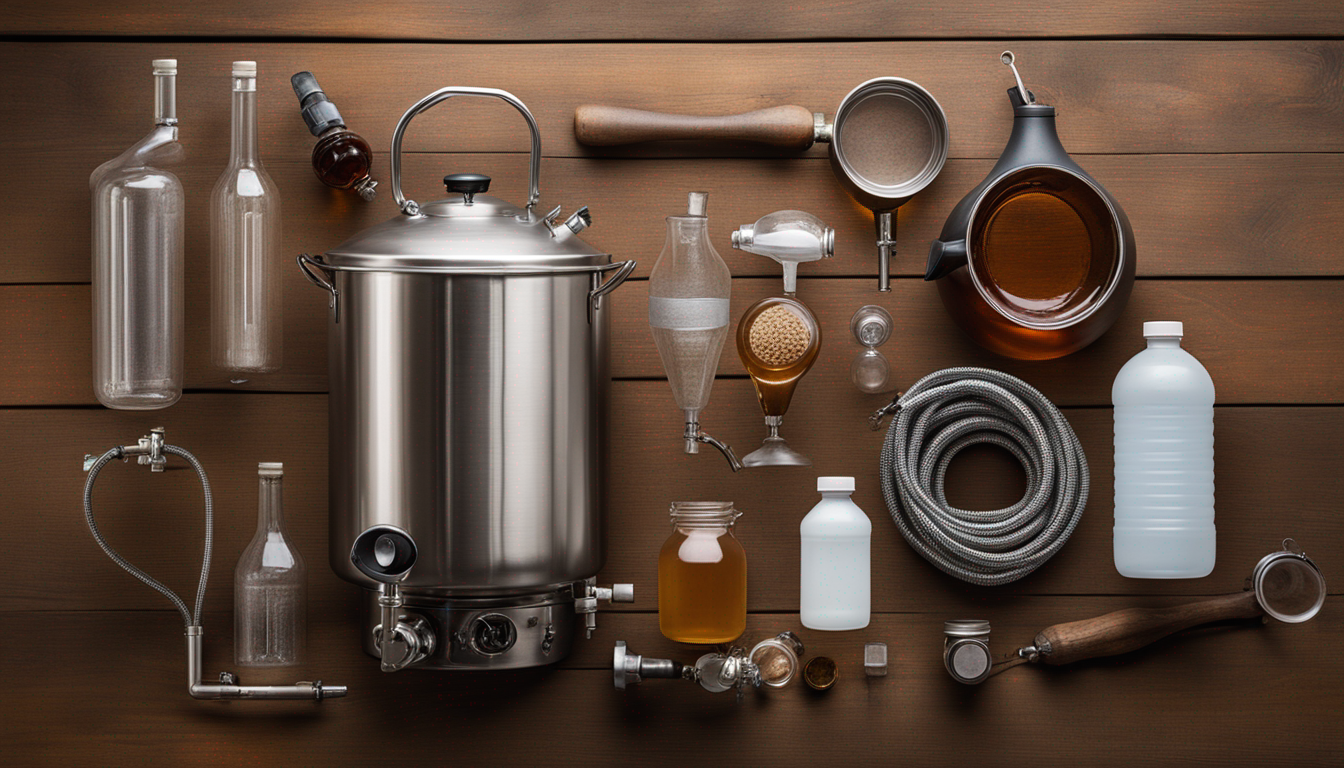
Every homebrew shop in America sells a "deluxe starter kit" for $300-500 that comes with gear you won't use for six months, a DVD nobody watches, and a recipe kit that expired in 2019. I bought one. The fermenter cracked on batch three, the plastic spoon warped, and I never once used the floating thermometer because it was impossible to read while squinting through steam.
Here's what I wish someone had told me: you can start brewing solid beer for $100-150 if you know what actually matters and what's marketing fluff. I've brewed over 200 batches since that first cracked-fermenter disaster, and the gear list for a great first brew is shorter than most people think.
The Non-Negotiable Starter List ($100-150)
These are the items you need for your first extract or partial-mash brew day. Nothing extra, nothing missing. If you're looking for a complete overview of the brewing process itself, check out our beginner brewing guide — this article focuses purely on gear.
Brew Kettle (8+ Quart) — $30-50
Your kettle is your most-used piece of equipment. For extract brewing, you need at least 8 quarts to do a partial boil without boilovers. A 5-gallon (20-quart) stainless steel stockpot from a restaurant supply store runs about $30-40 and works perfectly. The Winco SST-20 ($35 on Amazon) is the one I started with — thin walls, nothing fancy, but it held up for 40+ batches before I upgraded.
Skip the aluminum kettles. They're cheaper by $10, but they oxidize, they discolor, and they make some homebrewers nervous about metallic off-flavors (the science is debatable, but stainless steel eliminates the worry entirely). Also skip anything under 8 quarts — you'll regret it the first time you get a boilover that coats your stovetop in sticky wort.
Fermenter — $15-25
For your first batches, a food-grade plastic bucket fermenter with a spigot is the move. The standard 6.5-gallon ale pail from your local homebrew shop runs about $15. Add a drilled lid for $3. Yes, glass carboys look cooler. They also weigh 13 pounds empty, shatter when dropped, and are a genuine safety hazard when full of 5 gallons of liquid. Start with plastic. I mean it.
The Northern Brewer Big Mouth Bubbler ($25) is a good middle ground if you want something slightly nicer — wide mouth for easy cleaning, plastic construction so it won't kill your tile floor. But a basic bucket works just as well for fermentation quality.
Airlock and Stopper — $3
A three-piece airlock and a drilled rubber stopper. Total cost: about $3. The three-piece style is easier to clean than the S-type. Fill it with sanitizer solution, not water — if the liquid gets sucked back into your fermenter (it happens during temperature swings), you want sanitizer, not tap water with its chlorine and bacteria.
Hydrometer — $8
This glass tube tells you your beer's starting gravity (before fermentation) and final gravity (after). The difference gives you ABV. More importantly, consistent final gravity readings over 2-3 days confirm fermentation is actually done before you bottle — skip this step and you're playing roulette with bottle bombs.
A basic triple-scale hydrometer costs $8. Read it at eye level, in a sample jar (not directly in the fermenter), and at the calibrated temperature printed on the paper insert (usually 60F). If the sample is warmer or cooler, look up a hydrometer temperature correction chart. Or use our brewing calculators — we built a gravity correction tool for exactly this.
Sanitizer — $10-12
Star San. Full stop. One 8-ounce bottle of Star San ($10-12) makes 40+ gallons of no-rinse sanitizer solution, which means it'll last you a year of brewing. Mix 1 ounce per 5 gallons of water, let everything contact the foam for 30 seconds, and you're done. No rinsing required — the residual foam won't affect your beer's flavor or head retention despite what the internet argues about.
Don't substitute bleach. It works as a sanitizer, but it requires thorough rinsing, damages stainless steel over time, and if you leave even trace amounts behind, your beer will taste like a swimming pool. Star San is cheap insurance.
Bottling Bucket, Siphon, and Bottling Wand — $20-25
A second 6.5-gallon bucket with a spigot ($15), an auto-siphon ($8), and a spring-tip bottling wand ($4). The auto-siphon is critical — do not try to start a siphon with your mouth. You'll introduce bacteria, you'll splash the beer (oxidation), and you'll feel foolish. The Fermtech Auto-Siphon with 5 feet of 5/16" tubing is the standard. It works every time.
You'll also need bottles — but you don't need to buy them. Save your non-twist-off bottles for a month or two before your first brew. Pry-off caps from commercial craft beer work perfectly. Sam Adams, Sierra Nevada, most Belgian beers — all have reusable pry-off bottles. You need about 48-54 twelve-ounce bottles per 5-gallon batch. A bag of 100 crown caps costs $4, and a wing capper costs $15.
Stirring Spoon and Measuring Cup — $5-8
A 24-inch stainless steel brewing spoon ($6-8) and a 2-cup Pyrex measuring cup you probably already own. The long spoon matters — your arm should not be reaching into boiling liquid. Plastic spoons warp. Wooden spoons harbor bacteria in their grain. Stainless steel, long handle, done.
What's Worth Upgrading (After 5-10 Batches)
Once you've brewed a handful of batches and you know this hobby has its hooks in you, these upgrades make the biggest difference per dollar spent.
Temperature Control — $50-150
This is the single biggest quality improvement you can make. Fermentation temperature affects flavor more than any ingredient choice, any recipe tweak, any piece of shiny equipment. Fermenting an ale at 72F versus 66F produces noticeably different (and usually worse) beer — more fruity esters, more fusel alcohols, harsher flavors.
The cheapest approach: a large plastic tub or cooler, a few frozen water bottles rotated twice a day, and an Inkbird ITC-308 temperature controller ($35). Plug a small space heater into one outlet and nothing into the cooling outlet — use the frozen bottles manually. Total cost: $50-75 if you already have a cooler.
The proper approach: a used mini-fridge or chest freezer from Craigslist ($50-100), the same Inkbird controller, and a fermenter that fits inside. This gives you precise, hands-off temperature control. It's the upgrade every serious homebrewer eventually makes. Make it early.
Larger Brew Kettle (10+ Gallons) — $80-120
Moving to full-volume boils (boiling the entire 6+ gallons of wort instead of a concentrated partial boil) improves hop utilization, reduces wort darkening, and makes better beer. You need a 10-gallon or larger kettle for this. The Bayou Classic 1044 10-gallon stainless kettle ($80) is the workhorse of the homebrewing community. Add a weldless ball valve kit ($15) and you can drain wort directly without siphoning.
If you're heating on a stovetop, check your burner's BTU output first. Most home stoves can't bring 6+ gallons to a rolling boil quickly. A propane burner like the Bayou Classic SP10 ($50) or the Dark Star 2.0 ($70) solves this — brew outside, boil fast, and stop worrying about wort boiling over onto your kitchen floor.
Wort Chiller — $50-80
An immersion wort chiller (a coil of copper tubing connected to your garden hose) drops your boiling wort to pitching temperature in 15-20 minutes instead of the 45-60 minutes an ice bath takes. Faster chilling means less risk of contamination during the cooling period and better cold break (proteins clumping and dropping out, which means clearer beer).
The NY Brew Supply 25-foot copper immersion chiller ($50) is the most popular option. It works. If you're handy, you can build one from 25 feet of 3/8" copper tubing from a hardware store for about $35. Either way, this is the upgrade that saves you the most time on brew day.
What to Skip (Seriously)
Some gear is genuinely useful — later. But buying it before your fifth batch is like buying a KitchenAid mixer before you've made your first cake.
Refractometer
A refractometer measures gravity with a single drop of wort instead of the 4-6 ounces a hydrometer needs. Handy for brew day when you're taking multiple readings, unnecessary when you're brewing once a month. Your $8 hydrometer works fine. Upgrade to a refractometer ($25-30) after you've outgrown the hydrometer's minor inconveniences — and remember that refractometers require a correction calculation for post-fermentation readings because alcohol skews the reading. Most beginners forget this and get wildly inaccurate FG numbers.
Conical Fermenter
Stainless steel conicals look professional and make yeast harvesting easier. They also cost $150-400 and solve a problem you don't have yet. Your bucket fermenter makes identical beer. Buy a conical when you're brewing every two weeks and harvesting yeast from every batch. Until then, the bucket works.
Fancy All-in-One Systems
The Grainfather ($900), Clawhammer ($800), Anvil Foundry ($350) — these are fantastic all-grain brewing systems. They're also a terrible first purchase because you don't yet know if you want to brew all-grain, how often you'll brew, or whether the hobby sticks. Start cheap. Make 10 batches of extract beer. If you're still excited — and you will be — then start looking at all-in-one systems or building a traditional three-tier setup. Check out our homebrewing hub for guides on making that jump.
The $100 Shopping List
If I were starting over today with exactly $100, here's what I'd buy:
- 6.5-gallon plastic bucket fermenter with lid and spigot — $15
- Airlock and stopper — $3
- 8-quart stainless steel stockpot — $30
- Hydrometer and test jar — $12
- Star San 8 oz — $10
- Auto-siphon and tubing — $12
- Bottling wand — $4
- Wing capper and 100 caps — $18
- 24-inch stainless spoon — $6
Total: $110. Add a $30-40 extract recipe kit from your local homebrew shop or Northern Brewer, and you're brewing your first batch for $150 all-in. Everything on this list will last you 20+ batches except the caps and sanitizer, which are pennies per use.
The gear doesn't make the brewer. Sanitation, temperature control, and patience make the brewer. Everything else is a tool — and you only need enough tools to get started. Upgrade when you understand why you're upgrading, not because a "deluxe kit" told you to.