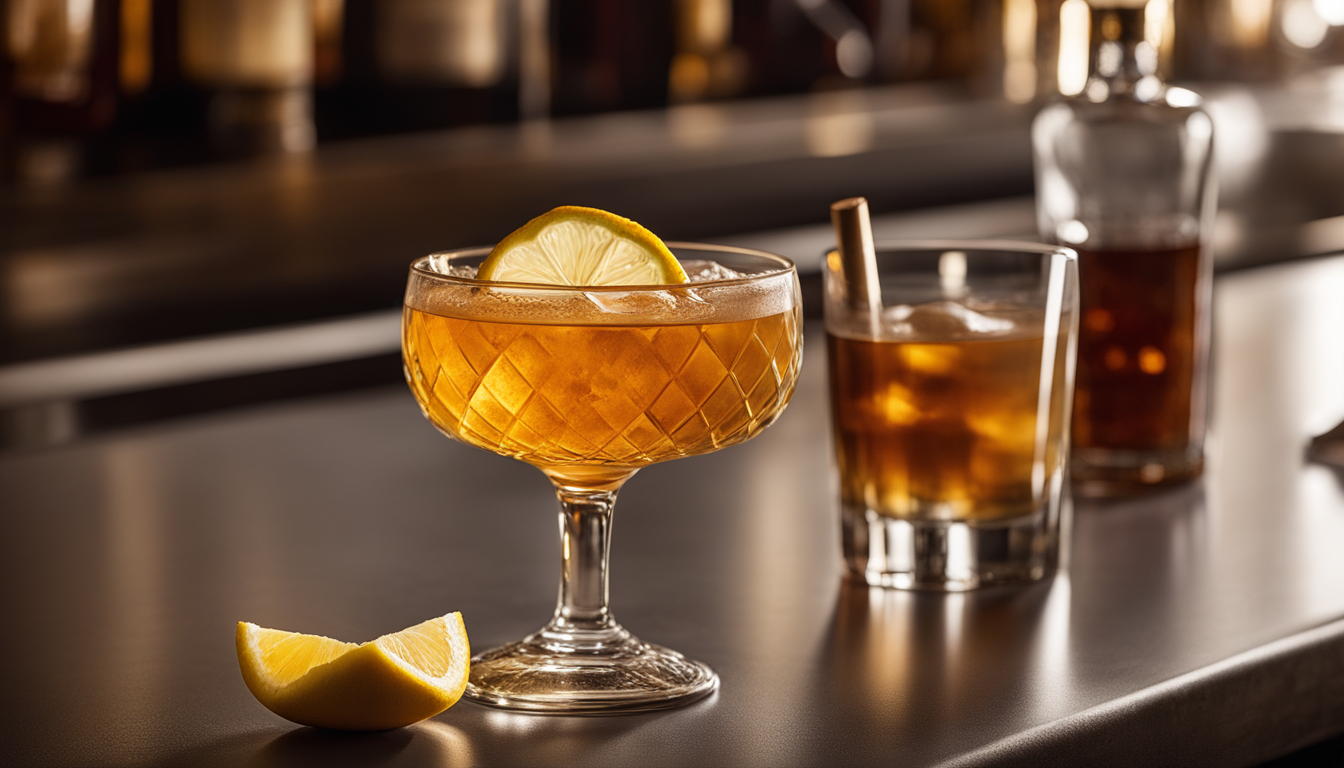
I first had a Gold Rush at a dimly lit bar in Portland in 2014, ordered on a whim because the menu description was exactly six words: "Bourbon. Honey. Lemon. That's it." The bartender grinned when I ordered it, said it was her favorite drink to make because "people always underestimate it until they taste it." She was right. One sip and I understood why this drink—created by T.J. Siegal at New York's legendary Milk & Honey bar in the early 2000s—became a modern classic practically overnight.
The Gold Rush is essentially a Whiskey Sour with one crucial substitution: honey syrup replaces simple syrup. That's the only difference. But that single swap changes the entire architecture of the drink. Honey brings viscosity, floral complexity, and a lingering sweetness that cane sugar can't match. It softens bourbon's edges without dulling them, plays up the caramel and vanilla notes, and creates this silky mouthfeel that makes the drink feel more substantial without being heavy. It's the cocktail equivalent of finding out your favorite song sounds even better in a different key.
What makes the Gold Rush brilliant isn't just the honey—it's the restraint. Three ingredients, equal proportions, no garnish. No muddled herbs, no bitters, no egg white foam. Just bourbon, honey syrup, and fresh lemon juice shaken hard and served cold. In an era when cocktail culture was getting increasingly baroque (and Milk & Honey was partly responsible for that trend), Siegal created something defiantly simple. It's a drink that trusts its ingredients to do the work, and that confidence is what makes it memorable.
The Recipe
Here's what you need:
Ingredients
- 2 oz bourbon
- ¾ oz honey syrup (3:1 ratio—see below)
- ¾ oz fresh lemon juice
- Ice
Equipment
- Cocktail shaker
- Jigger
- Fine-mesh strainer (for double-straining)
- Coupe glass or rocks glass
- Citrus juicer
Instructions
- Make the honey syrup: Combine 3 parts honey with 1 part hot water. Stir until completely dissolved. Let cool to room temperature. (This keeps in the fridge for 2-3 weeks.)
- Combine ingredients: Add bourbon, honey syrup, and fresh lemon juice to a cocktail shaker.
- Add ice and shake: Fill the shaker with ice and shake hard for 12-15 seconds. You want it properly cold and diluted—this isn't a drink that benefits from being under-shaken.
- Double strain: Strain through both your shaker's built-in strainer and a fine-mesh strainer into a chilled coupe glass. (The double strain removes ice shards and any pulp from the lemon juice.)
- Serve: No garnish needed. The drink is the garnish.
How to Make Honey Syrup (3:1 Ratio)
Heat 1 cup of water until it's hot but not boiling—around 150°F if you're measuring, or just hot enough that you wouldn't want to stick your finger in it. Add 3 cups of honey and stir until completely dissolved. The hot water breaks down the honey's viscosity so it mixes evenly into cocktails. Let it cool to room temperature before using. Store in an airtight container in the refrigerator for up to three weeks. Label it with the date because you will forget when you made it.
Quick Version
Shake 2 oz bourbon, ¾ oz honey syrup (3:1), and ¾ oz fresh lemon juice with ice until your hand hurts from the cold. Double strain into a coupe. Drink immediately.
The Details That Matter
The Gold Rush looks simple on paper, but there are specific choices that separate a good version from a great one.
Honey Syrup Ratio: Why 3:1 Is Best
You'll see Gold Rush recipes calling for different honey syrup ratios—3:1 (honey to water), 2:1, or even 1:1. Each ratio changes the drink's balance. A 1:1 ratio is too thin; it doesn't give you enough honey flavor or body, and you end up with something that tastes closer to a regular Whiskey Sour. A 2:1 ratio is serviceable but still underwhelming—the honey gets lost behind the lemon and bourbon. The 3:1 ratio, which Milk & Honey used in the original recipe, gives you proper honey presence without making the drink cloying. The syrup is thick enough to coat the bourbon and create that signature silky texture, but diluted enough to incorporate smoothly when shaken.
Honey Types Actually Matter
Not all honey tastes the same, and the Gold Rush puts honey front and center, so your choice matters. Clover honey—the standard supermarket variety—works perfectly well and gives you a clean, mild sweetness that lets the bourbon shine. Wildflower honey adds more complexity with subtle floral and herbal notes that play beautifully with higher-rye bourbons. Buckwheat honey is darker, almost molasses-like, with an earthy intensity that can overpower the drink if you're not careful, but pairs exceptionally well with wheated bourbons like Maker's Mark. Start with clover or wildflower. Save the buckwheat for when you want to experiment.
Shaking Technique: Hard and Cold
The Gold Rush needs a hard shake—12 to 15 seconds minimum. Honey syrup is viscous even at 3:1, and it needs aggressive agitation to fully integrate with the lemon juice and bourbon. Under-shake it and you'll get separation, with the honey settling at the bottom of the glass. Shake it properly and you get a uniform, silky texture throughout. Your shaker should be painfully cold to hold by the time you're done. If it's not, keep shaking.
Fresh Lemon Juice (Always)
This should go without saying, but: fresh lemon juice only. Bottled lemon juice has a flat, one-dimensional acidity that clashes with honey's complexity. Fresh juice has brightness, nuance, and aromatic oils from the peel that survive the juicing process. Juice your lemons within an hour of making the drink if possible. Lemon juice oxidizes quickly and loses its vibrancy after a few hours.
Serving: Coupe vs. Rocks
The classic presentation is straight up in a coupe glass—chilled, elegant, no ice. This is how Milk & Honey served it, and it's still the best way to experience the drink's texture and temperature evolution as it warms slightly in the glass. That said, serving it on the rocks in a double old-fashioned glass is perfectly legitimate, especially in warmer weather. The ice keeps it colder longer and adds gradual dilution that some people prefer. Both versions work. The coupe is more traditional; the rocks glass is more practical.
Our Bourbon Picks
The Gold Rush works with most bourbons, but certain bottles perform better than others. You want something with enough proof and flavor to stand up to honey and lemon, but not so aggressive that it fights with them.
Best Overall: Buffalo Trace ($28-32)
Buffalo Trace is the platonic ideal Gold Rush bourbon. It's 90 proof—strong enough to hold its shape in the cocktail but not so hot that it needs taming. The flavor profile leans heavily into caramel, vanilla, and toffee, all of which harmonize beautifully with honey. The lemon juice brightens everything without washing out the bourbon's character. If you only make one Gold Rush, make it with Buffalo Trace.
Best Premium: Knob Creek 9 Year ($32-38)
At 100 proof, Knob Creek brings more heat and intensity. The extra age gives you deeper oak influence and a richer, nuttier flavor that stands up to the honey syrup without disappearing. This makes a bolder, more assertive Gold Rush—less delicate than the Buffalo Trace version, but equally good in a different direction. Use this when you want the bourbon to be the star rather than a supporting player.
Best Budget: Evan Williams Bottled-in-Bond ($18-22)
Evan Williams BiB punches well above its price point. It's 100 proof, it's at least four years old (bottled-in-bond requirements), and it costs less than $20 in most markets. The flavor is straightforward—corn sweetness, caramel, a little oak—but it's clean and well-balanced. In a Gold Rush, it's nearly indistinguishable from bourbons twice its price. This is your batching bourbon, your house pour, your "I'm making six of these for friends" bottle.
Best Splurge: Four Roses Single Barrel ($45-55)
Four Roses Single Barrel brings floral and spice notes that complement honey in unexpected ways. The higher rye content adds a peppery edge that keeps the drink from getting too soft or sweet. This is a Gold Rush for people who already love Gold Rushes and want to see what happens when you use a genuinely excellent bourbon. It's not necessary, but it's a hell of an upgrade.
Shop these bourbons at Bourbon & Whisky — use code BOOZEMAKERS5 for 5% off your order.
What Our Panel Says
Marcus Chen, The Explorer: "The Gold Rush is the drink that made me realize I could actually make cocktails at home without screwing them up. I batch these for poker nights now—make a big jar of honey syrup on Sunday, keep it in the fridge, shake individual drinks to order. It's become my signature move. Three ingredients, zero stress, and everyone leaves asking for the recipe. Last month I made 14 Gold Rushes in two hours and didn't break a sweat. That's the power of a simple recipe done right."
William Hayes, The Connoisseur: "I visited Milk & Honey in 2006, back when you needed a phone number just to find the place. Ordered a Gold Rush because the bartender recommended it. I expected another overly clever craft cocktail with seventeen ingredients and a garnish that required tweezers. Instead, I got three ingredients in perfect proportion. No theatrics, no garnish, nothing to distract from the drink itself. That simplicity is what makes it endure. Also—and this matters—use good honey. The difference between supermarket clover and a quality wildflower honey is the difference between a good Gold Rush and a great one."
Sophia Laurent, The Host: "I served Gold Rushes at a dinner party last spring—ten people, coursed menu, needed a cocktail that would hold up from appetizers through dessert. Made a triple batch of honey syrup in advance, bought five lemons, set up a little shaking station in the kitchen. Guests loved it because it felt special but wasn't fussy. No muddling, no elaborate garnishes, just shake and serve. By the end of the night, three people had texted themselves the recipe. That's the mark of a good cocktail: people want to recreate it at home."
Variations
The Gold Rush's simplicity makes it an excellent template for experimentation. Here are four variations that keep the drink's spirit intact while taking it in new directions.
The Penicillin (Adjacent)
Add ¼ oz fresh ginger juice and reduce the honey syrup to ½ oz. Float ¼ oz of a smoky Islay Scotch (like Laphroaig 10) on top. This isn't technically a Gold Rush anymore—it's Sam Ross's Penicillin, another Milk & Honey classic—but it shows how versatile this template is. The ginger adds heat, the Scotch adds smoke, and suddenly you have an entirely different drink that's just as good as the original.
Gold Rush with Ginger Honey Syrup
Make your honey syrup with fresh ginger: slice a 2-inch piece of ginger, add it to the honey-water mixture while it's still warm, and let it steep for 30 minutes before straining. The ginger adds a subtle spicy warmth that doesn't overpower the bourbon. This version is excellent in fall and winter.
The Bourbon Bee's Knees
Swap the bourbon for a London Dry gin (like Beefeater or Tanqueray). The proportions stay the same—2 oz gin, ¾ oz honey syrup, ¾ oz lemon juice. This is essentially the classic Bee's Knees cocktail from Prohibition-era speakeasies, and it's proof that this honey-lemon template works across base spirits. Lighter, more botanical, but just as satisfying.
Spiced Gold Rush
Add two dashes of Angostura bitters to the shaker before shaking. The baking spice notes in the bitters—cinnamon, clove, cardamom—bridge the gap between bourbon and honey beautifully. It's a subtle shift, but it makes the drink feel richer and more complex without adding actual complexity.
Common Mistakes
The Gold Rush is a forgiving drink, but there are a few ways to mess it up.
Using Simple Syrup Instead of Honey Syrup
This seems obvious, but people do it. "I don't have honey syrup—can I just use simple?" No. The honey is the point. Simple syrup gives you a Whiskey Sour, which is a great drink, but it's not a Gold Rush. If you don't have honey syrup made, spend five minutes making it. It's not complicated.
Not Shaking Hard Enough
Honey syrup is thick. It doesn't integrate easily. A lazy shake leaves you with a separated drink where the honey settles at the bottom and the first sip is all lemon and bourbon. Shake it like you mean it—12 to 15 seconds minimum, until the shaker is too cold to hold comfortably.
Skipping the Double Strain
Ice shards and lemon pulp ruin the drink's silky texture. Double straining—through both your shaker's built-in strainer and a fine-mesh strainer—takes two extra seconds and makes a noticeable difference. Don't skip it.
Using Old Lemon Juice
Lemon juice starts losing its brightness within a few hours of juicing. If you're making Gold Rushes for a party, juice your lemons right before you start mixing. Don't juice them in the morning for an evening event. Fresh means fresh.
Overthinking the Bourbon
You don't need a $60 bottle for this. A solid mid-range bourbon—Buffalo Trace, Evan Williams BiB, Old Forester—performs beautifully. Save the ultra-premium bottles for sipping neat. The Gold Rush is about balance, not showcasing a single ingredient.
Final Thoughts
The Gold Rush is what a modern classic looks like: simple enough to make on a Tuesday, good enough to serve at a dinner party, flexible enough to adapt to your taste. Three ingredients, one smart substitution, and a drink that's been on cocktail menus worldwide for over two decades. That's not luck—that's good design.