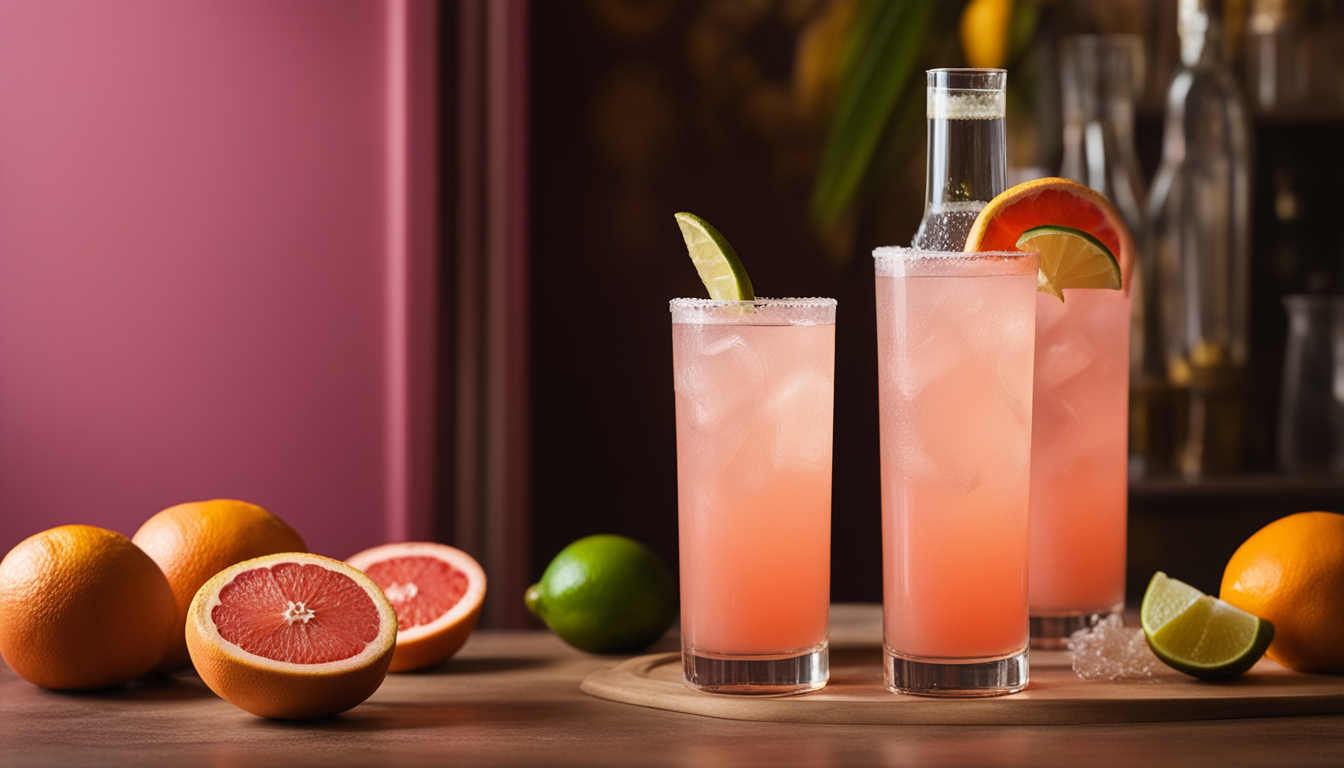
The bartender at La Docena in Mexico City didn't even blink when I ordered a Margarita. He made it, sure — perfectly balanced, good tequila, fresh lime. But then he slid a tall glass of something pink and sparkling across the bar. "Try this one," he said in Spanish. "This is what we actually drink."
The Paloma. Tequila, grapefruit, lime, salt, bubbles. It was simpler than the Margarita, more refreshing, and somehow more complex. The grapefruit brought this bitter-sweet brightness that made sense in the afternoon heat in a way the Margarita's aggressive tartness never quite managed. I spent the rest of that trip ordering Palomas at taquerías, mezcalerías, and beach bars from Tulum to Oaxaca. The drink was everywhere, mixed a dozen different ways, but always built on the same perfect foundation: tequila and grapefruit.
Here's the thing most Americans don't know: the Paloma outsells the Margarita in Mexico by a massive margin. It's not even close. The Margarita is what we drink. The Paloma is what they drink. And while the origin story is debated — some credit Don Javier Delgado Corona at La Capilla bar in Tequila, Jalisco in the 1950s — what matters is that this drink has been Mexico's default tequila serve for generations. It's time the rest of us caught up.
The Recipe: Two Ways to Make a Paloma
The beautiful tension at the heart of the Paloma is this: the "authentic" version uses grapefruit soda (Jarritos Toronja, Squirt, or Fresca), but the "elevated" version uses fresh-squeezed grapefruit juice. Both are legitimate. Both are delicious. Both are worth knowing.
Fresh Paloma (The Elevated Version)
Ingredients:
- 2 oz blanco tequila
- 2 oz fresh-squeezed grapefruit juice (preferably Ruby Red)
- ½ oz fresh lime juice
- ½ oz agave nectar (or simple syrup)
- 2-3 oz club soda
- Flaky sea salt for rim
- Grapefruit wedge for garnish
Equipment:
- Highball or Collins glass
- Citrus juicer
- Jigger
- Bar spoon
Instructions:
- Run a lime wedge around the rim of your glass. Pour flaky sea salt onto a small plate and dip the rim to coat one half of the glass (leaving the other half clean for those who don't want salt with every sip).
- Fill the glass with ice — the good stuff, not the cloudy freezer cubes that taste like last week's salmon.
- Add tequila, grapefruit juice, lime juice, and agave nectar directly to the glass.
- Stir gently to combine and chill — about 10 seconds.
- Top with club soda (2-3 oz depending on your glass size and how strong you like it).
- Give it one gentle stir to integrate the bubbles.
- Garnish with a grapefruit wedge.
Classic Paloma (The Traditional Version)
Ingredients:
- 2 oz blanco tequila
- ½ oz fresh lime juice
- 4-5 oz grapefruit soda (Jarritos Toronja, Squirt, or Fresca)
- Salt for rim
- Lime wedge for garnish
Instructions:
- Salt the rim (same technique as above — half rim, flaky salt).
- Fill glass with ice.
- Add tequila and lime juice.
- Top with grapefruit soda.
- Stir once, gently.
- Garnish with lime wedge.
Quick Version: Ice, tequila, lime, grapefruit (fresh or soda), bubbles, salt. That's it. You can make this in thirty seconds and it will taste like vacation.
The Details That Matter
Fresh Juice vs. Grapefruit Soda
This is not a quality judgment. The soda version is actually more traditional — Jarritos Toronja has been the default Paloma mixer in Mexico for decades. The fresh juice version is a craft cocktail adaptation, and it's genuinely wonderful, but don't make the mistake of thinking it's more "authentic." Authenticity in this case involves a bottle of bright pink soda from a taquería cooler.
That said, the fresh version gives you more control. You can dial in the sweetness, adjust the tartness, play with the proportions. The soda version is what it is — and what it is, is effortlessly drinkable and dangerously easy to make in quantity.
Tequila Selection: Blanco vs. Reposado
Blanco is standard. The clear, unaged spirit lets the grapefruit shine and keeps the drink bright and refreshing. This is a summer cocktail, a beach drink, a taco-night staple. Blanco tequila — with its agave-forward, slightly peppery profile — is the right tool for the job.
But reposado works beautifully if you want more depth. The barrel aging adds vanilla, caramel, and a gentle oak backbone that makes the Paloma feel more substantial. It's the difference between a poolside sipper and an evening cocktail. Both are correct. Just know what you're building toward.
The Mezcal Paloma
Swap the tequila for mezcal and you've got something else entirely. The smoke from the mezcal — that campfire, roasted agave character — plays against the grapefruit's bitterness in a way that shouldn't work but absolutely does. This version is more contemplative, less crushable, and worth making when you want something that demands attention.
Salt Rim Technique
Use flaky sea salt, not table salt. Table salt is harsh and chemical-tasting. Flaky salt (Maldon, Jacobsen, anything with actual texture) dissolves slowly and adds little bursts of salinity instead of an overwhelming wall of salt.
And only salt half the rim. Some sips should taste like the ocean; some should just taste like grapefruit and tequila. Let the drinker choose.
The Grapefruit Question
Ruby Red grapefruit is sweeter, less bitter, more approachable. White grapefruit is sharper, more astringent, more grown-up. For the Paloma, Ruby Red is usually the move — you want that sweet-tart balance, not a bitter punch. But if you like your drinks bracingly dry, white grapefruit will get you there.
Our Spirit Picks
Best Overall Blanco: Espolón Blanco. Bright agave, white pepper, citrus peel. It's affordable, widely available, and makes a Paloma that tastes exactly like it should. Cimarrón is another excellent budget option with even more agave character. If you want to splurge, Fortaleza Blanco is the platonic ideal — rich, complex, and still refreshing.
Best Reposado: El Tesoro Reposado. Barrel-aged for 9-11 months, this brings vanilla, honey, and oak without overwhelming the grapefruit. It's balanced, elegant, and makes a Paloma that works just as well at 4pm as at 9pm.
Best Mezcal Option: Del Maguey Vida. Smoky, earthy, with enough agave sweetness to keep the drink from going full bonfire. It's the mezcal that makes sense in cocktails — expressive but not aggressive.
Shop these tequilas at Bourbon & Whisky — use code BOOZEMAKERS5 for 5% off your order.
What Our Panel Says
Marcus Chen, The Explorer: "I had my first real Paloma at a taco stand in Playa del Carmen — one of those places with plastic chairs and a cooler full of Jarritos. The guy made it in about ten seconds: tequila, lime, grapefruit soda, ice, done. I've spent years drinking complicated cocktails in dark bars and this thing from a plastic cup was better than most of them. I came home and made them for a rooftop cookout. Six people asked for the recipe. Why isn't everyone drinking these?"
William Hayes, The Connoisseur: "I discovered the Paloma on a trip to Jalisco, visiting distilleries and talking to master distillers. At the end of a long day touring the agave fields, someone handed me a Paloma instead of a Margarita. It was a revelation — all the things I love about tequila, none of the cloying sweetness that ruins most Margaritas. The grapefruit brings out the citrus notes in the agave. The salt highlights the minerality. It's an exercise in restraint and balance, which is what great drinks are supposed to be."
Sophia Laurent, The Host: "The Paloma is my secret weapon for summer parties. Margaritas are fussy — you have to balance the sweet and sour, people argue about triple sec vs. Cointreau, someone always complains it's too strong or too weak. Palomas are just... easy. I make a big batch with fresh grapefruit juice and tequila, set out bottles of Topo Chico, and let people build their own. Everyone loves them. I did this for a taco night last summer and people are still asking when we're doing it again."
Variations Worth Trying
Mezcal Paloma
Swap tequila for mezcal (2 oz Del Maguey Vida or similar). The smoke transforms this into something darker and more mysterious. Garnish with a grilled grapefruit wedge if you're feeling dramatic.
Spicy Paloma
Muddle 2-3 thin slices of jalapeño in the glass before adding the other ingredients. Or add ½ oz of jalapeño-infused tequila. The heat plays beautifully with the grapefruit's bitterness and the salt rim.
Grapefruit Rosemary Paloma
Add a sprig of fresh rosemary to the glass and give it a light slap to release the oils before building the drink. The herbal, piney notes make this feel like a cocktail bar drink instead of a beach drink. Use agave syrup infused with rosemary if you want to commit to the bit.
Paloma Rosa
Add ½ oz Campari to the standard recipe. The bitter Italian aperitivo and the grapefruit become best friends, and the whole thing turns a beautiful coral pink. This is the Paloma for people who drink Negronis.
Common Mistakes
Using cheap, bottom-shelf tequila: You don't need Patrón, but you do need 100% agave tequila. Mixto tequila (the stuff that's only 51% agave) tastes like regret and makes drinks that taste like college. Espolón, Cimarrón, Olmeca Altos — all affordable, all 100% agave, all worth drinking.
Over-salting the rim: A Paloma is not a margarita. The salt is an accent, not the main event. Use flaky salt, apply it to half the rim, and let it be subtle. If every sip tastes like the ocean, you've gone too far.
Skipping the fresh lime juice: Even in the traditional soda version, fresh lime juice is non-negotiable. It adds brightness and acidity that the grapefruit soda can't provide on its own. Bottled lime juice tastes like plastic and sadness. Squeeze a real lime.
Using flat club soda: If you're making the fresh version, the bubbles matter. They lighten the drink, add texture, make it refreshing instead of heavy. Use fresh club soda or a good sparkling water like Topo Chico. Flat soda turns a Paloma into a grapefruit juice and tequila... thing. Not the same.
Overthinking it: The Paloma is a simple drink. Tequila, grapefruit, lime, salt, bubbles. That's the whole story. Don't add bitters, don't muddle twelve herbs, don't turn it into a science project. The beauty is in the simplicity. Make it, drink it, make another one.
The Final Word
The Paloma is what happens when a drink is so good, so balanced, and so easy that an entire country just... agrees. No trends, no marketing, no celebrity endorsements. Just tequila and grapefruit and salt and the understanding that sometimes the best answer is the simplest one.
Make the fresh version when you want to impress. Make the soda version when you want to drink like you're sitting at a taco stand in Jalisco. Make the mezcal version when you want smoke and grapefruit to have a conversation. Make a pitcher for your next party and watch it disappear.
Mexico figured this out decades ago. It's about time the rest of us paid attention.