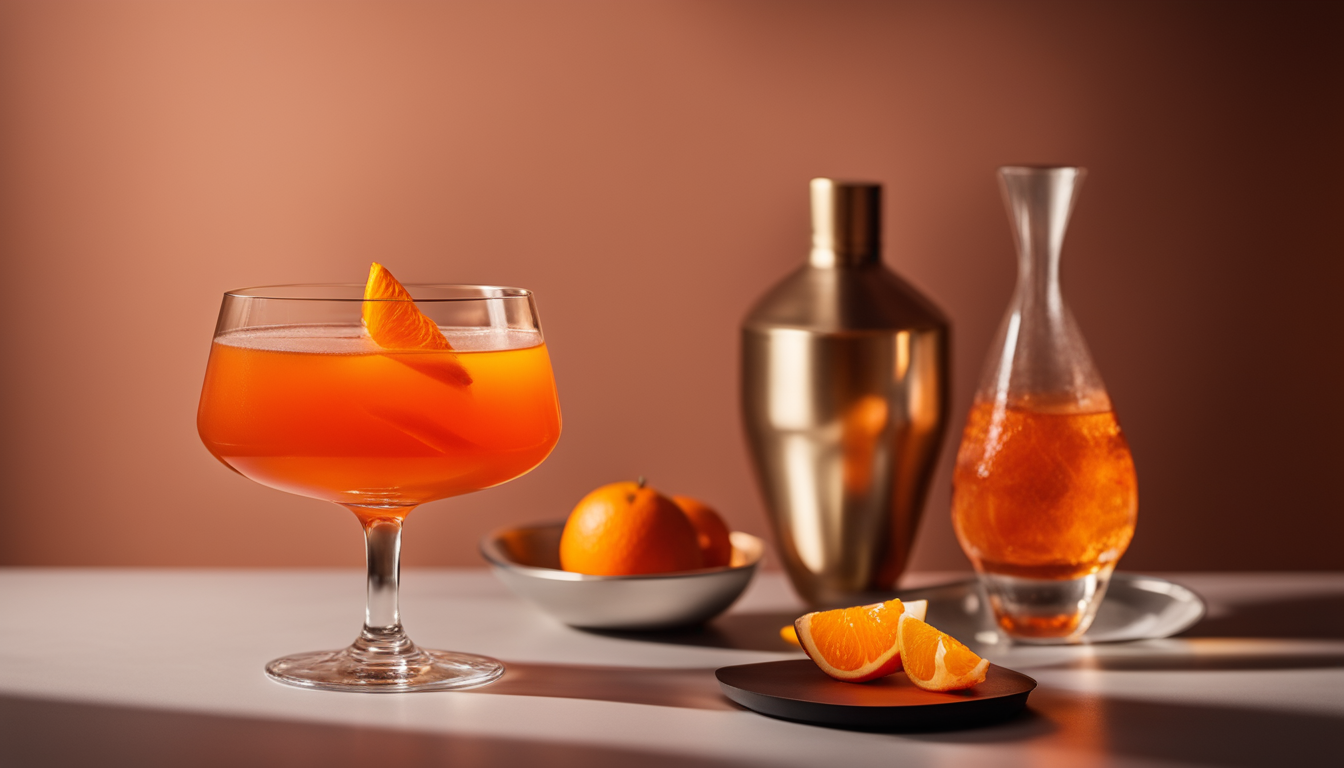
I first had a Paper Plane at Death & Co in New York, back when I still thought "fancy cocktails" meant something with muddled mint and too much sugar. The bartender—one of those guys who could free-pour four ingredients into a shaker without looking—slid the coupe across the bar with zero ceremony. It was the color of a desert sunset, cold enough to frost the glass, and it tasted like someone had figured out the exact mathematical formula for a perfect cocktail. Because that's essentially what Sam Ross did in 2007 when he created this drink at Milk & Honey.
Ross was listening to M.I.A.'s "Paper Planes" on repeat (the song was inescapable that year) and decided the title had the right ring for a cocktail. But the real genius wasn't the name—it was the structure. Equal parts bourbon, Aperol, Amaro Nonino, and fresh lemon juice. Three-quarters of an ounce each. The kind of elegant simplicity that makes other bartenders slap their foreheads and wonder why they didn't think of it first.
The Paper Plane became more than just another cocktail. It became a template. Along with the Last Word and the Naked & Famous, it proved that equal-parts spec drinks could be balanced, sophisticated, and endlessly riffable. You see its DNA in dozens of modern cocktails now. But the original? Still the best.
The Recipe
Ingredients
- ¾ oz bourbon
- ¾ oz Aperol
- ¾ oz Amaro Nonino Quintessentia
- ¾ oz fresh lemon juice
- Lemon twist for garnish (optional but encouraged)
Equipment
- Cocktail shaker
- Jigger
- Fine mesh strainer (for double straining)
- Coupe glass (chilled)
Instructions
- Chill your coupe glass in the freezer while you prep. A warm glass will sabotage this drink.
- Add all four ingredients to your shaker with ice. Use fresh ice—not the sad, half-melted stuff from your last drink.
- Shake hard for 12-15 seconds. You want this aggressively cold and properly diluted. Your shaker should frost over.
- Double strain into the chilled coupe using your fine mesh strainer. This keeps out ice chips and lemon pulp.
- Express a lemon twist over the drink if you're feeling civilized, then either discard it or drop it in.
- Drink it immediately while it's still bracingly cold.
The Quick Version
Three-quarters ounce of four things. Shake until your hand hurts. Strain into a cold glass. Try not to drink it too fast even though you will.
The Details That Matter
Why Equal Parts Works
Most cocktails rely on one dominant ingredient supported by modifiers. The Paper Plane takes a different approach—it's a four-way conversation where everyone gets equal time. The bourbon provides backbone and warmth. The Aperol brings bright, bitter orange. The Amaro Nonino adds honeyed, herbal complexity. The lemon juice ties it together with acidity. Each ingredient checks and balances the others. Too much bourbon and it becomes a whiskey sour. Too much Aperol and it's bitter orange juice. The ¾-ounce spec keeps everything in perfect tension.
This is why the Paper Plane works as a template. Once you understand the structure—spirit, bitter liqueur, amaro, citrus—you can riff endlessly. But you have to respect the proportions. Start changing ratios and you're writing a different song entirely.
Amaro Nonino: The Non-Negotiable Ingredient
Amaro Nonino Quintessentia is the secret weapon here. It's an Italian amaro made with grappa and aged in sherry barrels, which gives it a honeyed, almost caramelized sweetness that most amari don't have. It's got bitter orange, vanilla, saffron, and a dozen other botanicals working in harmony. It's also about $45-50 a bottle, which makes people ask: can I substitute it?
The honest answer is no, not really. Amaro Nonino has a specific sweetness and lightness that defines the Paper Plane. If you use a darker, more bitter amaro like Averna or Cynar, you'll get a completely different drink. It might be good—it might even be great—but it won't be a Paper Plane.
That said, if you absolutely must substitute, Amaro Montenegro gets you closest. It's got similar honeyed notes and won't overpower the other ingredients. But do yourself a favor and buy the real thing. You'll use it in dozens of other cocktails anyway.
Aperol vs. Campari
Some people try to make Paper Planes with Campari because it's what they have on hand. Don't. Campari is twice as bitter and nearly twice as alcoholic (25% vs. 11%). It will bulldoze everything else in the drink. Aperol's lighter, sweeter bitterness is essential to the balance. This is one of the few cocktails where Aperol truly shines as the correct choice over its bigger, angrier sibling.
Shaking and Straining Technique
The Paper Plane is a shaken drink, and that's not optional. You need the dilution and aeration that only shaking provides. The drink should be silky, not harsh. Shake until the shaker is painfully cold in your hand—at least 12 seconds, ideally 15. Then double strain through a fine mesh strainer to catch any ice shards or lemon pulp. The final drink should be crystal clear and smooth as glass.
Temperature Matters
This drink lives and dies by temperature. It should be cold enough to make your teeth hurt. That means chilling your glassware, using fresh ice, and shaking properly. If your Paper Plane is merely cool instead of face-slappingly frigid, something went wrong. The cold temperature keeps the sweetness in check and makes the bitter elements crisp instead of cloying. A warm Paper Plane is like a warm beer—technically the same drink, but why would you do that to yourself?
Our Bourbon Picks for Paper Planes
Best Overall: Bulleit Bourbon
Bulleit's high-rye mashbill (28% rye) gives it a spicy, peppery backbone that stands up beautifully to Aperol and Amaro Nonino. The vanilla and oak notes don't disappear—they weave into the drink's honeyed middle. It's widely available, reasonably priced ($30-35), and performs like a bourbon twice its cost in cocktails. This is what we reach for when making Paper Planes at home.
Shop Bulleit at Bourbon & Whisky (use code BOOZEMAKERS5 for 5% off)
Best Premium: Four Roses Single Barrel
If you want to elevate your Paper Plane into something worth photographing, Four Roses Single Barrel is the move. It's got floral, fruity complexity that plays gorgeously with the Amaro Nonino's honeyed notes. At 100 proof, it also adds a touch more structure without overwhelming the equal-parts balance. Worth the $45-50 for special occasions or when you're trying to impress someone who actually knows cocktails.
Shop Four Roses at Bourbon & Whisky (use code BOOZEMAKERS5 for 5% off)
Best Budget: Evan Williams Bottled-in-Bond
At $18-20, Evan Williams BiB is the value play that never disappoints. Bottled at 100 proof, it's got enough muscle to hold its own against the Italian liqueurs, and the classic bourbon flavor profile (caramel, vanilla, baking spice) provides a solid foundation. It's what you use when you're making Paper Planes for a party and need to stretch your dollar. No one will complain.
Shop Evan Williams at Bourbon & Whisky (use code BOOZEMAKERS5 for 5% off)
The Wild Card: High West Double Rye!
Technically this is rye, not bourbon, but hear me out—it works phenomenally in a Paper Plane. The rye grain brings out the spicier, more herbal notes in both amaros, and the drink takes on this almost autumnal character. If you like your cocktails on the drier, more complex side, try this variation. It's worth keeping both bottles around.
What Our Panel Says
Marcus Chen, The Explorer: "The Paper Plane was my 'aha' moment. I was in Chicago for work, wandering around after dinner, and ducked into The Violet Hour because I'd heard the name. Ordered a Paper Plane because it sounded less intimidating than half the menu. The bartender did this whole theatrical shake-and-strain thing, slid it across in this gorgeous vintage coupe, and I took a sip expecting... I don't know, something sweet and forgettable. Instead it was this perfectly balanced, bitter-sour-sweet thing that made me realize I'd been drinking whiskey-gingers for ten years and missing an entire world. I've probably made 200 Paper Planes since then. It's the drink that turned me from a whiskey drinker into a cocktail person."
William Hayes, The Connoisseur: "I was skeptical. Mid-2000s cocktail culture had a lot of flash and not always enough substance—drinks named after songs, equal-parts gimmicks, Italian liqueurs I'd never heard of. I tried a Paper Plane in 2009, maybe 2010, at a bar in San Francisco, and I'll admit I ordered it just to have an opinion on what everyone was talking about. But Ross got it right. It's not trying to reinvent anything—it's just extremely well-executed. The balance is impeccable. The flavors actually complement each other instead of fighting for attention. I've watched it earn its place as a modern classic over the past fifteen years, and that designation is deserved. It's the rare trendy drink that turned out to have real staying power."
Sophia Laurent, The Host: "Paper Planes are my secret weapon for dinner parties. They're beautiful in a coupe—that sunset-orange color catches the light perfectly—and they always, always start conversations. Last spring I made them for a group of friends, half of whom claimed they 'didn't like bourbon' and the other half who thought Aperol was only for spritzes. By the end of the night we'd gone through two bottles of Amaro Nonino and everyone was asking for the recipe. There's something about the equal-parts thing that makes people feel like they can actually make it at home. And the bittersweet profile is sophisticated without being alienating. It's the drink that makes people feel like they have good taste."
Variations Worth Trying
The Last Word (The Paper Plane's Grandfather)
Equal parts gin, green Chartreuse, maraschino liqueur, and lime juice. Created in the 1910s, forgotten for decades, rediscovered in 2004 by Murray Stenson at the Zig Zag Café in Seattle. It's the drink that proved equal-parts cocktails could work, and it directly inspired Sam Ross when he created the Paper Plane. If you like the Paper Plane's structure, the Last Word will blow your mind. It's more herbal and botanical, but the balance is just as elegant.
Naked & Famous
Equal parts mezcal, Aperol, yellow Chartreuse, and lime juice. Created by Joaquín Simó in 2011 as a riff on both the Paper Plane and the Last Word. The mezcal brings smoke, the Chartreuse brings complexity, and the whole thing tastes like a campfire on a beach in Oaxaca. If you're a mezcal person, this might become your new favorite drink.
Rye Paper Plane
Same recipe, but swap the bourbon for rye whiskey. This shifts the drink toward spicier, drier territory. The rye's peppery notes bring out the herbal character in the Amaro Nonino, and the whole thing becomes a bit more grown-up. Try it with Rittenhouse Rye or High West Double Rye.
Winter Paper Plane
¾ oz bourbon, ¾ oz Aperol, ½ oz Amaro Nonino, ¼ oz St. Elizabeth Allspice Dram, ¾ oz lemon juice. The allspice dram adds warm baking spices—cinnamon, clove, nutmeg—that make this feel like a holiday drink. It's technically not equal parts anymore, but it's a beautiful seasonal variation that respects the original's spirit.
The Paper Route
¾ oz bourbon, ¾ oz Aperol, ¾ oz Averna (instead of Nonino), ¾ oz grapefruit juice. This is what you make when you don't have Amaro Nonino and refuse to be defeated. Averna is darker and more bitter, so the grapefruit's acidity helps balance things out. It's not a Paper Plane, but it's a damn good drink in its own right.
Common Mistakes to Avoid
Using Old or Bottled Lemon Juice
Fresh-squeezed lemon juice is mandatory. Bottled lemon juice tastes like furniture polish and will ruin the drink. Lemon juice also oxidizes quickly—if you squeezed it more than four hours ago, squeeze fresh. This isn't being precious; it's the difference between a bright, vibrant cocktail and one that tastes flat and tired.
Skipping the Double Strain
Ice chips and lemon pulp have no place in a Paper Plane. The texture should be silky and clean. Use your fine mesh strainer. Yes, it's an extra step. No, you can't skip it if you want the drink to look and feel right.
Not Chilling Your Glassware
A room-temperature coupe will immediately start warming your drink. Stick your glass in the freezer for at least 10 minutes before you make the cocktail. If you forget, fill it with ice water while you're shaking, then dump it out right before straining. The drink should stay cold from first sip to last.
Weak Shaking
This isn't a martini where you're worried about bruising gin (which isn't a real thing anyway). Shake this drink hard and long. You need dilution to soften the edges and aeration to create that silky texture. If you're not shaking for at least 12 seconds, you're not shaking enough. Your shaker should frost over and feel uncomfortably cold in your hand.
Substituting the Amaro
We covered this already, but it's worth repeating: Amaro Nonino is essential. Using a different amaro creates a different drink. Some of those drinks might be excellent—cocktail creativity is encouraged—but they're not Paper Planes. If you're going to make this drink, commit to the ingredients that made it famous.
Making It Too Far in Advance
The Paper Plane doesn't hold well. The citrus starts to oxidize, the dilution changes the balance, and the drink loses its brightness. Make it immediately before serving. If you're making multiple rounds, that's fine—just shake each batch fresh. This isn't a cocktail you can batch and refrigerate for a party. It demands to be made to order.
The Final Word
The Paper Plane earned its status as a modern classic because it does everything right. It's balanced without being boring, complex without being challenging, and elegant without being fussy. It's a bartender's handshake—the drink that signals you know what you're talking about when you order it, and that you care about craft when you make it.
Sam Ross created something that looks simple on paper but reveals layers of sophistication with each sip. That's the mark of great design in any field—it makes the difficult look effortless. The Paper Plane is a master class in balance disguised as a four-ingredient cocktail. Mix one tonight and see why it's still on cocktail menus fifteen years after it was created.
Just make sure your Amaro Nonino is the real deal, your lemon juice is fresh, and your glass is cold enough to hurt. Everything else will take care of itself.