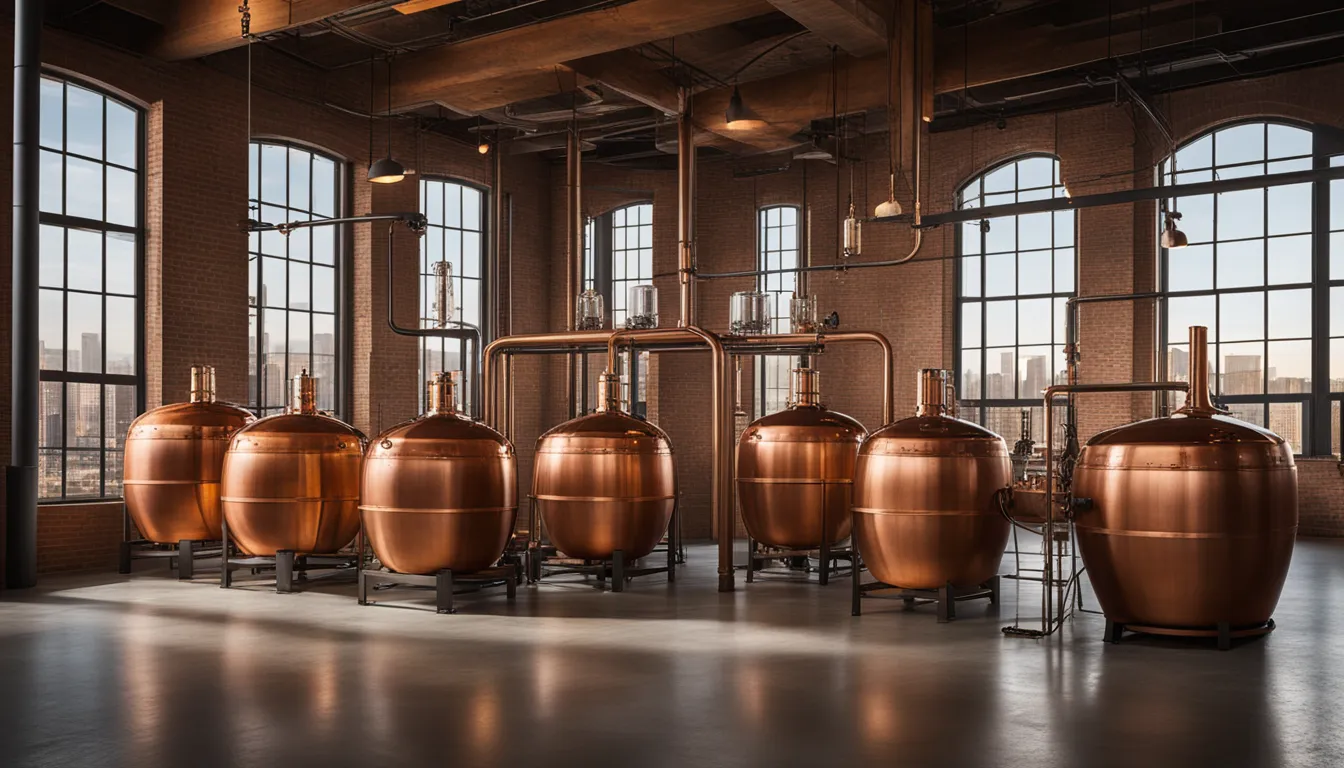
The copper still gleams against exposed brick, and through the Navy Yard warehouse windows, the East River catches afternoon light. We're standing in Kings County Distillery, where the air smells of corn mash and charred oak, and where the Manhattan skyline provides a backdrop that would have been unthinkable for a whiskey distillery twenty years ago. Colin Spoelman, co-founder, is explaining how they source New York corn and age bourbon in 5-gallon barrels when it hits us: American whiskey has broken free from its geographic constraints. The bourbon trail no longer begins and ends in Kentucky.
This is the new American whiskey map—a constellation of craft distilleries, single malt pioneers, and grain-to-glass innovators stretching from Brooklyn warehouses to Rocky Mountain foothills. While Kentucky and Tennessee remain the spiritual (and legal) home of bourbon and Tennessee whiskey, a parallel whiskey culture has emerged across the country, one that's writing its own rules, experimenting with heritage grains, and proving that terroir matters as much for whiskey as it does for wine.
We've spent the past eighteen months visiting these emerging whiskey regions, tasting through their portfolios, and mapping routes for travelers who've already conquered the Ultimate Bourbon Trail Guide and are ready for the next chapter. What we found surprised us: these aren't Kentucky imitators. They're regional distillers building distinct flavor profiles from local ingredients, often with techniques that would make bourbon purists raise their eyebrows—and reach for another glass.
Beyond Kentucky and Tennessee
The American whiskey renaissance started quietly. While craft beer exploded in the 1990s, whiskey remained the domain of established brands with decades-old recipes and warehouses full of aging stock. Then, around 2010, something shifted. Former homebrewers, wine enthusiasts, and entrepreneurial spirits (pun intended) began opening small distilleries in unexpected places.
The numbers tell the story: In 2005, there were fewer than 50 craft distilleries in the United States. By 2025, that number exceeded 2,500, with whiskey operations accounting for more than 60% of craft spirits production. These aren't vanity projects—many have won double gold medals at the San Francisco World Spirits Competition, secured shelf space at serious whiskey bars, and built loyal followings among drinkers who appreciate regional character.
What makes these emerging trails different from Kentucky's bourbon belt? First, they're not bound by bourbon's strict legal requirements. While some producers make legitimate bourbon (and make it well), others are exploring single malts, rye-forward mashbills, alternative grains like triticale and spelt, and aging techniques adapted to different climates. Second, they're smaller and more experimental. Where a Kentucky distillery might produce 100 barrels a day, many craft operations fill 10—which allows for creativity impossible at industrial scale. Third, they're deeply local, sourcing grains from farms within 100 miles, using regional water sources, and creating flavor profiles that reflect their geography.
Indiana: MGP Country and the Craft Uprising
Indiana whiskey carries a complicated reputation. MGP Ingredients in Lawrenceburg has been the industry's worst-kept secret for years—the contract distiller behind hundreds of "craft" bourbon brands that wouldn't exist without their sourced juice. But there's more to Indiana whiskey than contract distilling, and the state's emerging trail proves it.
Starlight Distillery in Borden (about 20 minutes north of Louisville) occupies a 450-acre family farm that's been growing corn, wheat, and rye since the 1820s. Ted Huber, sixth-generation farmer, started distilling in 2001 and launched Starlight bourbon in 2014. The real story here is the grain: everything is estate-grown, milled on-site, and fermented with proprietary yeast strains. Their Huber's Bourbon uses a high-rye mashbill (60% corn, 22% rye, 18% malted barley) that produces spicy, fruit-forward whiskey with notes of cherry cola and baking spice. The distillery tour includes the farm, the 100-year-old orchard, and a tasting room overlooking rolling hills that feel more Tuscany than Midwest.
West Fork Whiskey in Indianapolis represents the new urban distillery model. Located in a converted industrial building in the Fletcher Place neighborhood, West Fork focuses on straight bourbon and rye made from Indiana grains. Their Leopold Bros-designed hybrid pot-column still allows them to dial in exact congener profiles—technical whiskey geekery that translates to exceptionally clean, grain-forward spirits. The Four Grain Straight Bourbon (corn, rye, wheat, malted barley) won double gold at the 2023 San Francisco competition, and it deserves it: balanced, approachable, with enough complexity to sip neat but enough structure to stand up in an Old Fashioned.
Hotel Tango Distillery, also in Indianapolis (Mass Ave Cultural District), takes its name from the NATO phonetic alphabet—founders Travis and Hilary Barnes are Marine Corps veterans who started distilling in 2014. Their straight bourbon uses a wheater mashbill similar to Maker's Mark, producing softer, sweeter whiskey with vanilla and caramel notes. But the real draw is the cocktail program: bartenders here make some of the best brown-spirit cocktails in the Midwest, and the distillery restaurant serves elevated pub food that pairs surprisingly well with high-proof bourbon.
The Indiana trail works as a long weekend: fly into Indianapolis, spend a day hitting urban distilleries, drive south to Starlight for countryside views and farm-to-bottle storytelling, then continue to Louisville to connect with the Kentucky trail if you're feeling ambitious.
New York: Brooklyn to Finger Lakes
New York's whiskey scene spans 300 miles and several distinct subregions, each with its own character. The Brooklyn distillery cluster launched the city's craft spirits movement, while the Finger Lakes represents a return to New York's agricultural whiskey roots (the state was America's leading whiskey producer before Prohibition).
Kings County Distillery, where we started this story, remains New York's flagship whiskey operation. Since 2010, they've been making bourbon and other whiskeys in the Brooklyn Navy Yard, using New York corn, malted barley, and—unusually—aging in small 5-gallon barrels that accelerate maturation. The small barrel technique is controversial among whiskey purists (more wood contact means faster extraction of oak compounds, but also means the whiskey can turn over-oaked quickly), but Kings County has refined their process to produce bourbon with legitimate depth. Their Bottled-in-Bond bourbon, at 100 proof and aged at least four years in standard 53-gallon barrels, proves they can play by traditional rules too. The Navy Yard location offers industrial-chic aesthetics and easy subway access—you can visit here, then hit Brooklyn breweries and be back in Manhattan for dinner.
Tuthilltown Spirits (now owned by William Grant & Sons) in Gardiner, about 90 minutes north, pioneered the farm distillery movement in New York. Their Hudson Whiskey line includes Hudson Baby Bourbon (100% New York corn, aged in small barrels) and Hudson Manhattan Rye, both of which demonstrated that craft whiskey could compete nationally. The distillery itself occupies a converted granary mill from 1788, with water-powered grinding stones still visible. Tours include the grain room, fermentation area, and barrel warehouses, plus tastings of limited releases that never leave the distillery.
Coppersea Distilling in New Paltz takes heritage grains seriously. Founder Christopher Williams uses floor-malted barley (a labor-intensive process abandoned by most distilleries in the 1960s), heritage corn varieties, and direct-fire heated stills that produce whiskey with earthy, rustic character. Their Excelsior Bourbon uses heritage Empire corn and Wapsie Valley corn from Iowa, floor-malted barley, and no chill filtration, resulting in whiskey that tastes distinctly different from anything coming out of Kentucky—more grain-forward, less oak-dominant, with notes of toasted nuts and dried grass. This isn't whiskey for bourbon traditionalists, but if you appreciate natural wine or farmhouse ales, Coppersea will make sense.
Finger Lakes Distilling in Burdett represents the wine-country crossover. Located on Seneca Lake in the heart of New York wine country, they started as a brandy producer before expanding into whiskey. Their Vintners Select 14-Year Wheat Whiskey won Best American Whiskey at the 2022 New York International Spirits Competition—a rare achievement for a craft distillery. The facility includes a restaurant with lake views, barrel-aging cellars dug into hillsides (for temperature stability), and a cocktail bar that showcases how their whiskeys work in classic and contemporary drinks.
The New York trail requires planning. Brooklyn distilleries cluster together (add Brooklyn Gin, St. Agrestis, and Industry City Distillery to your itinerary), while Hudson Valley and Finger Lakes operations spread across hours of driving through gorgeous countryside. Treat it like Napa: focus on 2-3 distilleries per day, book accommodations near Seneca Lake if you're doing Finger Lakes, and leave time for spontaneous stops at farm stands and wineries.
Pacific Northwest: Seattle's Single Malt Revolution
The Pacific Northwest has become America's answer to Scotland, and not just because of the rain. Seattle and Portland have emerged as single malt whiskey centers, with distilleries producing American interpretations of Scottish styles—plus innovative grain-forward whiskeys that defy easy categorization.
Westland Distillery in Seattle's SoDo neighborhood is the standard-bearer. Founded in 2010, Westland makes American single malt whiskey using Washington-grown barley, proprietary yeast strains, and a combination of new American oak, new French oak, and ex-sherry casks for maturation. The result is whiskey with Pacific Northwest character: notes of chocolate, espresso, dark fruit, and a subtle peat influence from their Garryana series (which uses Oregon white oak, Quercus garryana, for additional aging). Westland's visitor center is exceptional—sleek, modern, with a tasting bar that offers flights exploring different barley varieties, cask types, and maturation lengths. They take education seriously here, and tours dive deep into malting techniques, fermentation science, and the impact of cask selection.
Copperworks Distilling, also in Seattle (Kenmore location on Lake Washington), started as a vodka and gin producer before launching their American Single Malt program in 2013. Their Release 050 series has garnered serious attention from whiskey critics, with releases scoring 90+ points from Whisky Advocate. Copperworks uses Washington Select pale malt and a unique double-pot still system that produces exceptionally clean, malt-forward spirits. The tasting room overlooks the production floor, and visitors can watch the entire process from milling to bottling. Try their cask-strength single malts—bold, fruit-forward, with enough intensity to satisfy scotch enthusiasts.
Cross the border to Portland, and the scene shifts slightly. Westward Whiskey (formerly House Spirits) pioneered the American single malt category with their flagship Westward American Single Malt, which uses Pacific Northwest two-row barley, ale yeast (unusual for whiskey), and new American oak barrels. The ale yeast creates fruity esters during fermentation—banana, pear, stone fruit—that carry through to the finished whiskey. Westward has expanded rapidly (they were acquired by Diageo in 2022), but their Portland distillery and tasting room retain craft credibility. The stave-finish series explores different cask types (pinot noir, stout beer, maple syrup barrels), showcasing how American single malt responds to alternative aging.
Bull Run Distilling in Portland's industrial southeast makes both American single malt and bourbon. Their straight bourbon uses Oregon-grown corn and wheat, producing softer, grain-forward whiskey with notes of honey and toasted grain. The single malt, aged in a combination of new American oak and ex-bourbon barrels, leans toward scotch-style profiles—lighter, more floral, less overtly oaky than their bourbon. Bull Run also operates a cocktail bar (Side Yard Bar) that's worth visiting separately for cocktails made with their house spirits.
Freeland Spirits, founded by Jill Kuehler (formerly of Batch 206 in Seattle), focuses on bourbon made from heirloom grains. Their Portland facility includes a distillery, barrel warehouse, and tasting room designed with sustainability in mind—solar panels, reclaimed materials, water recycling systems. The bourbon uses Glenn wheat (a heritage variety) alongside corn and malted barley, creating whiskey with bready, almost pastry-like notes underneath the caramel and vanilla.
The Pacific Northwest trail benefits from food culture. Seattle and Portland both offer world-class restaurants, coffee roasters, and breweries, making this a trip for all-around beverage enthusiasts. Pair distillery visits with Pike Place Market, Powell's Books, and the hundreds of restaurants defining Pacific Northwest cuisine.
Distillery Directory(15 of 15)
Black Button Distilling
Finger Lakes
Rochester's award-winning craft distillery. Known for their bourbon, citrus-forward gins, and innovative barrel-finishing. The tasting room has one of the best cocktail menus in upstate New York.
Bull Run Distilling Co.
Portland
Portland's first legal distillery since Prohibition. Known for their straight bourbon, cask strength releases, and Pacific Rye. The tasting room features a stunning copper still and Oregon timber.
Coppersea Distilling
Hudson Valley
An uncompromising grain-to-glass operation in New Paltz. Coppersea floor-malts their own grain and uses 100% Hudson Valley ingredients. Their Green Malt Whisky and Excelsior Bourbon are unlike anything else in American whiskey.
Copperworks Distilling Co.
Seattle
A Seattle waterfront distillery making American single malt, bourbon-style whiskey, gin, and vodka. Founded by two former Microsoft engineers. Their Release Series showcases experimental cask finishes.
Finger Lakes Distilling
Finger Lakes
New York's first farm distillery since Prohibition. Set on a scenic estate overlooking Seneca Lake. Their McKenzie Bourbon and rye are made from locally grown New York grains.
Freeland Spirits
Portland
A woman-owned distillery in Portland's Central Eastside. Known for their gin, but their bourbon and rye programs are gaining serious attention. Founder Jill Kuehler is one of the few women master distillers in the U.S.
Hotel Tango Artisan Distillery
Indiana
A veteran-owned distillery in downtown Indianapolis' Fletcher Place. Makes bourbon, whiskey, gin, vodka, and rum. The urban location and approachable vibe make it a great entry point for whiskey beginners.
Kings County Distillery
Brooklyn/NYC
New York City's oldest operating whiskey distillery since Prohibition. Set in the historic Paymaster Building in Brooklyn Navy Yard. Their moonshine, bourbon, and peated bourbon are cult classics.
Laws Whiskey House
Denver
An uncompromising grain-to-glass operation focused on Colorado-grown heirloom grains. Laws makes bourbon, rye, and single malt using open-air fermentation and direct-fire stills. Their Four Grain Bourbon is one of the best American whiskeys you've never heard of.
Starlight Distillery
Indiana
A fourth-generation family operation in the heart of MGP country. Starlight has quietly become one of the Midwest's most awarded craft distilleries, with a stunning hilltop campus and top-tier bourbon, rye, and brandy.
Stranahan's Colorado Whiskey
Denver
Colorado's original single malt whiskey. Founded in 2004, Stranahan's pioneered the American single malt movement. Their flagship is a 100% malted barley whiskey aged in new American oak — a style all their own.
Tuthilltown Spirits / Hudson Whiskey
Hudson Valley
The distillery that put New York whiskey on the map. Hudson Baby Bourbon was the first whiskey distilled in New York since Prohibition. Set on a gorgeous Hudson Valley campus in Gardiner.
West Fork Whiskey Co.
Indiana
A modern, grain-to-glass operation in downtown Indianapolis. Focuses on single-barrel bourbon, rye, and single malt. Their tasting room and cocktail lounge is one of Indy's hidden gems.
Westland Distillery
Seattle
The standard-bearer for American single malt whiskey. Westland uses Washington-grown barley, Belgian brewer's yeast, and ex-wine/beer casks to create a whiskey style that's unmistakably Pacific Northwest. Their Garryana series is legendary.
Westward Whiskey
Portland
Portland's most ambitious American single malt program. Westward uses Pacific Northwest barley, brewer's yeast, and new American oak to create a style that bridges Scotch and bourbon. Their Stout Cask and Pinot Noir Cask finishes are standouts.
Colorado: High-Altitude Whiskey
Colorado's whiskey scene started with one distillery and has expanded into a legitimate regional movement. The altitude matters here—Denver sits at 5,280 feet, and some distilleries operate even higher. At elevation, water boils at lower temperatures (203°F in Denver vs. 212°F at sea level), which affects distillation. Lower atmospheric pressure also means faster evaporation from barrels, leading to higher angel's share (8-10% per year vs. 2-4% in Kentucky) and potentially faster maturation as more whiskey interacts with oak.
Stranahan's Colorado Whiskey launched in 2004 as one of America's first single malt distilleries outside traditional whiskey regions. The story is Denver legend: Jess Graber (Flying Dog Brewing) and George Stranahan (philanthropist, troublemaker) started distilling in a barn near the mountains, using Rocky Mountain water and American oak barrels. Stranahan's doesn't call their whiskey "bourbon" or "scotch"—it's simply Colorado Whiskey, a 100% malted barley spirit aged in new American oak. The flagship Original Release is bottled at cask strength (varies by batch, usually 94-100 proof) and tastes like the middle ground between bourbon and scotch: caramel and vanilla from the new oak, malty sweetness from the barley, with notes of butterscotch and toasted nuts. The distillery, located in the Ballpark neighborhood, offers tours and tastings, plus a members-only bottle shop with limited releases.
Laws Whiskey House, founded by Al Laws in 2011, takes Colorado grain seriously. They source heritage grains from Colorado family farms—heirloom corn, San Luis Valley rye, malted barley—and mill, mash, ferment, distill, and age everything on-site. Their Four Grain Straight Bourbon (60% corn, 20% heirloom wheat, 10% rye, 10% malted barley) won Best American Whiskey at the 2020 World Whiskies Awards, beating established Kentucky brands. Laws also makes bonded rye, bonded wheat whiskey, and experimental releases showcasing single farms or heritage varieties. The tasting room in south Denver offers flights organized by grain type, letting you taste how heirloom corn differs from commodity corn or how San Luis Valley rye compares to traditional rye.
Colorado's whiskey trail is compact—most distilleries are within Denver city limits or nearby suburbs. Combine with craft breweries (Denver has 150+), mountain hiking, and Red Rocks Amphitheatre for a long weekend that mixes whiskey with Colorado's outdoor culture.
The Distilleries
One pattern emerges across all these regions: the distilleries themselves are worth visiting beyond the whiskey. These aren't corporate tasting rooms with scripted tours. They're working production facilities where you'll see milling, mashing, fermentation, distillation, and bottling happening in real time. The people giving tours are often distillers, not hospitality staff—they can answer technical questions about enzyme activity during mashing, the impact of barrel char levels, or why they chose a specific cut point during distillation.
Visiting smaller distilleries also means access to releases that never reach broader distribution. Many of these producers bottle fewer than 10,000 cases per year, with significant portions sold directly through their tasting rooms. Limited releases, single barrel selections, and experimental batches often sell out within days of release. If you're serious about collecting American whiskey beyond mainstream brands, these distillery visits are essential.
Booking varies by location. Urban distilleries (Brooklyn, Seattle, Portland, Denver) usually accept walk-ins for tastings, though weekend tours may require reservations. Rural operations (Starlight, Tuthilltown, Finger Lakes) typically require advance booking, especially during peak season. Most charge $15-35 for tours with tastings, though some waive the fee with bottle purchase.
The American Single Malt Movement
The rise of American single malt whiskey connects many of these regional stories. For decades, "single malt" meant Scottish single malt—whisky made at one distillery, from 100% malted barley, in pot stills, aged in oak barrels. But American distillers have adopted the category while adding their own innovations: new American oak (instead of used bourbon barrels), different barley varieties, ale yeast (instead of distiller's yeast), and aging in climates far from Scotland's cool, damp warehouses.
The American Single Malt Whiskey Commission, founded in 2016, has been working toward establishing legal standards for the category—similar to how bourbon, rye, and Tennessee whiskey have strict definitions. As of early 2025, the TTB (Alcohol and Tobacco Tax and Trade Bureau) is considering a formal definition: whiskey distilled from 100% malted barley, distilled at one U.S. distillery, aged in oak barrels, and bottled at no less than 80 proof.
Why does this matter for travelers? Because right now, we're witnessing the formation of an American whiskey category in real time. The distilleries producing American single malt are experimenting with techniques, flavor profiles, and regional identities that will define the category for decades. Visiting now means tasting through these innovations while they're still evolving, talking with the distillers making decisions that will become industry standards, and drinking whiskey that might be impossible to find in five years when production scales up or styles solidify.
The Pacific Northwest—particularly Seattle and Portland—has become the center of this movement. Westland, Copperworks, Westward, and others are producing American single malts that compete internationally, win awards, and increasingly appear on serious whiskey bar shelves alongside Scottish bottlings. If you visit only one region from this guide, and you're interested in where American whiskey is headed next, start there.
When to Visit Which Region
Timing your whiskey trail matters more than you'd think. Unlike breweries (which produce year-round) or wineries (which focus on harvest season), distilleries operate continuously, but regional tourism patterns, weather, and local events create better and worse windows for visiting.
Brooklyn and New York City: Spring (April-May) and fall (September-October) offer ideal weather for walking between distilleries and exploring the city. Summer brings crowds and humidity, winter brings cold but also lower hotel prices. Avoid major holidays when locals flee the city—you'll have easier access to popular spots.
Hudson Valley and Finger Lakes: Peak season is September-October (fall foliage, wine harvest), which means gorgeous scenery but crowded tasting rooms and higher accommodation prices. Late spring (May-early June) offers similar weather without crowds. Winter is off-season—some distilleries reduce hours, but you'll have personalized attention and snow-covered landscapes that look straight out of a Currier & Ives print.
Pacific Northwest: Seattle and Portland have mild, wet winters and dry summers. June-September is peak tourist season—book ahead for distillery tours and expect higher prices. Late spring (April-May) and early fall (September-October) offer the best balance: reasonable weather, fewer crowds, and lower prices. Don't avoid winter entirely—yes, it rains, but distilleries are indoors, and the region's coffee culture thrives when it's gray outside.
Colorado: Denver weather can shift dramatically. Summer (June-August) brings afternoon thunderstorms and peak tourist season (hikers, mountain visitors). Fall (September-October) offers stable weather and spectacular aspen colors in nearby mountains. Winter is ski season—distillery traffic is lighter, but the city is still busy with mountain visitors. Spring (April-May) is unpredictable—snowstorms through April are common—but you'll find good deals.
Indiana: Similar to Kentucky weather—hot, humid summers and cold winters. Spring (April-May) and fall (September-October) are ideal. If you're combining with the Kentucky bourbon trail, coordinate timing—the Kentucky Bourbon Festival (September in Bardstown) draws crowds and raises prices throughout the region.
Toggle your priorities to see personalized recommendations.
September
June
October
Regional Food and Drink Highlights
Whiskey trails shouldn't exist in isolation. Each of these regions offers food and drink culture worth exploring between distillery visits.
Brooklyn: The Navy Yard area has exploded with food options. Russ & Daughters for bagels and smoked fish, Roberta's for pizza, Sunday in Brooklyn for brunch. Don't miss Brooklyn breweries—Other Half, Threes, Grimm—and cocktail bars like Long Island Bar (classic cocktails in a restored 1950s bar) or Milk & Roses (natural wine and small plates).
Hudson Valley: Farm-to-table dining defines the region. The Roundhouse in Beacon (right by Dia:Beacon museum), Terrapin in Rhinebeck, and Gaskins in Germantown source from local farms and serve seasonal menus that pair beautifully with Hudson Valley whiskeys. Stop at orchards in fall for apples and cider, and hit Hudson Valley Brewery (one of America's best hazy IPA producers) in Beacon.
Finger Lakes: Wine country dining skews upscale. FLX Table in Geneva (20-seat prix fixe), Stonecat Café in Hector (overlooking Seneca Lake), and Dano's Heuriger in Lodi (Austrian-inspired, on Lamoreaux Landing Wine Cellars). The region's Rieslings—dry, off-dry, and dessert styles—are world-class and surprisingly food-friendly with whiskey-friendly fare like pork chops, smoked trout, and aged cheeses.
Seattle: Pike Place Market for oysters and fresh seafood, Canlis for splurge dining with views, Altura for Italian-inspired tasting menus. Seattle's coffee culture rivals any city globally—visit Slate Coffee, Elm Coffee, and Espresso Vivace. Cocktail bars like Canon (2,500+ bottles, extensive whiskey list) and Navy Strength (tropical cocktails, rum focus) show how serious the city takes spirits.
Portland: The city's food carts are legendary (Nong's Khao Man Gai, La Jarochita, Matt's BBQ). Sit-down highlights include Le Pigeon (French-inspired, inventive), Langbaan (Thai tasting menu), and Canard (whole-animal cooking from Le Pigeon team). Portland's coffee scene rivals Seattle's—Heart, Coava, and Sterling are all top-tier. For cocktails, Clyde Common, Pepe Le Moko, and Expatriate represent different approaches to craft bartending.
Denver: The city has evolved beyond steakhouses. Mercantile Dining & Provision (European-inspired market), The Wolf's Tailor (ingredient-driven tasting menu), and Hop Alley (Chinese-American with excellent cocktails) represent Denver's modern food scene. Green chile appears on everything—embrace it. For beer, Ratio Beerworks, TRVE Brewing, and Cerebral Brewing push styles in different directions.
Indianapolis: Bluebeard (seasonal American in renovated warehouse), Milktooth (brunch destination with creative savory dishes), and St. Joseph Brewery & Public House (craft beer and upscale pub food). The Mass Ave Cultural District clusters restaurants, bars, and distilleries within walking distance—base yourself there for easy access.
Building Your Own Trail
The beauty of these emerging whiskey trails is flexibility. Unlike Kentucky's bourbon trail—where the density of major distilleries creates obvious routes—these regions let you build personalized itineraries based on interests and time.
The Long Weekend: Pick one region, focus deeply. Three days in Seattle lets you hit Westland, Copperworks, and several smaller producers, plus breweries, coffee roasters, Pike Place Market, and serious dining. Three days in Denver covers Stranahan's, Laws, and smaller operations, with time for hiking, Red Rocks, and the city's food scene. Brooklyn alone could fill a long weekend if you include breweries, cocktail bars, restaurants, and cultural attractions.
The Week-Long Deep Dive: Combine adjacent regions. Fly into New York City, spend two days in Brooklyn distilleries, drive north to Hudson Valley for two days, continue to Finger Lakes for three days, fly out of Rochester or Syracuse. Or: Fly into Seattle, spend three days exploring Seattle and nearby distilleries, drive to Portland (3 hours), spend three days there, fly home from Portland.
The Grand Tour: For the ambitious, connect multiple regions. Start in Denver (two days), fly to Seattle (three days), drive or fly to Portland (two-three days), fly home. Or: Start in Brooklyn (two days), train to Boston (add Bully Boy Distillers, GrandTen Distilling), fly to Indianapolis (two days), drive to Louisville to connect with Kentucky trail, fly home. Build in travel days, rest days, and spontaneous discoveries—the best whiskey trips include room for serendipity.
The Thematic Approach: Build your trail around whiskey styles. For American single malt obsessives: Seattle (Westland, Copperworks), Portland (Westward), Denver (Stranahan's), plus side trips to smaller single malt producers in each city. For grain-to-glass purists: Starlight (farm distillery), Coppersea (heritage grains and floor malting), Laws (Colorado grains and heirloom varieties). For urban distillery culture: Brooklyn, Seattle, Portland, and Denver all offer clusters of distilleries within walking or short transit distance.
The Future of American Whiskey
Visiting these emerging whiskey trails isn't just about drinking good whiskey—though there's plenty of that. It's about witnessing an industry in transformation.
Bourbon's legal definition and Kentucky's dominance have created a remarkably stable, traditionalist approach to American whiskey for decades. But these regional distilleries are asking different questions: What if we use heritage grains instead of commodity corn? What if we adopt Scottish single malt techniques but age in new American oak? What if we embrace local ingredients and terroir instead of trying to replicate Kentucky bourbon?
The answers are creating new flavor profiles, new whiskey categories, and new regional identities. Pacific Northwest single malts taste different from Scottish single malts—fruitier, oakier, bolder. Colorado whiskey, aged at altitude, develops faster and loses more to evaporation, creating concentrated flavors. New York whiskey made from New York grains tastes subtly different from Indiana whiskey made from Indiana grains, even when using similar mashbills.
This matters because it expands the definition of American whiskey beyond bourbon and rye. It creates space for experimentation, for regional pride, for distillers who want to make whiskey that reflects their place rather than imitating Kentucky's legacy. And it gives drinkers more options—if you love scotch but want to support American producers, Seattle's single malts offer an entry point. If you appreciate natural wine's focus on terroir and minimal intervention, Coppersea's heritage grain whiskeys share similar philosophy.
The emerging trails also democratize whiskey tourism. Kentucky's bourbon trail is incredible, but it's also well-worn—you'll visit the same distilleries, take similar tours, and encounter crowds at major stops during peak season. These newer regions offer accessibility: smaller crowds, easier reservations, more time with actual distillers, and the thrill of discovering something before it becomes mainstream.
Over the next decade, some of these distilleries will scale up, get acquired by spirits conglomerates, and lose their scrappy charm. Others will remain small, regional, and cult favorites. A few won't survive—whiskey requires years of aging before generating revenue, and many craft operations run on thin margins. But collectively, they're reshaping American whiskey's geographic and stylistic landscape.
So if you've conquered the Ultimate Bourbon Trail Guide, if you've toured Buffalo Trace and tasted Pappy at retail prices (lucky you), if you know Kentucky bourbon inside and out—these emerging trails are your next chapter. Pack lighter expectations, bring curiosity, and prepare to taste whiskey that doesn't fit existing categories. The American whiskey map has expanded far beyond the Kentucky-Tennessee corridor, and the best discoveries still lie ahead.
Plan another trip — more trail guides
The Boozemakers Annual · Coming Soon
The bottles to bring back home
The year’s Best 100 bottles — the bottle picks behind every distillery in this guide, scored and price-stamped. Use code HALFOFF for $14.50.
Join the launch waitlistOur Spirits Partner
Stock up before the trip
Cask Cartel ships allocated and hard-to-find bottles nationwide. Worth a look before you fly out — line up the pours you want to taste so you know what’s worth hunting for on the trail (and hauling home in the carry-on).
Shop bottles at Cask Cartel