The copper pot still gleams in the afternoon sun, just steps from the Potomac River. We're standing in George Washington's reconstructed distillery at Mount Vernon, watching a costumed interpreter stoke the fire beneath a 120-gallon copper boiler—the same model Washington used to produce 11,000 gallons of rye whiskey in 1799. The air smells of fermenting grain and wood smoke. This isn't a museum exhibit playing at authenticity. This is where American whiskey was born, forty years before Kentucky even thought to register a barrel.
Virginia wrote America's distilling story first. Long before bourbon country claimed the narrative, Virginia farmers were converting excess grain into liquid currency, building the foundation for an industry that would define American spirits. Today, the Virginia Spirits Trail winds through 300 years of that history, connecting colonial-era distilleries with cutting-edge craft producers across five distinct regions. It's a trail that spans from tidewater plantations to Blue Ridge mountain valleys, from Washington's original copper stills to single malt operations rivaling Scotland.
We've driven the entire route three times now, visiting 38 distilleries across the commonwealth. The Virginia trail doesn't have Kentucky's volume or Tennessee's tourism infrastructure, but that's precisely its appeal. This is whiskey's origin story, told without the crowds.
America's Whiskey Origin Story
The history textbooks got it wrong. American whiskey didn't start in Kentucky—it started here, in Virginia, with the country's founding fathers. George Washington wasn't just the Father of His Country; he was one of America's largest whiskey producers. By 1799, his Mount Vernon distillery was pumping out 11,000 gallons annually, making it one of the largest commercial operations in America.
Washington hired a Scottish farm manager named James Anderson who understood the economics: five bushels of rye worth $1 each could be distilled into two and a half gallons of whiskey worth $1 per gallon. The math was simple. The whiskey was good. Washington's rye sold for 50 cents a gallon at the distillery gate, $1 per gallon in Alexandria—premium pricing for the era.
But Washington's operation wasn't an outlier. Virginia had 2,579 registered distilleries by 1810, more than any other state. The Shenandoah Valley became known as "Little Ireland" for its Scotch-Irish settlers who brought Old World distilling knowledge to New World grain. They were making whiskey decades before Elijah Craig supposedly discovered bourbon in Kentucky (he didn't, but that's another story).
Prohibition gutted Virginia's distilling heritage. By 1934, only memories remained. The revival started slowly in the 2000s with Virginia's craft distillery law, but it accelerated dramatically in 2015 when Virginia Distillery Company opened in Nelson County. They weren't making corn whiskey or bourbon imitations—they were making single malt, and they were making it seriously enough to blend with Scottish distillate and bottle it for international markets.
Today's Virginia Spirits Trail represents both resurrection and reinvention. You'll find historical recreations like Washington's distillery operating with 18th-century methods. You'll find fourth-generation family operations that survived Prohibition by hiding stills in mountain hollows. And you'll find new-guard producers making spirits that win double-gold medals at San Francisco and challenge every assumption about American whiskey.
The Regions
Virginia divides into five distinct distilling regions, each with its own character, history, and production style. Unlike Kentucky's bourbon trail, which clusters around a single product in a concentrated geography, Virginia's trail sprawls across 430 miles of varied terrain. You're not completing this in a weekend.
Northern Virginia
The densest concentration of distilleries sits within an hour of Washington, D.C. This region anchors on George Washington's Mount Vernon distillery but includes 12 modern craft operations. Catoctin Creek in Purcellville became Virginia's first legal distillery since Prohibition when it opened in 2009. They're making organic rye whiskey using direct-fire copper pot stills—old-school methods producing new-school flavor profiles.
A-Smith Bowman in Fredericksburg brings serious pedigree. They've been distilling since 1935 (one of the few Virginia operations to survive Prohibition's aftermath), and their Abraham Bowman limited releases have become collector's items. They're owned by Sazerac now, which brings Kentucky money and distribution but maintains Virginia identity.
The Northern Virginia region benefits from proximity to D.C.'s cocktail culture. These distilleries think about mixology and restaurant programs. You'll find more gin and vodka here than anywhere else on the trail, plus experimental spirits like Catoctin Creek's Rabble Rouser bottled-in-bond rye.
Charlottesville and the Blue Ridge
This is Virginia's whiskey heartland. The region around Charlottesville combines University of Virginia sophistication with Blue Ridge mountain culture, creating a distilling scene that's both ambitious and rooted. Virginia Distillery Company sits 20 minutes south of town in Lovingston, occupying a 113-acre campus with views that rival anything in Scotland's Speyside region.
Ragged Branch in Charlarlottesville makes wheated bourbon using estate-grown grain—they farm 285 acres and control the entire process from field to bottle. Silverback Distillery in Nelson County focuses on single malt aged in Virginia's humid climate, which accelerates maturation compared to Kentucky's temperature swings.
The Charlottesville region benefits from wine country infrastructure. You can visit distilleries and wineries in the same afternoon, stay at farm-to-table B&Bs, and eat at restaurants that wouldn't be out of place in Napa. This is the most tourism-ready part of the trail.
Shenandoah Valley
Drive west from Charlottesville into the Shenandoah Valley and you're following the route Virginia's Scotch-Irish settlers took in the 1700s. They called this region "Little Ireland" and they brought Celtic distilling traditions that predated Kentucky bourbon by generations. Today's Shenandoah distilleries lean into that heritage.
Copper Fox in Sperryville makes American single malt using apple wood and cherry wood smoke instead of peat. It's a distinctly Virginia approach—using local wood to create regional character. They're also aging spirits in barrels with toasted wood chips inside, a technique that accelerates flavor development and creates complexity that would take years in traditional cooperage.
Belle Isle in Richmond started as a moonshine operation (legal moonshine, to be clear) but has expanded into craft whiskey and ready-to-drink cocktails. Their Cold Brew Coffee Moonshine shouldn't work on paper but somehow does in practice.
Richmond
Virginia's capital brings urban energy to distilling. Richmond's scene is younger and more experimental than the traditional operations in rural areas. Reservoir Distillery occupies a 100-year-old bread factory in the Scott's Addition neighborhood, surrounding itself with breweries, cideries, and cocktail bars. They're making bourbon and rye using 100% Virginia grain and bottling at high proof points that respect the whiskey.
Virago Spirits focuses on gin but also produces a bourbon finished in wine casks—a nod to Virginia's dual identity as wine and whiskey country. The Richmond distilleries benefit from the city's restaurant culture. You'll find their spirits on cocktail menus across town, often in drinks designed specifically for Virginia distillate.
Tidewater
The coastal region around Virginia Beach and Norfolk represents the newest frontier. Chesapeake Bay Distillery in Virginia Beach opened in 2012 and quickly became the area's flagship operation. They're making vodka, gin, rum, and whiskey, plus a straight rye that's aged in the humid coastal climate—think Caribbean rum maturation applied to American whiskey.
The tidewater region is still developing its distilling identity, but the coastal location creates unique aging conditions. Humidity stays high year-round, temperature swings are moderate, and the maritime influence affects barrel breathing. These are different conditions than Kentucky or Scotland, producing different results.
The Distilleries
Thirty-eight distilleries currently operate across Virginia's Spirits Trail, ranging from reconstructed historical operations to cutting-edge modern facilities. The trail doesn't rank or endorse—it simply connects producers who open their doors to visitors. But after three complete circuits, we have opinions.
The must-visit distilleries fall into three tiers. The historical anchors—Mount Vernon and A-Smith Bowman—provide essential context for understanding Virginia's distilling heritage. The quality leaders—Virginia Distillery Company, Catoctin Creek, Copper Fox, and Ragged Branch—produce spirits that justify the trip regardless of your interest in history. And the regional discoveries—Silverback, Reservoir, and Belle Isle—reward curious visitors willing to venture off the main route.
Most Virginia distilleries offer tours by appointment. Unlike Kentucky's drop-in bourbon trail, you'll need to plan ahead. Tours run $15-25 per person and typically last 45-60 minutes, covering production process, barrel aging, and tasting. Many distilleries offer additional experiences: blending classes at Virginia Distillery Company ($75), barrel picking at A-Smith Bowman (by arrangement for groups), and food pairings at Ragged Branch (seasonal).
The distillery experience varies dramatically by scale. Mount Vernon runs historical interpretation with costumed guides explaining 18th-century techniques. Virginia Distillery Company operates a modern visitor center with a restaurant, tasting room, and retail shop that rivals Scottish distillery experiences. Small craft operations like Silverback and Virago feel like visiting someone's ambitious garage project—which is essentially what they are, just scaled up and licensed.
Distillery Directory(13 of 13)
A. Smith Bowman Distillery
Fredericksburg
Virginia's oldest distillery, established 1934. Now owned by Sazerac. Their Abraham Bowman limited releases and John J. Bowman Single Barrel are legendary.
Belle Isle Craft Spirits
Richmond
Richmond's moonshine specialist. Makes award-winning flavored moonshines and craft vodkas. Named after the James River island.
Blue Ridge Distilling Co.
Waynesboro
Small Shenandoah Valley distillery making moonshine, whiskey, and flavored spirits. Known for traditional Appalachian recipes and mountain heritage.
Catoctin Creek Distilling Company
Purcellville
Northern Virginia's first legal distillery since Prohibition. Specializes in organic rye whiskey and brandy. Roundstone Rye is their flagship — 100% rye and bottled-in-bond.
Filibuster Distillery
Maurertown
Shenandoah Valley distillery using patented Dual Barrel finishing technique. Makes bourbon, rye, and gin. Known for innovative barrel-aging methods.
George Washington's Distillery at Mount Vernon
Mount Vernon
Where America's whiskey story began. Washington's distillery was one of the largest in the nation by 1799, producing 11,000 gallons annually. Faithfully reconstructed and operational.
Ironclad Distillery
Newport News
Tidewater distillery making bourbon, rum, and vodka. Named after the Civil War ironclad ships. Known for Virginia Sweet Tea Vodka and barrel-aged rum.
KO Distilling
Manassas
Craft distillery in Old Town Manassas making bourbon, rye, and barrel-aged gin. Their Bare Knuckle series features high-rye bourbon and American single malt.
Ragged Branch Distillery
Charlottesville
Farm distillery on a 230-acre estate near Charlottesville. Makes wheated bourbon and rye with estate-grown grains. Small batch, single barrel focus.
Reservoir Distillery
Richmond
Richmond's first legal distillery since Prohibition. Makes 100% corn bourbon, wheat whiskey, and rye in small batches. Known for their short-barrel aging technique.
Silverback Distillery
Afton
Mountain distillery at the foot of the Blue Ridge. Makes rum, whiskey, and vodka. Known for their 8-year bourbon and Blue Ridge rum aged in bourbon barrels.
Virginia Distillery Company
Lovingston
Producer of Virginia-Highland Whisky, an acclaimed American single malt aged in Virginia and finished with Scottish casks. Set on 113 acres in Nelson County with stunning Blue Ridge views.
Vitae Spirits
Charlottesville
Micro-distillery near the UVA campus making barrel-aged gin, liqueurs, and experimental whiskey. Known for their Charlottesville Gin and creative barrel finishes.
George Washington's Distillery at Mount Vernon
We saved Mount Vernon for its own section because it deserves one. This isn't just Virginia's most important distillery—it's arguably America's most important distillery, the place where commercial whiskey production began at scale.
Washington entered the distilling business in 1797, two years before his death, at the urging of his Scottish farm manager James Anderson. The timing was strategic. The Whiskey Rebellion had ended, establishing the federal government's right to tax distilled spirits. Washington, having commanded the troops that put down the rebellion, now embraced the industry that sparked it. Politics makes strange cooperage fellows.
The operation was immediately successful. Washington's distillery produced 4,500 gallons in its first year, 11,000 gallons by 1799. He made primarily rye whiskey—common rye, a coarser grain that was cheaper and more available than cultivated rye. The whiskey sold for premium prices because Washington's name guaranteed quality. America's first celebrity-branded spirits.
The distillery operated until 1814, when it burned down. The site was excavated in the 1990s, and the Distilled Spirits Council of the United States funded a complete reconstruction in 2007. Today, Mount Vernon operates Washington's distillery as a living history site, producing whiskey using 18th-century methods during the spring and fall distilling seasons.
Visiting requires separate admission from the Mount Vernon mansion tour ($20 for adults, $10 for youth). The distillery sits about a mile from the main estate, accessible by shuttle bus or a pleasant walk through woods along the Potomac. Tours run daily from April through October, led by costumed interpreters who explain the distilling process while demonstrating period techniques.
The experience is more historical education than whiskey tourism. You won't taste Washington's whiskey during regular tours—Virginia law prohibits alcohol sales at historical sites. But Mount Vernon does produce about 5,000 bottles annually, sold through special releases at their retail shop. A 375ml bottle of Washington's Rye Whiskey costs $95 and sells out immediately upon release each March. We've tried it. It's historically accurate, which means it's rough and fiery and nothing like modern whiskey. But there's something profound about tasting the same recipe Washington drank.
The real value of Mount Vernon is context. Standing in Washington's distillery, you understand that American whiskey began as agriculture, not mystique. It was a practical solution to the problem of excess grain and expensive transportation. Washington wasn't romancing the craft—he was running a business that netted him $7,500 annually, making his distillery one of Mount Vernon's most profitable enterprises.
That pragmatic, agricultural foundation defines Virginia whiskey to this day. These aren't heritage brands trading on 200-year-old recipes. These are farmers and entrepreneurs building a new distilling culture on Virginia's historical foundation.
Virginia's Single Malt Revolution
Virginia Distillery Company doesn't look like a craft distillery. The Lovingston facility occupies 113 acres of rolling pasture in Nelson County, with views of the Blue Ridge mountains that rival anything in Scotland. The visitor center features floor-to-ceiling windows, a white-tablecloth restaurant, and a tasting room stocked with 40+ expressions. This is Napa Valley architecture applied to whiskey.
But VDC isn't playing at being Scottish—they're creating something entirely new. Their flagship Courage & Conviction American single malt uses 100% malted barley distilled in Virginia, aged in ex-bourbon casks, and bottled at 46% ABV without chill filtration. Then comes the controversial part: they also produce Virinia-Highland Whisky, which blends Virginia-made single malt with whisky distilled in Scotland.
The whiskey world initially sneered at the Virginia-Highland concept. Blending American and Scottish whisky seemed like cheating, or at least confusion about identity. But VDC's co-founder Dr. George Moore had a clear vision: demonstrate that Virginia could produce single malt at Scottish quality levels, then prove it by blending the two.
It worked. Virinia-Highland Whisky won double gold at the San Francisco World Spirits Competition. More importantly, it showed that Virginia's climate—hot summers, cold winters, high humidity—could produce single malt with character distinct from Scotland, Kentucky, or anywhere else. Virginia's temperature swings drive aggressive barrel interaction. The humidity prevents excessive evaporation. The result is malt whisky that matures faster and develops deeper wood influence than Scottish counterparts.
Courage & Conviction proved VDC could stand alone. Released in 2019, it immediately won best American single malt at multiple competitions. The core expression uses three cask types: ex-bourbon, Cuvée casks (former red wine barrels), and sherry casks. The combination creates a whisky that's simultaneously American in its bold flavor and European in its complexity.
VDC now produces nine core expressions plus limited releases. The tour and tasting costs $20 and includes four pours—Virinia-Highland, Courage & Conviction, plus two rotating selections. The blending experience ($75, by appointment) lets visitors create their own cask-strength single malt from VDC's various barrel types. You leave with a 200ml bottle of your personal blend.
But the real reason to visit VDC is the restaurant. Dram Kitchen serves lunch daily, focusing on Mid-Atlantic ingredients paired with VDC's whisky. The menu changes seasonally, but expect things like Virginia trout with bourbon butter, duck confit with whisky gastrique, and a cheese board that matches local creameries with specific VDC expressions. Make reservations.
Virginia Distillery Company represents Virginia's distilling ambition. This isn't craft spirits as hobby—it's American whiskey challenging the world's best on quality, presentation, and vision. If you only visit one Virginia distillery, make it this one.
The Wine Country Overlap
Virginia produces more wine than whiskey. The state has 300+ wineries concentrated in the same regions that house its distilleries—particularly around Charlottesville and the Blue Ridge foothills. This overlap creates opportunities for combination itineraries that appeal to wine tourists and whiskey enthusiasts equally.
The Monticello Wine Trail and Virginia Spirits Trail intersect directly in the Charlottesville area. You can visit Virginia Distillery Company in the morning, have lunch at Pippin Hill Farm & Vineyard (20 minutes away), tour Barboursville Vineyards in the afternoon, and finish with dinner at Ragged Branch Distillery's tasting room. It's a full day spanning two beverage traditions with Virginia as the common thread.
Several distilleries enhance the wine connection deliberately. Ragged Branch uses wine casks for finishing their wheated bourbon. Virginia Distillery Company's Cuvée casks are sourced from Virginia wineries. Reservoir Distillery finishes bourbon in wine barrels from local producers. The cross-pollination is intentional—these producers understand they're attracting overlapping audiences with related interests.
The practical advantage of the wine-spirits overlap is accommodation and dining infrastructure. Charlottesville and the surrounding counties have excellent B&Bs, farm-to-table restaurants, and hospitality experience that most whiskey regions lack. You can stay at the Inn at Willow Grove—a Relais & Châteaux property with Michelin-level dining—and be within 30 minutes of four distilleries and a dozen wineries.
If you're planning a combination itinerary, we recommend a 4-day loop: Day 1 in Charlottesville (VDC, Ragged Branch, Silverback), Day 2 in wine country (Barboursville, Pippin Hill, King Family Vineyards), Day 3 in the Shenandoah Valley (Copper Fox, Belle Isle if you loop through Richmond), Day 4 in Northern Virginia (Catoctin Creek, A-Smith Bowman, Mount Vernon). This route covers Virginia's best distilleries while incorporating wine tourism and culinary experiences that make the trip more than just spirits-focused.
The seasonality aligns perfectly. Virginia's wine harvest runs September through October, exactly when whiskey tourists should visit for weather and foliage. Spring is the second-best season, when distilleries like Mount Vernon restart seasonal production and the landscape turns green. Summer is too hot for barrel warehouses, and winter can be icy in mountain areas.
What to Pack
Virginia's Spirits Trail spans diverse terrain and requires more logistical planning than Kentucky's concentrated bourbon trail. We learned this the hard way during our first circuit, when inadequate footwear turned a Mount Vernon distillery visit into a muddy disaster.
Start with footwear. Most distilleries operate working facilities with concrete floors, metal stairs, and outdoor barrel storage. You'll be standing for hour-long tours and walking uneven surfaces. Comfortable closed-toe shoes are mandatory—preferably leather boots or sneakers with grip. Leave the dress shoes at home. Several distilleries explicitly prohibit open-toe shoes in production areas.
Weather in Virginia swings dramatically between regions and seasons. The Shenandoah Valley runs 10-15 degrees cooler than Richmond. Coastal areas stay humid. Mountain distilleries like Copper Fox can be chilly even in spring and fall. Layering is essential. Pack a light jacket even for summer visits—barrel warehouses stay cool, and air-conditioned tasting rooms can be frigid after hot outdoor walks.
Bring a designated driver or arrange transportation. Virginia takes DUI seriously, and the Spirits Trail doesn't offer the party-bus infrastructure common in Kentucky. Many distilleries are 20-30 minutes apart on rural roads with limited cell service. We recommend staying in Charlottesville or Richmond as base camps and doing day trips rather than trying to drive the entire trail.
Pack a notebook if you're serious about whiskey. Virginia distilleries often pour limited releases and experimental expressions that you won't find elsewhere. Recording your impressions helps remember what you liked when you're back home browsing online shops. Several distilleries—particularly A-Smith Bowman and VDC—sell exclusive bottles only available on-site.
Bring cash for smaller distilleries. Most accept cards, but rural operations sometimes have spotty internet for card processing. Having $40-50 cash per person covers tour fees and ensures you can buy bottles regardless of technology failures.
Sunscreen and a hat for warm-weather visits. Many distilleries offer outdoor seating areas, and you'll be walking between buildings at larger facilities like VDC. Virginia sun is stronger than you expect, particularly at mountain elevations.
Finally, pack patience. Virginia's distilleries don't operate on Kentucky's volume tourism model. Tours are often small groups, sometimes just your party. Staff may be the actual distiller rather than professional tour guides. The experience is more personal and less polished, which we consider a feature rather than a bug. You're visiting working distilleries that happen to offer tours, not theme parks that happen to make whiskey.
Documents
Clothing & Gear
Supplies
Planning
When to Visit
Virginia's Spirits Trail runs year-round, but three seasons deliver optimal experiences. Timing your visit affects not just weather and foliage but also distillery operations, seasonal releases, and tourism infrastructure.
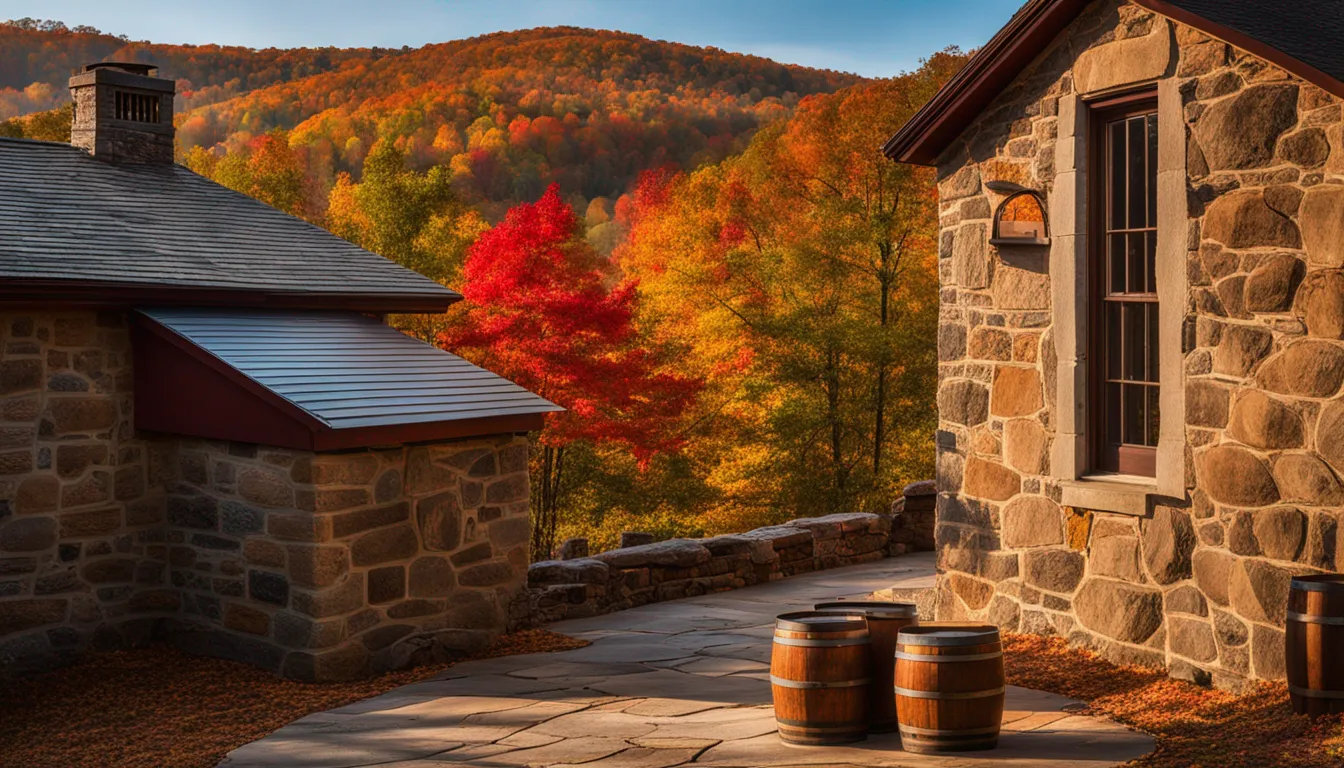
Fall (September-November) is peak season. Temperatures run 60-75°F, humidity drops from summer's oppressive levels, and the Blue Ridge mountains turn crimson and gold. This is harvest season for both grapes and grain, meaning you might catch distilleries receiving fresh crops or wineries crushing. Virginia Distillery Company releases its annual limited editions in October. The downside: accommodations book early and charge peak rates, particularly during October weekends.
Spring (April-May) offers the best combination of weather, availability, and value. Temperatures hit 65-75°F, everything's green, and tourism infrastructure is fully operational without peak-season crowds. Mount Vernon's distillery restarts seasonal production in April, letting visitors watch actual distillation using 18th-century methods. Spring also brings Virginia wine festivals that pair nicely with spirits tourism. Book accommodations at least three weeks ahead for popular areas like Charlottesville.
Winter (January-March) is the off-season, with real tradeoffs. Temperatures drop to 30-45°F, and snow/ice can close mountain roads. But you'll have distilleries essentially to yourself, and accommodations run 30-40% cheaper than peak season. Several distilleries offer winter-only experiences like barrel picks and blending sessions when tourism slows. The catch: some smaller distilleries reduce hours or close weekdays, and restaurants in rural areas may operate limited schedules.
Summer (June-August) is our least favorite season despite maximum daylight and availability. Virginia summers are hot (85-95°F) and humid, making barrel warehouse tours sweaty and uncomfortable. The heat also affects whiskey—distilleries often limit production during July and August when fermentation is harder to control. If you must visit in summer, plan early-morning distillery tours and afternoon wine tastings or indoor activities. The coastal distilleries around Virginia Beach are more comfortable than inland operations during summer.
Specific timing considerations by distillery: Mount Vernon operates seasonal distilling April-October only. Winter visits see the distillery buildings but no production. Virginia Distillery Company is comfortable year-round with excellent climate control, making it a good shoulder-season anchor. A-Smith Bowman releases Abraham Bowman limited editions sporadically but tends to cluster them in spring and fall. Catoctin Creek releases Rabble Rouser Bottled-in-Bond twice annually—April and October.
For foliage, peak fall color in Virginia's mountains runs October 15-30, about two weeks later than Vermont or New England. The Shenandoah Valley peaks first, then Charlottesville, then tidewater areas. Plan for mid-October if foliage is a priority.
We recommend visiting in late April/early May or late September/early October. These shoulder seasons deliver good weather, manageable crowds, full operational status, and reasonable accommodation rates. If you want the full Virginia experience—distilleries, wineries, restaurants, and mountain scenery—those windows optimize all variables.
Toggle your priorities to see personalized recommendations.
October
May
September
The Charlottesville Experience
Charlottesville anchors Virginia's Spirits Trail with a combination of distilleries, restaurants, bars, and accommodations that make it the natural base camp for exploring the region. The city sits at the intersection of the Blue Ridge mountains and Virginia's wine country, 70 miles northwest of Richmond and 115 miles southwest of Washington, D.C.
The distilleries within 30 minutes of Charlottesville include Virginia Distillery Company (20 minutes south), Ragged Branch (15 minutes east), and Silverback (25 minutes south). This concentration means you can visit all three in a single day without excessive driving, though we recommend spacing them across two days to allow for proper appreciation and avoid palate fatigue.
The restaurant scene punches well above Charlottesville's 50,000 population. The Downtown Mall—a pedestrian brick corridor running eight blocks—houses 30+ restaurants spanning price points and cuisines. For upscale dining, C&O Restaurant serves French-influenced Mid-Atlantic food in a candlelit bistro setting. The rotating menu emphasizes Virginia ingredients and includes an excellent whiskey list featuring local distilleries. Reservations essential for dinner.
Mas Tapas focuses on Spanish small plates using Virginia farms and offers 20+ sherries by the glass—useful education for understanding sherry-cask-finished whiskey. The Hamilton is a gastropub with elevated bar food and Virginia craft spirits in cocktails. Their Old Fashioned uses Ragged Branch wheated bourbon and actually improves on the classic template.
For cocktail-focused drinking without dinner, Commonwealth Restaurant & Skybar operates a rooftop bar with views of the Blue Ridge and a cocktail menu built around Virginia spirits. Alley Light is a speakeasy-style cocktail bar hidden down an alley (naturally) with serious mixology and a whiskey list that spans Virginia, Kentucky, Scotland, and Japan.
Accommodations range from budget-friendly chain hotels to luxury properties. The Inn at Willow Grove sits 20 minutes south in Orange County and offers the region's most upscale lodging: a Relais & Châteaux property with five-diamond dining, spa, and rooms that start at $500/night. It's extraordinary if you can justify the cost.
More accessible options include Keswick Hall (a former country estate with golf course, $300-400/night) and Graduate Charlottesville (a boutique hotel on the Downtown Mall, $150-250/night). For B&B character, The Oakhurst Inn occupies a restored 1910 mansion within walking distance of downtown ($175-225/night).
Charlottesville also provides practical advantages: a commercial airport (though most visitors drive from Richmond or D.C.), excellent grocery stores and wine shops, reliable cell service, and tourism infrastructure that understands sophisticated travelers. After three trips, we've settled into a pattern: stay at Graduate Charlottesville for Downtown Mall access, day-trip to distilleries and wineries, and return to town for dinner and cocktails. It's the Virginia Spirits Trail's most comfortable home base.
Our Recommended Route
After three complete circuits of Virginia's Spirits Trail, we've optimized the route for maximum quality, minimum backtracking, and realistic daily distances. This is a 5-day itinerary assuming you're driving from out of state and want to cover the essential distilleries without killing yourself.
Day 1: Northern Virginia (Base: Arlington or Alexandria)
Morning: George Washington's Distillery at Mount Vernon (open at 10am, arrive early to avoid bus tours). Budget 90 minutes including the shuttle from the main estate.
Afternoon: A-Smith Bowman Distillery in Fredericksburg (45 minutes south). Tour at 2pm by appointment. This is Virginia's most established operation and worth the drive.
Evening: Dinner in Alexandria's Old Town. Columbia Firehouse has excellent Virginia wine and spirits list.
Day 2: Shenandoah Valley (Base: Charlottesville)
Morning: Drive to Charlottesville (2 hours from Alexandria). Check into hotel.
Afternoon: Copper Fox Distillery in Sperryville (1 hour northwest). Their smoke-dried malt and barrel-aging innovations require seeing in person. Tour at 2pm.
Evening: Dinner on Charlottesville's Downtown Mall. C&O Restaurant or The Hamilton.
Day 3: Charlottesville/Blue Ridge
Morning: Virginia Distillery Company in Lovingston. Take the 10am tour, stay for lunch at Dram Kitchen. This is a 3-4 hour experience done properly.
Afternoon: Ragged Branch Distillery (if you have energy) or spend the afternoon exploring Charlottesville wine country.
Evening: Cocktails at Commonwealth Skybar, dinner at Mas Tapas.
Day 4: Richmond
Morning: Drive to Richmond (1 hour east).
Midday: Reservoir Distillery in Scott's Addition neighborhood. Tour at noon, then explore the surrounding breweries and cideries.
Afternoon: Belle Isle Craft Spirits if you want more distillery visits, or explore Richmond's museums and dining.
Evening: Drive to Virginia Beach (1.75 hours) or stay in Richmond.
Day 5: Tidewater (Optional)
Morning: Chesapeake Bay Distillery in Virginia Beach. Their coastal aging environment creates unique profiles worth experiencing.
Afternoon: Beach time or start the drive home.
This route covers Virginia's best distilleries in a logical geographical progression, uses Charlottesville as the central base, and allows time for meals, wine tourism, and recovery. Total driving is about 400 miles over 5 days—manageable but not rushed.
If you only have 3 days, cut Days 1 and 5 and focus on Charlottesville as a hub. Visit VDC, Ragged Branch, Copper Fox, and spend the saved time exploring Virginia wine country and restaurants. You'll miss Mount Vernon and the Northern Virginia distilleries, but you'll get the heart of Virginia's modern distilling scene.
For a weekend trip (2 days), stay in Charlottesville and visit Virginia Distillery Company and Ragged Branch on Day 1, then Copper Fox on Day 2. It's a distillery-focused quick hit that captures Virginia's range from traditional to experimental.
Final Thoughts
The Virginia Spirits Trail doesn't compete with Kentucky bourbon tourism on volume, infrastructure, or brand recognition. Virginia will never have Kentucky's density of distilleries or Tennessee's tourist-bus efficiency. But that's precisely what makes it valuable.
This is American whiskey's origin story, told without the marketing polish. You're visiting working farms that happen to distill, historical sites that reconstruct colonial commerce, and ambitious modern operations that challenge Scottish single malt on its own terms. The trail requires more planning than Kentucky's drop-in accessibility, but rewards effort with authenticity.
Virginia distillers aren't trying to make bourbon—they're making Virginia whiskey, whatever that means to each producer. For George Washington it meant rye aged briefly in used barrels. For Virginia Distillery Company it means single malt aged in Virginia's climate to create something distinct from Scotland. For Copper Fox it means smoke-dried malt using local wood. For Ragged Branch it means estate-grown grain and wine-cask finishing.
The diversity is the point. Virginia's trail doesn't prescribe style or method. It connects producers who share geography and history but pursue individual visions. After three trips, we appreciate that openness. Kentucky bourbon tourism offers consistency and tradition. Virginia offers experimentation and evolution.
The practical reality: you'll plan more, drive more, and coordinate more than you would in Kentucky. Tours require appointments. Distilleries are spread across five regions. You'll need accommodations in multiple locations. But you'll also get smaller groups, more personal attention, and access to distillers who are often the tour guides themselves.
Virginia's Spirits Trail rewards curiosity and patience. If you want efficient whiskey tourism with party buses and gift shops, visit Kentucky. If you want to understand where American whiskey actually started and where it might be going, visit Virginia. Just don't expect George Washington to pour your tasting samples.
For more American whiskey trails, see our Ultimate Bourbon Trail Guide covering Kentucky's classic route.
Plan another trip — more trail guides
The Boozemakers Annual · Coming Soon
The bottles to bring back home
The year’s Best 100 bottles — the bottle picks behind every distillery in this guide, scored and price-stamped. Use code HALFOFF for $14.50.
Join the launch waitlistOur Spirits Partner
Stock up before the trip
Cask Cartel ships allocated and hard-to-find bottles nationwide. Worth a look before you fly out — line up the pours you want to taste so you know what’s worth hunting for on the trail (and hauling home in the carry-on).
Shop bottles at Cask Cartel