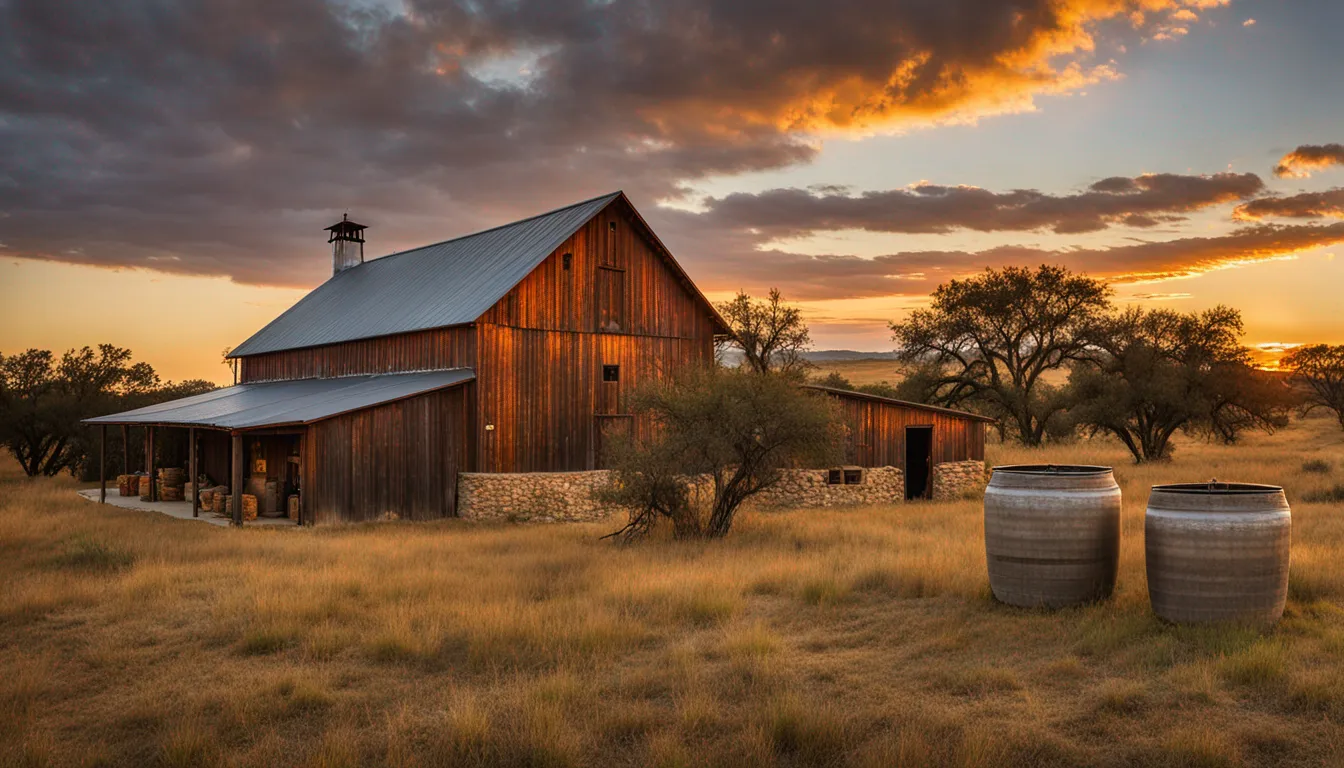
We're standing in a metal quonset hut in Waco, Texas, where the August heat radiates through corrugated walls and pushes the ambient temperature north of 105°F. Inside a rickety rack system, 200 barrels of blue corn whiskey are aging at a pace that would make a Kentucky distiller's head spin. Jared Himstedt, head distiller at Balcones, gestures toward a barrel that's been here eighteen months. "In Scotland, this would be a teenager," he says, pulling the bung. "Here? It's drinking like a six-year-old bourbon." The sample hits our glass dark as cola, smelling of caramel and oak char intensity that seems impossible for something so young. This is Texas whiskey—where the laws of barrel aging get rewritten by sheer atmospheric brutality.
The Texas Whiskey Trail isn't just Kentucky with cowboy hats. Across 54+ distilleries spanning three distinct routes—Hill Country, DFW/North Texas, and Gulf Coast/South—Texas has built a whiskey culture that leverages climate as weapon, terroir as differentiator, and iconoclasm as founding principle. Where Kentucky perfected bourbon over centuries, Texas compressed the timeline through environmental extremes and sheer audacity. The result is a trail system that rivals the original Ultimate Bourbon Trail Guide in scope while offering something Kentucky fundamentally cannot: whiskey shaped by 70-degree temperature swings, limestone-filtered water from the Edwards Aquifer, and distillers who learned their craft from scratch rather than bourbon dynasty lineage.
Why Texas Whiskey Is Different: Heat, Terroir, and the Acceleration Effect
The Texas whiskey story begins with climate vandalism. In Kentucky, seasonal temperature variations of 40-50°F drive gentle barrel breathing—oak expands in summer, contracts in winter, whiskey seeps in and out, extracting flavor over years. In Texas, particularly in un-climate-controlled warehouses, daily temperature swings can hit 30-40°F, with summer peaks reaching 110-120°F inside metal rick houses. This thermal violence accelerates everything: barrel entry at 125 proof might see 15-20% angel's share loss annually (versus Kentucky's 3-5%), but what remains has oak extraction levels equivalent to 4-6 years of Kentucky aging after just 18-24 months.
Garrison Brothers proved the model in 2006, building Texas's first legal bourbon distillery on a ranch in Hye, 70 miles west of Austin. Founder Dan Garrison embraced the heat, constructing metal rick houses with zero climate control and watching barrels swell until oak staves cracked. The whiskey that emerged was massive—chewy, tannic, intensely oaky—but undeniably bourbon, and undeniably Texan. When their first release hit the market in 2010, it commanded Kentucky-level prices ($60-80) and sold out immediately. The message was clear: Texas could make whiskey, and people would pay for it.
Beyond heat, terroir matters here in ways that surprise bourbon traditionalists. The Edwards Aquifer limestone filtration gives Texas water a mineral profile similar to Kentucky's, but with regional variations—softer in the Hill Country, harder near the Gulf. Local grain sourcing has become doctrine for top distilleries: Garrison Brothers uses Texas corn, wheat, and rye exclusively; Still Austin contracts with local farmers for heirloom corn varieties; Treaty Oak sources from within 200 miles. Blue corn, a Texas whiskey innovation pioneered by Balcones, adds earthy, nutty complexity impossible with yellow dent corn. The terroir argument isn't marketing—it's measurable in grain character, water chemistry, and ambient yeast populations.
Three Routes: Mapping the Texas Whiskey Trail
The Texas Whiskey Trail officially encompasses 54 distilleries across three geographic zones, though the number grows quarterly as new operations open. The Hill Country route (Austin-San Antonio-Fredericksburg triangle) hosts the highest concentration of heritage producers and tourist-friendly experiences. The DFW/North Texas corridor balances urban craft distilleries with rural operations. The Gulf Coast/South route includes Houston metro distilleries and coastal producers experimenting with barrel aging in humidity that would horrify Scots whisky makers.
Most serious whiskey travelers prioritize the Hill Country loop—a 200-mile circuit that hits Garrison Brothers, Treaty Oak, Andalusia Whiskey, Still Austin, and Balcones in Waco, all within 90 minutes' drive of Austin. This is the Kentucky Bourbon Trail equivalent: established distilleries with consistent output, professional tasting rooms, and whiskeys that have won international awards. The route is doable in 3-4 days with Austin or San Antonio as a base, though we recommend five days minimum to avoid palate fatigue and actually enjoy Texas's food/music scene.
DFW's urban distillery cluster—Firestone & Robertson, Treaty Oak Urban Distillery, Texas Sake Company (which makes whiskey), Whiskey Ranch—offers a different experience: smaller batches, experimental releases, and less tourist polish. Houston and the Gulf Coast route skew even more experimental, with distilleries like Yellow Rose Distilling and Maverick Whiskey pushing boundaries on mash bills and barrel finishes. These aren't day-trip destinations—they're for whiskey nerds willing to chase limited releases and barrel picks.
The Distilleries: Who to Prioritize on a First Trip
If you have time for only five distilleries, the consensus list among Texas whiskey writers is: Balcones (Waco), Garrison Brothers (Hye), Still Austin (Austin), Treaty Oak (Dripping Springs), and Firestone & Robertson (Fort Worth). These represent the stylistic range of Texas whiskey—from Balcones's blue corn pot still intensity to Garrison Brothers's high-rye bourbon heft to Still Austin's grain-forward smoothness—while offering professional tour experiences that justify the 1-2 hour time investment.
Distillery Directory(14 of 14)
Andalusia Whiskey Co.
Hill Country
Blanco's newest craft distillery focusing on triple-distilled whiskey with Spanish and Texas influences. A boutique operation with intimate tours and tastings.
Balcones Distilling
Waco
The flagship of Texas whiskey. Founded in 2008, Balcones put Texas on the craft whiskey map with their bold, innovative spirits and won World's Best Whisky for True Blue in 2022.
Desert Door Distillery
Hill Country
While famous for sotol (made from Texas desert plants), Desert Door also produces bourbon and has become a Hill Country destination with live music and stunning Hill Country views.
Firestone & Robertson Distilling Co.
DFW Metroplex
Makers of TX Whiskey, one of Texas's most awarded bourbons. Located in Fort Worth's historic Chisholm Trail Distillery building with a rooftop bar overlooking downtown.
Garrison Brothers Distillery
Hill Country
Texas's first legal bourbon distillery since Prohibition. Set on a stunning ranch in Hye, they age bourbon in the extreme Texas heat, creating uniquely bold flavors.
Herman Marshall Distillery
DFW Metroplex
A family-owned craft distillery in Garland producing small-batch bourbon and whiskey. The Barr family creates spirits with a nod to Texas heritage and cowboy culture.
Iron Wolf Ranch & Distillery
Hill Country
A working ranch distillery in Spicewood producing bourbon and rye whiskey. Tours include the ranch, production, and tastings with scenic Lake Travis views.
Maverick Whiskey
San Antonio
San Antonio's craft whiskey distillery producing Texas bourbon with a maverick spirit. Located near the Pearl District, combining whiskey tradition with Alamo City attitude.
Ranger Creek Brewing & Distilling
San Antonio
Texas's first craft distillery-brewery hybrid. Their .36 Texas Bourbon is aged in whiskey barrels, then finished in beer barrels for a unique flavor profile.
Still Austin Whiskey Co.
Austin
Austin's first whiskey distillery produces grain-to-glass bourbon and rye. A modern urban distillery with a cocktail bar and tasting room right on the production floor.
Tahwahkaro Distilling
DFW Metroplex
Grapevine's first distillery, making Texas bourbon, moonshine, and vodka. Native American-owned, the name means 'Turtle Spirit' in the Tonkawa language.
Treaty Oak Distilling
Hill Country
A sprawling 28-acre ranch distillery in Dripping Springs featuring a working distillery, ranch water bar, live music venue, and food trucks. Home to Red Handed bourbon and Ghost Hill bourbon.
Whitmeyer's Distilling Company
Houston
Houston's oldest craft distillery producing award-winning bourbon, gin, and rum. A family operation focused on classic American spirits with a Texas twist.
Yellow Rose Distilling
Houston
Houston's premium whiskey distillery producing award-winning bourbon and rye. Known for their outlaw series and innovative barrel finishes using Texas heat to accelerate aging.
Balcones remains the artistic soul of the trail. Founded in 2008 in a welding shop, Balcones built its reputation on blue corn whiskey, Texas single malt, and a refusal to follow bourbon orthodoxy. Their flagship Balcones Texas Single Malt has won more international awards than any Texas whiskey, while their limited releases (Rumble, Brimstone, Single Barrel releases) command secondary market prices rivaling Pappy Van Winkle. Tours book weeks in advance; the distillery itself is utilitarian to the point of ugliness, but the liquid is transcendent.
Garrison Brothers offers the opposite aesthetic: 68 acres of Hill Country ranch land, longhorn cattle, and a gift shop selling $300 leather jackets alongside $500 barrel-proof bourbons. This is Texas whiskey as lifestyle brand, and it works. Their Small Batch Bourbon ($75) is the entry point—heavy oak, caramel, leather, absolutely not subtle. The Cowboy Bourbon ($150-200) is the flex bottle: barrel proof, 4-5 years old, drinking like an 8-year Kentucky bourbon but with more tannin intensity. Tours include barrel thieving, a ranch walk, and the best distillery gift shop in Texas.
Still Austin, the youngest of the tier-one distilleries (opened 2017), has quietly become the critics' favorite. Co-founded by former Austin mayor Will Wynn, Still Austin focuses on grain provenance—they publish their farmers' names on bottles—and a house style that prioritizes grain sweetness over oak aggression. Their Cask Strength Bourbon (typically 115-120 proof) offers the best proof-to-drinkability ratio on the trail, while their Bottled-in-Bond release shows surprising restraint for a Texas whiskey. The distillery itself sits in a renovated industrial building in southeast Austin, with floor-to-ceiling windows looking into the production floor. It's the most transparent operation in Texas—you can literally watch grain delivery, mashing, fermentation, and bottling from the tasting room.
Treaty Oak's Dripping Springs location—a $25 million campus opened in 2021—represents where Texas whiskey is heading: destination distilleries with restaurants, event spaces, and product portfolios extending beyond whiskey. The grounds include a full-service restaurant (Matchstick), a cocktail bar, 20,000 square feet of production space, and a barrel room designed for Instagram. The whiskey itself is competent if not revolutionary—their Red Handed Bourbon ($45) is the crowd-pleaser, while their cask-finished releases (port, rum, cognac barrels) show more ambition. This is the distillery you bring non-whiskey-drinking partners who need food and scenery to stay engaged.
The Balcones Story: How a Welding Shop Became a Whiskey Cathedral
Every whiskey region needs an origin myth, and Texas's belongs to Chip Tate and Balcones Distilling. In 2008, Tate—a former Air Force intelligence officer with no distilling experience—leased a 6,000-square-foot welding shop in downtown Waco and installed a homemade copper pot still fabricated from drawings he'd sketched. His plan was legally insane: make blue corn whiskey in an un-air-conditioned metal building in one of the hottest cities in America, age it in new oak despite lacking Kentucky's century of institutional knowledge, and charge premium prices despite zero brand recognition.
The first Balcones Baby Blue release in 2009—a 6-month-old blue corn whiskey—sold out in Texas within weeks. By 2011, Balcones Texas Single Malt was winning gold medals at international competitions, beating Scotch whiskies aged 12-18 years. The secret wasn't magic: it was heat cycling, blue corn's unique flavor profile (nuttier, earthier than yellow corn), and Tate's willingness to bottle whiskey at 12-36 months that tasted finished despite being toddler-aged by Scotch standards.
Tate left Balcones in 2014 amid acrimonious ownership disputes, but head distiller Jared Himstedt has maintained and refined the house style. The current Balcones lineup—Texas Single Malt ($70), Rumble ($40), Lineage ($250), plus rotating single barrel picks—represents the most stylistically diverse portfolio in Texas. Their new 65,000-square-foot distillery, opened in 2019, includes climate-controlled barrel storage alongside traditional hot warehouses, allowing experimentation with aging profiles. But the soul remains unchanged: this is still whiskey made by people who learned by doing, not by consulting Kentucky playbooks.
The Hill Country Experience: Beyond the Distillery Gates
The Hill Country route succeeds because whiskey distilleries exist within an established tourism infrastructure built around wine (130+ wineries), barbecue, and live music. The 90-minute drive from Austin to Garrison Brothers passes through Dripping Springs (Treaty Oak), Johnson City (Hye Meadow Winery), and Fredericksburg (100+ wine tasting rooms, German heritage), creating natural distillery-winery-restaurant loops that prevent palate fatigue.
Fredericksburg deserves two nights minimum. The town offers 300+ B&Bs, German biergartens, Hill Country barbecue (Cranky Frank's, Old German Bakery & Restaurant), and antique shopping that appeals to non-whiskey-drinking travel partners. Garrison Brothers is 20 minutes south; Andalusia Whiskey is 15 minutes west; a dozen wineries are within 10-minute drives. The downtown Main Street walkability—rare in Texas—makes this the trail's most civilized base camp.
Austin, the obvious alternative base, offers urban advantages: direct flights from most US cities, 200+ music venues, breakfast taco culture, and Zilker Park for post-distillery recovery. Still Austin is 15 minutes from downtown; Treaty Oak Dripping Springs is 30 minutes west; Balcones in Waco is 90 minutes north. The food scene—Franklin Barbecue, Uchi, Odd Duck, Salty Sow—ranks among America's best, providing necessary palate cleansers between whiskey stops.
What to Pack for Texas: Heat Management and Whiskey Trail Essentials
Texas whiskey tourism is fundamentally a heat management problem. May through September, daytime temperatures routinely exceed 95°F, with humidity ranging from 40% (Hill Country) to 70% (Gulf Coast). Un-air-conditioned rick houses, outdoor ranch tours, and parking lot walks between car and tasting room become endurance tests. This isn't Kentucky in October—this is Sonoran Desert heat with worse humidity.
Pack wide-brim hats (not baseball caps—you need neck coverage), high-SPF sunscreen, polarized sunglasses, and moisture-wicking clothing. Distillery tours often involve walking on gravel or dirt—boots or closed-toe shoes are mandatory at properties like Garrison Brothers. Water bottles are essential; dehydration accelerates alcohol's effects, and you'll be sampling 6-10 whiskeys per day. Electrolyte packets (Liquid IV, LMNT) are worth the luggage space.
For whiskey gear: bring a Glencairn glass if you're serious about tasting (many distilleries offer plastic or inadequate glassware), a notebook for tasting notes, and a cooler if you're buying bottles in summer (Texas heat in car trunks can damage corks and accelerate oxidation). Many distilleries offer shipping, but Texas law prohibits shipping spirits to most states—verify before assuming you can mail purchases home.
Documents
Clothing & Gear
Supplies
Planning
Budgeting Your Texas Whiskey Trail: Costs and Value Calculations
A five-day Hill Country whiskey trip for two people runs $2,500-4,000 all-in, depending on accommodation choices and bottle purchases. Breaking down the expenses: flights to Austin average $300-600 per person from major US cities; rental cars run $50-80/day ($250-400 total); mid-range hotels or Airbnbs in Fredericksburg/Austin cost $150-250/night ($750-1,250 total); distillery tours and tastings average $20-40 per person per stop ($400-800 for two people hitting 10 distilleries); meals run $100-150/day for two ($500-750); and bottle purchases add $300-1,000+ depending on self-control.
The value calculation favors Texas over Kentucky for whiskey availability. Texas distilleries sell allocated bottles (Garrison Brothers Cowboy Bourbon, Balcones limited releases, Still Austin single barrels) directly at the distillery without lottery systems or wait lists. In Kentucky, allocated bourbons rarely appear at distillery gift shops—they're distributed through retail channels where they vanish instantly. Texas's smaller production scales and direct-to-consumer focus mean you can walk out of Garrison Brothers with a $200 Cowboy Bourbon that would cost $400-500 on secondary markets.
Budget whiskey travelers can trim costs by camping (Hill Country State Natural Area, Pedernales Falls State Park offer sites for $15-25/night), skipping formal tours in favor of free tasting room visits, and packing picnic lunches. Several distilleries—Still Austin, Treaty Oak, Balcones—allow walk-in tastings without tour fees, charging only for spirits poured ($10-20 for 4-5 samples). Austin's food truck scene and San Antonio's taco culture provide excellent meals for $10-15 per person.
Estimated Budget
When to Visit: Seasons, Weather, and the Summer Heat Reality
The Texas Whiskey Trail has one perfect season (November-March), one acceptable season (April-May, October), and one season you should avoid unless you're conducting field research on heat stroke (June-September). Peak season runs November through March when daytime temperatures average 60-75°F, evenings cool to 45-55°F, and Hill Country landscapes turn green from winter rains. This is also festival season: Austin hosts SXSW (March), Trail of Lights (December); Fredericksburg hosts Oktoberfest (October, technically shoulder season); San Antonio hosts Fiesta (April).
Spring (April-May) offers wildflower blooms—bluebonnets, Indian paintbrush, winecups carpet Hill Country roadsides—but temperatures creep toward 85-90°F by May, with humidity building as Gulf moisture pushes north. Fall (October) is theoretically ideal but compressed into a 4-6 week window; by mid-October highs drop to 80s, but real coolness doesn't arrive until November. Book accommodations 2-3 months ahead for October visits—everyone wants Hill Country in fall.
Summer (June-September) is brutal. Daytime highs exceed 95°F routinely, hitting 105-110°F during heat waves. Drought turns Hill Country brown; outdoor distillery tours become forced marches; barrel room visits (uninsulated metal buildings holding whiskey at 120°F+) qualify as saunas. The only advantages: fewer tourists, better accommodation availability, and distillery staff with more time for extended conversations. If you must visit in summer, book morning distillery tours (9-11 AM before peak heat), take 2-4 PM siestas in air conditioning, and plan evening activities only.
Toggle your priorities to see personalized recommendations.
October
April
November
Austin & San Antonio: The Food and Bar Scenes You Need Between Distilleries
Texas whiskey exists within a broader culinary ecosystem that demands attention. Austin's food scene has evolved beyond Franklin Barbecue (still worth the 2-hour line for brisket that defines the form) into one of America's most diverse dining cities. Uchi and Uchiko (Japanese, $80-120 per person) showcase what happens when Austin's ingredient access meets Japanese technique. Odd Duck (contemporary American, $50-80) built its reputation on farm-to-table before that phrase became marketing noise. Salty Sow (gastropub, $30-50) offers the best whiskey list in Austin—300+ bottles including Texas distillery picks unavailable elsewhere.
For whiskey bars specifically: Firehouse Lounge (downtown Austin) stocks 500+ whiskeys with deep Texas craft representation; Midnight Cowboy (speakeasy, reservations required) focuses on craft cocktails using Texas spirits; Small Victory (east Austin) offers excellent barrel picks and knowledgeable staff. San Antonio's whiskey bar scene centers on The Modernist (100+ whiskeys, rooftop views) and Esquire Tavern (historic bar, River Walk location, 125+ whiskeys).
Barbecue provides necessary ballast between whiskey stops. Beyond Franklin in Austin, hit Micklethwait Craft Meats (no line, comparable quality), Valentina's Tex Mex BBQ (brisket breakfast tacos), or Interstellar BBQ (if Franklin's line is 3+ hours). In Fredericksburg, Cranky Frank's does Hill Country barbecue without tourist markup. In Waco, near Balcones, Health Camp (burgers, shakes, breakfast) has been feeding locals since 1948—it's the pre-distillery tour fuel stop.
Our Recommended Itinerary: The Five-Day Hill Country Loop
Day 1: Austin Arrival & Still Austin
Fly into Austin-Bergstrom, pick up rental car, check into downtown hotel. Afternoon visit to Still Austin (2pm tour, $25/person, books online). Evening: Franklin Barbecue (order online for next-day pickup to avoid line), then Firehouse Lounge for whiskey flight comparison—taste Texas against Kentucky/Tennessee.
Day 2: Treaty Oak & Garrison Brothers
Morning drive to Treaty Oak Dripping Springs (30 minutes west, 10am tour, $20/person). Lunch at Matchstick restaurant on-site. Afternoon: drive to Garrison Brothers in Hye (1 hour, 2pm tour, $30/person). Book the "Heritage Tour" ($75) if available—includes barrel thieving and premium pours. Evening: check into Fredericksburg accommodation, dinner on Main Street (Cranky Frank's or Otto's).
Day 3: Fredericksburg Base Camp
Morning: explore downtown Fredericksburg shops and cafes. Afternoon: Andalusia Whiskey (15 minutes west, open tasting room, no tour required). Or substitute winery visits—Becker Vineyards, Grape Creek Vineyards, Pedernales Cellars all within 15 minutes. Evening: sunset drive through Hill Country back roads, dinner at Old German Bakery & Restaurant.
Day 4: Balcones & Waco
Check out of Fredericksburg, drive to Waco (90 minutes, 10am arrival). Tour Balcones (book weeks ahead, $20/person, 11am tour). Lunch at Health Camp. Afternoon: Magnolia Market (if you must—it's very touristy), or explore Waco Mammoth National Monument. Drive back to Austin (90 minutes), check into hotel. Evening: Uchi or Uchiko for dinner, Midnight Cowboy for cocktails.
Day 5: Austin Recovery & Departure
Morning: pick up Franklin Barbecue order, eat at Zilker Park. Midday: return rental car, fly home. Or extend trip: Balcones Rumble festival (annual, June), Austin City Limits (October), SXSW (March).
Texas Whiskey Pro Tips: What the Locals Know
Book Tours Ahead: Balcones and Garrison Brothers sell out 2-4 weeks in advance during peak season (November-March, October). Still Austin and Treaty Oak usually have same-week availability but weekend tours fill fast. Call distilleries directly—online booking systems often lag real availability.
Shipping Workarounds: Texas law prohibits distilleries from shipping spirits to most states. If you're buying multiple bottles, ask about "gift shop storage"—some distilleries will hold purchases until your return trip. Or: schedule a second-day pickup (buy on day one, distillery ships to your hotel, you pick up on checkout). Or: pay for extra checked luggage and pack bottles in wine skins wrapped in clothing.
Barrel Picks: Still Austin, Balcones, and Garrison Brothers offer private barrel picks for groups (typically 6+ people, advance scheduling). If you're traveling with a whiskey club, coordinate barrel selection during your visit—you'll leave with a unique single-barrel bottling (240 bottles from one barrel, split among group) unavailable in retail.
Distillery Release Schedules: Garrison Brothers releases Cowboy Bourbon once annually (spring), with distillery allocation selling out in days. Balcones drops limited editions quarterly, announced via email list. Still Austin's Bottled-in-Bond and Cask Strength releases follow irregular schedules. Join email lists 2-3 months before your trip to track release timing.
Heat Strategy: If visiting summer, plan distillery tours for 9-11 AM (coolest part of day), take 2-5 PM breaks in air conditioning (hotel pool, museums, movie theaters), resume activities at 6 PM when temperatures drop to merely hot (90-95°F). Hydrate aggressively—drink 16oz water between each distillery stop.
Fredericksburg Accommodations: Book 3+ months ahead for October, 2+ months for November-March. B&Bs offer better value than hotels (90+ options, $120-200/night). Airbnbs work well for groups (rent a Hill Country house, designate a driver). Avoid staying in Austin and driving to Fredericksburg daily—it's 80 miles each way, and post-tasting drives are unwise.
Food as Palate Reset: You cannot taste whiskey accurately for 12 hours straight. Schedule substantial meals between distillery clusters: big breakfast before tours, lunch between stops 2-3, dinner after final distillery. Barbecue, tacos, and German food (in Fredericksburg) provide fat and protein that coat palate and slow alcohol absorption.
The Austin Music Bonus: Austin's live music scene (250+ venues) offers nightly options from blues to outlaw country to indie rock. Venues like the Continental Club, Antone's, and Stubb's BBQ host touring acts plus local legends. Check event calendars before your trip—catching a legendary Texas songwriter like Hayes Carll or Steve Earle in a 200-capacity room is the perfect complement to a day of whiskey tasting.
Texas whiskey is no longer Kentucky's scrappy younger sibling—it's a fully realized regional style with distinct flavor profiles, tourist infrastructure, and international acclaim. The trail itself rivals the Kentucky Bourbon Trail in scope while offering what no other American whiskey region can: extreme terroir, climate-accelerated aging, and the ability to walk into a distillery and buy allocated bottles at retail. Whether you're a bourbon traditionalist curious about heat-aged whiskey or a spirits explorer seeking America's newest craft movement, the Texas Whiskey Trail delivers experiences impossible anywhere else. Just bring sunscreen, book tours ahead, and prepare for whiskey that tastes like it's been aging for years when it's barely left adolescence.
Plan another trip — more trail guides
The Boozemakers Annual · Coming Soon
The bottles to bring back home
The year’s Best 100 bottles — the bottle picks behind every distillery in this guide, scored and price-stamped. Use code HALFOFF for $14.50.
Join the launch waitlistOur Spirits Partner
Stock up before the trip
Cask Cartel ships allocated and hard-to-find bottles nationwide. Worth a look before you fly out — line up the pours you want to taste so you know what’s worth hunting for on the trail (and hauling home in the carry-on).
Shop bottles at Cask Cartel