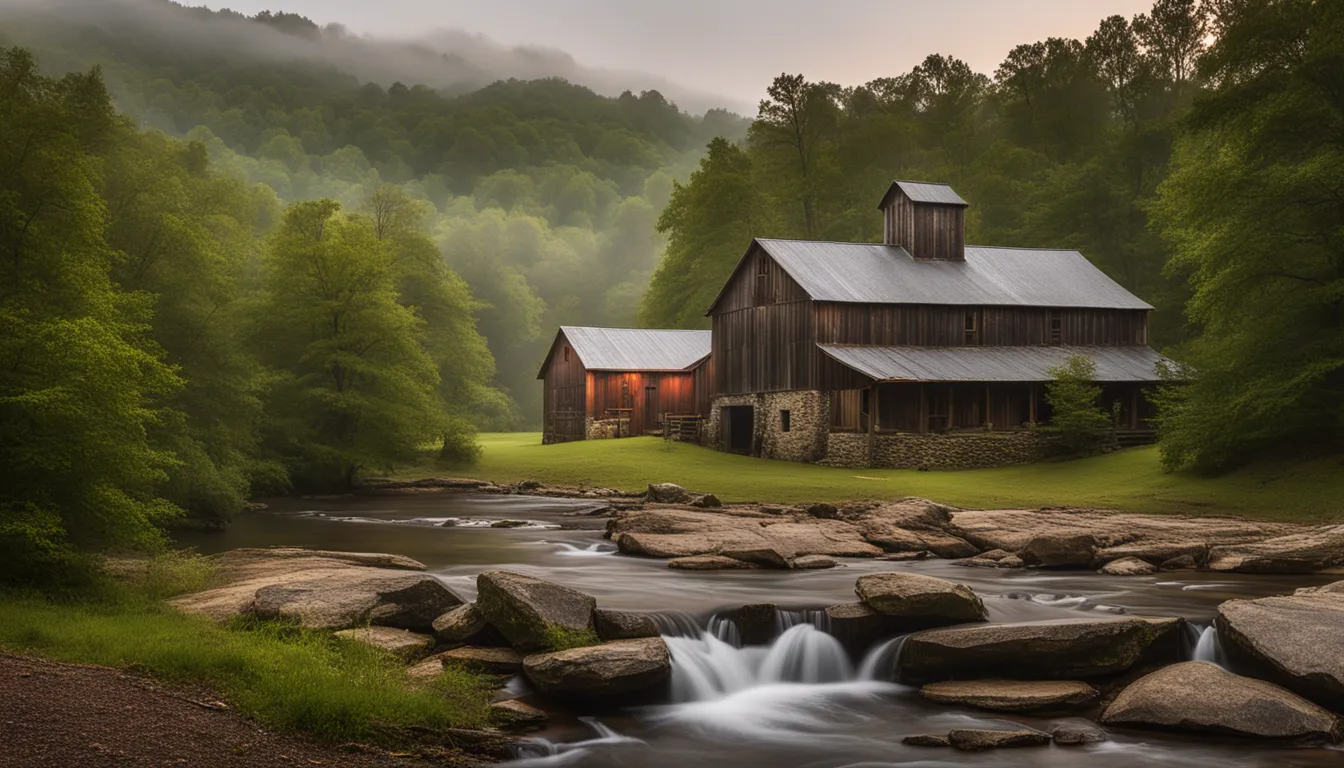
The water temperature holds steady at 56 degrees year-round, trickling from Cave Spring at a rate of 800 gallons per minute through layers of limestone that have filtered Tennessee rainfall for centuries. We're standing at the source of Jack Daniel's whiskey, watching clear water emerge from the rocks exactly as it did when Jasper Newton "Jack" Daniel first tasted it in 1866. A guide dips a plastic cup into the spring and hands it over. It tastes clean, slightly mineral, utterly unremarkable—until you remember that this exact water profile, combined with sugar maple charcoal mellowing, creates the flavor that made Tennessee whiskey a category unto itself.
The Tennessee Whiskey Trail isn't Kentucky's louder, more famous cousin. It's something quieter, stranger, and in many ways more interesting: a route through a state where the biggest distillery in America operates in a dry county, where the first Black master distiller's story remained untold for 150 years, where moonshine culture evolved into legitimate business, and where craft distillers are rewriting rules alongside century-old operations.
We've driven this trail six times over four years, from Nashville honky-tonks to Smoky Mountain hollows, logging tours at every stop from corporate juggernauts to two-person operations. What follows is what we learned: the distilleries worth visiting, the routes that make sense, the costs that add up, and the details that transform a whiskey tour into something more like a cultural excavation.
Tennessee vs Kentucky Whiskey: The Lincoln County Process
Tennessee whiskey is bourbon's methodical sibling. Both require at least 51% corn, new charred oak barrels, and distillation below 160 proof. But Tennessee adds one additional step that defines the category: the Lincoln County Process, which filters new-make spirit through at least ten feet of sugar maple charcoal before barreling.
Jack Daniel's burns sugar maple wood to create their own charcoal, then packs it into large vats called mellowing tubs. The unaged whiskey drips through over approximately six days, emerging slightly softer, with some of the harsher congeners removed. George Dickel chills their spirit to 40 degrees before filtering, believing cold temperatures improve the process (they call it "chill charcoal mellowing"). The result: Tennessee whiskey typically tastes smoother and slightly sweeter than comparable Kentucky bourbon, with some of the aggressive grain notes rounded off.
The legal requirement dates to 2013, when Tennessee law codified the Lincoln County Process as mandatory for anything labeled "Tennessee Whiskey." Only one distiller objected: Diageo-owned George Dickel, which briefly considered making bourbon instead before deciding the Tennessee designation carried marketing value worth preserving.
For our Ultimate Bourbon Trail Guide veterans, this means Tennessee offers fundamentally different flavor profiles. Same mash bills, same barrel aging, different filtration—it's the whiskey equivalent of terroir, except the difference comes from process rather than place.
Three Routes Through Tennessee
The Tennessee Whiskey Trail sprawls across 300 miles, from Nashville in the north to Gatlinburg in the Smokies. Unlike Kentucky's compact Bourbon Trail, Tennessee's distilleries don't cluster conveniently. You'll need to choose your route based on available time and priorities.
Route One: Nashville and Surrounds (1-2 days)
Base yourself in Nashville and cover the urban craft distillery scene: Corsair, Nelson's Green Brier, Pennington's. Add a 90-minute drive to Nearest Green Distillery in Shelbyville. This route works for extended weekends and business travelers with limited time. You'll taste innovation and history but miss the big heritage brands.
Route Two: Middle Tennessee Deep Dive (2-3 days)
Start in Nashville, drive south to Lynchburg (90 minutes) for Jack Daniel's and the surrounding Moore County distilleries, continue to Cascade Hollow near Tullahoma for George Dickel (20 minutes from Lynchburg). Add Nearest Green in Shelbyville on the return leg. This is the history-focused route: the big operations that defined Tennessee whiskey, plus the Nearest Green story that's rewriting the historical record.
Route Three: The Complete Trail (4-5 days)
Nashville → Shelbyville → Lynchburg → Tullahoma → Gatlinburg/Pigeon Forge. Covers craft distilleries, heritage operations, and Smoky Mountain moonshine culture (Ole Smoky, Sugarlands). This route requires commitment but delivers the full spectrum of Tennessee spirits: whiskey, moonshine, experimental craft products, and the cultural context that connects them.
We recommend Route Two for most visitors. Route Three adds moonshine distilleries that, while historically significant, produce tourist-focused products that rarely justify the additional driving time unless you're specifically interested in Appalachian distilling culture or visiting the Smokies for other reasons.
The Distilleries
Twenty-eight distilleries currently operate on Tennessee's official Whiskey Trail, but only a dozen warrant detours. We've ranked them by priority for serious whiskey travelers.
Distillery Directory(15 of 15)
Company Distilling
East TN
Alcoa's craft distillery near Knoxville. Making whiskey, gin, and rum. Tasting room with cocktails. Walk-in friendly with a laid-back East Tennessee vibe.
Corsair Distillery
Nashville
Nashville's experimental craft distillery making everything from triple smoke whiskey to hopquila. Tasting room vibe with creative cocktails. Walk-in tours welcome.
George Dickel Distillery
Middle TN
Tennessee's other legendary whisky (spelled without the 'e'). Cascade Hollow has been home to Dickel since 1870. Known for chilling whisky before charcoal mellowing.
Jack Daniel's Distillery
Lynchburg Area
America's oldest registered distillery, home of Old No. 7 Tennessee Whiskey. Still using the Lincoln County Process with sugar maple charcoal. Located in a dry county — bring cash for bottle purchases.
Nashville Craft Distillery
Nashville
Small-batch spirits in the heart of The Gulch. Known for their gin and moonshine, but also producing whiskey. Casual tasting room atmosphere.
Nearest Green Distillery
Middle TN
Honoring Nathan 'Nearest' Green, the enslaved master distiller who taught Jack Daniel. The first major distillery in the U.S. named after an African American.
Nelson's Green Brier Distillery
Nashville
Resurrected from a pre-Prohibition Tennessee whiskey dynasty. The Nelson brothers brought back their great-great-great-grandfather's recipe. Also produces Belle Meade Bourbon.
Ole Smoky Distillery
Smoky Mountains
Tennessee's first legal moonshine distillery since Prohibition. Multiple locations in Gatlinburg and Pigeon Forge. Free tastings, no reservations needed — just walk in and sample.
Pennington Distilling Co.
Nashville
The South's first urban craft whiskey distillery post-Prohibition. Located in The Nations neighborhood with a focus on Tennessee whiskey and bourbon.
PostModern Spirits
Chattanooga
Chattanooga's first distillery since Prohibition. Making Tennessee whiskey, gin, and vodka in a renovated warehouse. Known for their Muscat cask-finished whiskey.
Prichard's Distillery
Middle TN
Tennessee's first legal distillery since Prohibition (1997). Phil Prichard makes Tennessee whiskey without the Lincoln County Process — one of only two exemptions. Weekend tours only.
Short Mountain Distillery
Middle TN
A family-owned micro-distillery in rural Woodbury. Making Tennessee Shine (moonshine) and bourbon in small batches. Truly off-the-beaten-path experience.
Sugarlands Distilling Company
Smoky Mountains
Gatlinburg moonshine with a modern twist. Featured on Discovery Channel's 'Moonshiners'. Walk-in tastings and tours throughout the day.
Taconic Distillery - Tennessee
Nashville
New York's Taconic Distillery opened a Tennessee outpost in Nashville. Producing bourbon and rye with their signature New York approach in Music City.
Tennessee Hills Distillery
East TN
Jonesborough's craft distillery making small-batch Tennessee whiskey and moonshine. Historic downtown location near the Storytelling Center.
Tier One: Mandatory Stops
Jack Daniel Distillery (Lynchburg): The highest-volume distillery in America deserves half a day. Book the Taste of Lynchburg tour ($35, 2 hours) which includes the cave spring, rick yards, barrel-making demonstration, and extensive tasting. The Flight of Jack Daniel's tour ($50) adds rare bottlings. Tours sell out weeks ahead in summer and fall. The on-site restaurant, Miss Mary Bobo's Boarding House, requires separate reservations but delivers authentic Southern cooking in a historic setting.
George Dickel Distillery (Cascade Hollow): Smaller and quieter than Jack's operation, Dickel's tour emphasizes their distinctive chill filtration process. The general tour ($16, 90 minutes) covers production; upgrade to the Dickel Experience ($30) for barrel-thieving and extended tastings. The property itself—a narrow hollow with a creek running through—feels more intimate than Jack's corporate polish. Weekend tours book up fast.
Nearest Green Distillery (Shelbyville): The newest of the major operations, opened 2019, tells the story of Nathan "Nearest" Green, the enslaved man who taught Jack Daniel to distill and became his first master distiller. The tour ($20, 75 minutes) focuses on Green's legacy and the archaeology of uncovering erased history. The whiskey—designed by master distiller Victoria Eady Butler, Green's great-great-granddaughter—is excellent, particularly the Founder's Select wheated bourbon. This stop adds historical context that reframes the entire Tennessee narrative.
Tier Two: Worthwhile Additions
Nelson's Green Brier Distillery (Nashville): A resurrection story: brothers discovered their great-great-great-grandfather ran Tennessee's third-largest distillery before Prohibition, found the original recipes in archives, and rebuilt the brand. The tour ($18, 60 minutes) covers both the historical detective work and modern craft production. Their Belle Meade bourbon, sourced and blended before their own distillate matured, won enough awards to fund expansion. Now their own whiskey is reaching market age, and early releases suggest skill beyond simple nostalgia.
Corsair Distillery (Nashville): Experimental and uncompromising, Corsair makes whiskey for spirits geeks. Their tour ($10, 45 minutes) explains unusual mash bills: quinoa bourbon, triticale whiskey, smoked grain experiments. The Marathon Village location—a converted car factory—houses multiple craft producers and makes a convenient Nashville stop. The whiskey won't appeal to traditionalists, but if you want to taste where American whiskey might evolve, Corsair provides the preview.
Pennington Distilling Co. (Nashville): The smallest operation on our essential list, Pennington makes Davidson Reserve Tennessee Whiskey in a 2,500-square-foot facility. The tour ($15, 45 minutes) offers rare access to true small-batch production: you'll see every step performed in one room, often by owner Jeff Pennington himself. The whiskey spends time in smaller barrels for faster maturation—a technique that produces polarizing results but demonstrates craft distilling economics and creative problem-solving.
Tier Three: Specialists and Side Trips
Ole Smoky Distillery (Gatlinburg): Legal moonshine in five locations across Gatlinburg and Pigeon Forge, Ole Smoky transformed Appalachian white whiskey culture into a tourist juggernaut. Free tastings, no reservations required, 30+ flavored moonshines ranging from traditional (apple pie) to bizarre (pickle). The whiskey itself is unremarkable—neutral grain spirit with flavorings—but the cultural context and people-watching justify a stop if you're already in the Smokies. The Gatlinburg Barrelhouse location offers the most comprehensive tour.
Sugarlands Distilling Company (Gatlinburg): Ole Smoky's primary competitor, Sugarlands takes moonshine slightly more seriously. Their Appalachian Sippin' Cream liqueurs and barrel-aged shine show more craft than Ole Smoky's flavored neutrals. Free tastings, similar tourist-friendly setup, but with better production explanations. Choose one moonshine distillery unless you're specifically studying the category.
The Jack Daniel's Experience: A Deep Dive
Jack Daniel's deserves separate discussion because the operation's scale and slickness can obscure genuine substance. This is not merely a corporate tour designed to move merchandise—though it's certainly that too. It's also the most comprehensive demonstration of industrial whiskey-making available to the public anywhere in America.
The distillery occupies 260 acres in Lynchburg, population 6,929 (though that number famously includes the Jack Daniel's barrel inventory). They produce approximately 160 barrels per day—roughly 9 million bottles per month—using water exclusively from Cave Spring and corn from within 100 miles. Every drop of Jack Daniel's Old No. 7, Gentleman Jack, Single Barrel, and Tennessee Honey starts here.
The tour route covers production chronologically: Cave Spring first, then mash houses where massive cookers process grains, fermentation tanks where yeast converts sugar to alcohol (the sour mash smell here is potent—expect it), column stills that separate ethanol from solids, mellowing vats where charcoal filtration occurs, and finally the barrel houses where angels claim 5-7% annually.
The barrel-making demonstration justifies admission alone. Jack Daniel's makes all their own barrels—approximately 500,000 annually—at cooperages on the property. You'll watch coopers assemble staves without glue or nails, using only metal hoops and precision fitting, then char the interiors to precise specifications. The skill level involved in coopering rarely receives public attention; watching a master cooper assemble a barrel in under four minutes while explaining why white oak grain structure matters provides context that transforms how you'll think about aging.
The cave spring stop, which opens most tours, offers literal cool relief on summer visits (it's noticeably 10-15 degrees cooler in the grotto) and demonstrates why Jack Daniel chose this location. The limestone filtration removes iron, which would darken whiskey and create off flavors. The consistent temperature and flow rate mean production never depends on seasonal water conditions. The guide will emphasize that this is "the only water Jack Daniel's uses"—a claim that's technically true and subtly misleading, since Lynchburg's municipal water, also limestone-filtered, presumably goes into restrooms and cleaning operations.
Book ahead. The distillery hosts approximately 280,000 visitors annually, and weekend tours from April through November sell out 2-3 weeks in advance. Weekday mornings offer the least crowded experience. The Taste of Lynchburg tour provides the best value: $35 includes production tour, barrel-thieving demonstration (pulling whiskey directly from aging barrels), tasting of six expressions, and a Glencairn glass. The Flight of Jack Daniel's tour ($50) adds rare bottles—Sinatra Select, Single Barrel Barrel Proof, limited editions—that you likely won't taste elsewhere unless you're spending $150+ per bottle.
One peculiarity: despite being the world's best-known whiskey distillery in a town built around whiskey, you cannot buy a drink in Lynchburg outside the distillery. Moore County is dry. This paradox gets its own section below, because the contradiction reveals something essential about Tennessee's relationship with alcohol.
What to Pack for the Tennessee Trail
Tennessee trail logistics differ from Kentucky's more compact geography. You'll cover more miles, encounter more varied terrain, and face fewer tourist-infrastructure accommodations outside Nashville and Gatlinburg.
Essential Items:
Designated driver or ride-share budget (Uber/Lyft service is spotty outside Nashville; plan accordingly)
Comfortable walking shoes—distillery tours involve concrete floors, gravel paths, and barrel warehouse stairs
Light layers—warehouse temperatures vary 20+ degrees from outdoor summer heat; Nashville bars overdo air conditioning
Notebook or phone for tasting notes (most distilleries prohibit photography in production areas but allow it during tastings)
Reusable water bottle—you'll need hydration between tastings, and Middle Tennessee summer heat is oppressive
Sunscreen and hat for outdoor portions of tours, particularly Jack Daniel's rick yard walks
Small cooler if purchasing bottles in summer (car trunk temperatures can exceed 120°F in July-August, potentially harming whiskey)
Strategic Additions:
Reservations printouts—cellular service drops notably between towns
Snacks—food options in Lynchburg and Cascade Hollow are minimal
Cash for tips (some distillery tour guides, all bartenders)
Glencairn glasses from home if you're serious about comparative tasting (distillery samples come in plastic tasting cups)
Documents
Clothing & Gear
Supplies
Planning
Budgeting Your Tennessee Whiskey Trail
Tennessee's trail costs less than Kentucky's but requires more driving, which shifts expenses from tours to transportation.
Tour costs per person:
Jack Daniel's: $35-50 depending on tour level
George Dickel: $16-30
Nearest Green: $20
Nashville craft distilleries: $10-18 each
Moonshine distilleries: Free tastings, bottles $20-35
Plan $100-150 per person for tours alone on a 2-3 day trip covering major distilleries. Nashville adds $30-60 per person if you hit multiple craft operations.
Transportation:
Rental car: $40-70/day (required unless staying exclusively in Nashville)
Gas: ~$60 for 400 miles of driving
Parking: Free at all distilleries; $10-25/day in downtown Nashville
Accommodations:
Nashville hotels: $120-250/night
Lynchburg area (Tullahoma, Winchester): $80-140/night
Gatlinburg/Pigeon Forge: $100-200/night
Airbnb alternatives in rural areas often provide better value and more space
Food:
Nashville per day: $60-100/person for three meals
Rural Tennessee: $35-50/person
Miss Mary Bobo's (Lynchburg): $35 for family-style lunch
Nashville cocktail bars: $14-18/drink
Bottles:
Budget $30-60 per bottle for distillery exclusives
Jack Daniel's Single Barrel distillery-only picks: $60-75
Nearest Green special releases: $50-80
Craft distillery experimental releases: $40-70
Total estimated costs for two people, three days, Route Two itinerary: $900-1,400 depending on accommodation choices and bottle purchases. This breaks down to approximately $450-700 per person, assuming shared lodging and transportation costs.
Estimated Budget
When to Visit: Seasonal Considerations
Tennessee's trail spans three climate zones—Nashville's humid subtropical, Middle Tennessee's transitional, Smoky Mountains' humid continental—creating more seasonal variation than Kentucky's relatively uniform spring/fall appeal.
Spring (March-May):
Peak conditions for Middle Tennessee. Temperatures range 55-75°F, rainfall moderates by late April, wildflowers bloom through May. Lynchburg's dogwood trees frame the Jack Daniel's property beautifully mid-April. Tours are less crowded than summer/fall, weekend availability better. Risk: March can still bring cold snaps, and spring rain occasionally closes outdoor tour portions. The Smokies remain cool into May (40s-60s at elevation).
Summer (June-August):
The busiest season and, paradoxically, the worst for comfort. Temperatures regularly exceed 90°F with 70%+ humidity. Barrel warehouse visits become endurance tests—interior temperatures in rick houses can reach 120°F in July. Advantages: longest daylight hours for driving, all distilleries maintain full schedules, Nashville's rooftop bar season peaks. Mitigate heat by booking earliest morning tours (8-9 AM when available), staying hydrated, and scheduling afternoon hours for air-conditioned tastings. Tourist crowds in Gatlinburg reach insufferable levels.
Fall (September-November):
The optimal season. Temperatures drop to 60-75°F, humidity breaks by October, fall color peaks in the Smokies late October through early November. Harvest brings fresh corn to distilleries—you'll potentially see grain delivery and milling at peak volume. Disadvantages: peak tourist season, especially October weekends. Jack Daniel's tours book 3-4 weeks ahead. Accommodation costs spike 30-40%. If visiting in fall, book everything (tours, hotels, restaurants) 4-6 weeks in advance minimum.
Winter (December-February):
The underrated season. Crowds disappear, tour availability opens up, accommodation costs drop 25-35%. Barrel warehouse visits become pleasant—heat from aging processes warms the space while outdoor temperatures cool. Nashville's bar scene maintains full operation. Risks: occasional ice storms close distilleries (rare but possible January-February), Smoky Mountain roads can become hazardous, some smaller distilleries reduce tour schedules. The Lynchburg Christmas parade (early December) transforms the town into an overcrowded parking challenge—avoid that specific weekend.
Our recommendation: late September through mid-October for optimal weather and manageable crowds, or February-March for value-focused visitors willing to accept variable weather.
Toggle your priorities to see personalized recommendations.
October
May
April
Nashville's Spirits Scene: Beyond Distilleries
Nashville's transformation from honky-tonk hub to cocktail city happened quietly over the past decade. The whiskey bar scene now rivals Louisville's, with the added advantage of local distillery products and Tennessee's more permissive cocktail-to-go laws.
Essential Bars:
The Patterson House (Midtown): The bar that launched Nashville's craft cocktail movement. Dark wood, leather booths, prohibition-era aesthetic executed with precision rather than kitsch. The whiskey list emphasizes Tennessee and Kentucky expressions, with 80+ bottles ranging from standard Old No. 7 to rare single-barrel picks. Bartenders know their inventory—trust their recommendations for Tennessee-focused flights. Reservations recommended for parties of 4+, but the bar accepts walk-ins. Cocktails $14-16.
Attaboy (Downtown): No menu, no reservations, no social media presence. Tell the bartender your preferences; they'll build accordingly. The minimalist approach works because the staff possesses deep knowledge and ego-free execution. Ask specifically for Tennessee whiskey applications—they'll often suggest combinations unavailable elsewhere. Limited seating (maybe 20 people total), expect a wait after 8 PM on weekends.
The Fox Bar & Cocktail Club (Sylvan Park): Neighborhood bar without tourist-trap energy, despite the quality. Emphasis on classics executed correctly: Old Fashioneds with hand-cut ice, perfect Manhattans, martinis at proper dilution. The whiskey shelf includes local craft distillery products that rarely appear on other bar menus—ask about Corsair experimental releases and Nelson's Green Brier limited bottlings. Excellent staff who drink what they serve.
Under the Radar:
Old Glory (East Nashville): Beer-focused but maintains a 40-bottle whiskey shelf with intelligent curation
The Continental (Midtown): Hotel bar that overperforms—Tennessee whiskey flights $18-24, knowledgeable service
Acme Feed & Seed (Broadway): Tourist zone but the rooftop bar offers legitimate cocktails and Broadway views without the bachelor-party chaos three floors below
Food Pairings:
Husk Nashville (Rutledge Hill): Sean Brock's Southern ingredient showcase, whiskey list organized by grain (corn whiskeys, wheated bourbons, high-rye, etc.)
City House (Germantown): Italian-Southern hybrid, belly ham pizza pairs remarkably well with Tennessee whiskey's maple sweetness
The Catbird Seat (Midtown): Tasting-menu splurge with beverage pairings that include Tennessee spirits in unexpected applications
The Lynchburg Paradox: Whiskey in a Dry County
Moore County has prohibited alcohol sales since 1909, surviving multiple repeal attempts and maintaining dry status through decades of social change. The county that produces 9 million bottles of whiskey monthly does not allow those bottles to be sold or consumed within its borders—except at the distillery itself, which operates under a special exemption.
The arrangement creates notable peculiarities. Lynchburg's restaurants serve sweet tea and lemonade but no beer or wine. The town square features gift shops, the distillery's White Rabbit Bottle Shop (the only legal retail alcohol location in the county), and Miss Mary Bobo's Boarding House, but no bars. Visitors expecting whiskey-soaked revelry find instead a quiet town of antique stores and a single traffic light.
The distillery exemption allows on-premise tastings and bottle sales through specific legal mechanisms: you're not buying whiskey, you're buying a commemorative bottle that happens to contain whiskey as part of the collectible package. The legal fiction satisfies both dry county ordinances and the distillery's business needs.
Local support for dry status remains strong, driven by a coalition of Baptist churches and residents who prefer Lynchburg's quiet character to the potential bar-and-restaurant development that wet status might enable. Jack Daniel's, despite producing the economic engine that sustains the town, maintains official neutrality on dry/wet referendums. The company presumably recognizes that Lynchburg's dry peculiarity creates marketing mystique—the whiskey town that doesn't drink whiskey makes for compelling brand narrative.
Practical impact for visitors: plan lunch and dinner outside Lynchburg if you want alcohol with meals. Tullahoma (20 minutes west) offers standard chain restaurants and a few local spots with beer/wine. Winchester (30 minutes south) provides more options. Or pack picnic supplies and enjoy them at Lynchburg's town square or nearby Tim's Ford Lake.
Our Recommended Itinerary: Three-Day Route
Day One: Nashville Craft Scene
Morning: Drive to Nearest Green Distillery (90 minutes from Nashville), 10 AM tour
Afternoon: Return to Nashville, Corsair Distillery tour (2 PM), Nelson's Green Brier tour (4 PM)
Evening: Dinner at Husk, drinks at Patterson House
Overnight: Nashville
Day Two: Jack Daniel's Deep Dive
Morning: Drive to Lynchburg (90 minutes), 9 AM Taste of Lynchburg tour
Lunch: Miss Mary Bobo's Boarding House (requires advance reservation)
Afternoon: White Rabbit Bottle Shop for distillery-exclusive bottles, explore Lynchburg square
Late afternoon: Drive to George Dickel (20 minutes), 3 PM tour
Evening: Drive to Tullahoma or Winchester for dinner (wet counties), overnight locally
Alternative: Return to Nashville (90 minutes) for more diverse lodging/dining
Day Three: Nashville Bars and Departure
Morning: Sleep in, late checkout
Lunch: City House pizza
Afternoon: Shopping, Broadway tourist observation, or additional distillery tour if you missed one
Evening: Fox Bar & Cocktail Club for farewell drinks
Depart Nashville
This itinerary prioritizes heritage distilleries and craft operations, minimizes backtracking, and leaves flexibility for weather delays or spontaneous discoveries. Adjust based on tour availability—Jack Daniel's schedule should dictate Day Two timing, book that tour first.
Four-Day Extension:
Add Day Three between current Days Two and Three: Drive Tullahoma to Gatlinburg (2.5 hours), morning tour at Ole Smoky or Sugarlands, afternoon Smoky Mountains exploration (Cades Cove, Clingmans Dome), evening in Gatlinburg. Overnight Gatlinburg, morning departure to Nashville (4 hours) on what becomes Day Four.
Final Tips From Six Trail Runs
Book tours before hotels. Tour availability dictates schedule more than lodging, particularly at Jack Daniel's during peak season. Build your itinerary around confirmed tour times, then select accommodations that minimize driving.
Eat before tastings. Multiple distilleries offering five-sample flights will impair judgment faster than anticipated. Full stomach mitigates alcohol absorption. Bring protein bars for between-distillery driving.
Ship bottles. If purchasing multiple bottles, have distilleries ship directly rather than flying with glass. Jack Daniel's and Nearest Green both offer shipping services. Cost: approximately $20-30 per box, but eliminates baggage weight concerns and breakage risk.
Weekday tours see less crowding. Friday-Sunday tours at major distilleries can include 40+ people. Tuesday-Thursday tours run 15-20, allowing more interaction with guides and better photo opportunities.
Trust local recommendations. Distillery staff live in these communities and know which restaurants deliver, which back roads avoid traffic, which accommodations offer value. Ask guides for suggestions—they've fielded these questions thousands of times.
The Rick House effect is real. Barrel warehouse visits in summer heat affect people differently. If you feel lightheaded from temperature or alcohol vapors, step outside immediately. Guides won't judge—they see it regularly.
Photography restrictions vary. Jack Daniel's prohibits production-area photography but allows tasting-area photos. Smaller distilleries often permit photos throughout. Ask before shooting; distilleries take proprietary process protection seriously.
Tennessee whiskey vs Tennessee Whiskey. Lowercase "whiskey" refers to any whiskey made in Tennessee. Capital "W" Whiskey indicates Lincoln County Process compliance. Some craft distillers make Tennessee whiskey (state) without Tennessee Whiskey (process) designation. Check labels if you're seeking authentic charcoal-mellowed products.
The trail continues evolving. New distilleries open regularly. Nearest Green didn't exist six years ago; now it's mandatory. Check the official Tennessee Distillers Guild website before planning to catch recent openings. Small operations come and go—confirm operating status for any distillery more than a year old that lacks robust online presence.
Kentucky is 180 miles away. If you've driven this far, the Ultimate Bourbon Trail Guide covers distilleries 2-3 hours north. Combine trails for a comprehensive week-long whiskey education—Tennessee provides the methodical alternative to Kentucky's bold approach, demonstrating how minor process variations create categorical differences.
We'll return to the Tennessee trail next fall, adding whatever new distilleries have opened and revisiting the operations that continue refining their offerings. The cave spring will still run at 56 degrees and 800 gallons per minute. The charcoal will still mellow new-make spirit into something smoother. And somewhere in Moore County, the paradox of a dry county distilling 9 million bottles monthly will continue generating exactly zero local controversy. Tennessee whiskey, it turns out, makes most sense when you stop expecting it to behave like bourbon.
Plan another trip — more trail guides
The Boozemakers Annual · Coming Soon
The bottles to bring back home
The year’s Best 100 bottles — the bottle picks behind every distillery in this guide, scored and price-stamped. Use code HALFOFF for $14.50.
Join the launch waitlistOur Spirits Partner
Stock up before the trip
Cask Cartel ships allocated and hard-to-find bottles nationwide. Worth a look before you fly out — line up the pours you want to taste so you know what’s worth hunting for on the trail (and hauling home in the carry-on).
Shop bottles at Cask Cartel