You've smoked a few cigars. Some were great, some were forgettable, and one tasted like burning newspaper. What separates them? It's not price, it's not brand, and it's not the guy at the shop telling you "this one's really smooth." Here's what actually matters.
Construction: The Single Most Important Thing
Before flavor, before brand, before that gorgeous band that makes you feel like Don Draper — construction is king. A well-constructed cigar burns evenly, draws smoothly, and doesn't fall apart in your hand like a gas station roller dog. A poorly constructed one will ruin an hour of your evening regardless of how premium the tobacco inside claims to be.
Here's the squeeze test, and it takes three seconds. Pick up a cigar and gently press it between your thumb and forefinger. You want slight give — like a ripe avocado. If it's rock hard, it's over-filled, which means a tight draw and a lot of frustration. If it's spongy or has soft spots, it's under-filled, which means it'll burn too hot and too fast, turning that $12 stick into a $12 campfire.
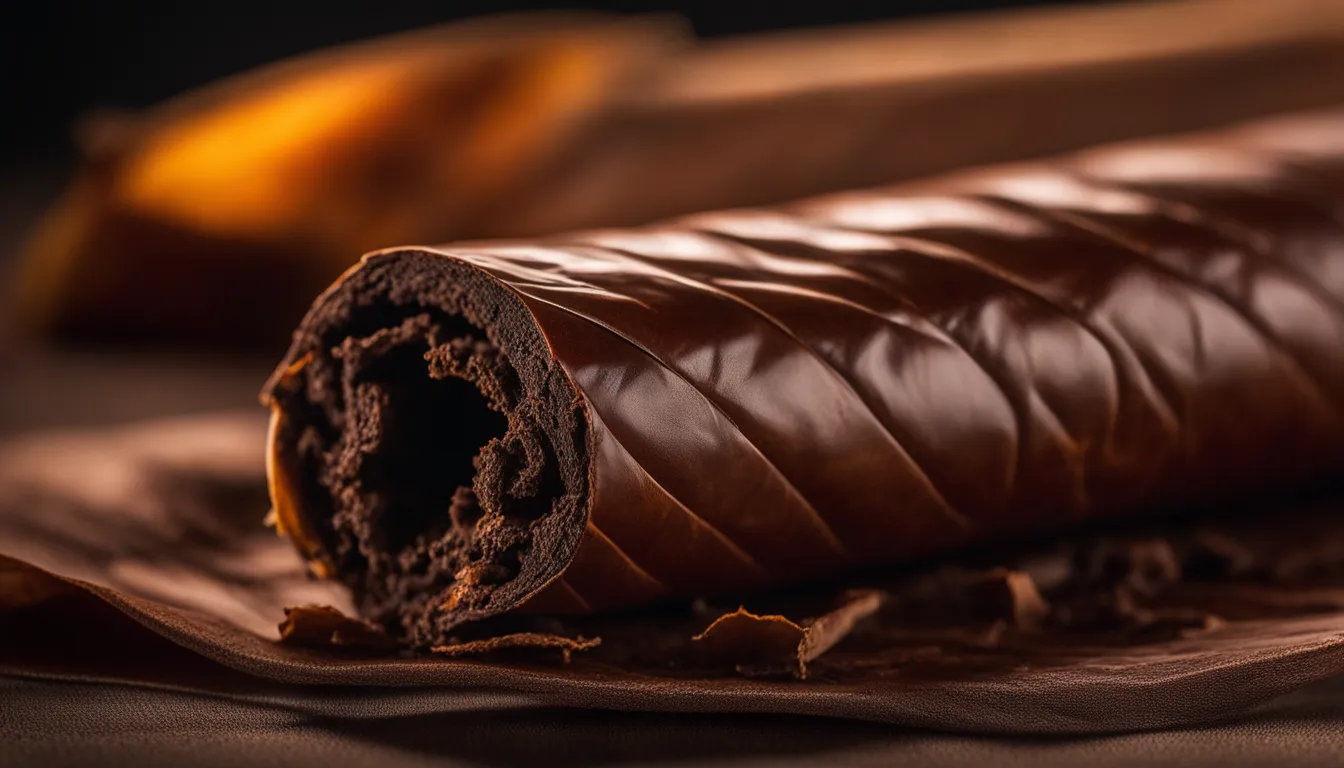
Look at the wrapper. The veins should be small, even, and running in the same direction. Big, raised veins signal lower-quality leaf. The cap — that little swirl at the top — should be smooth and well-applied. If it looks like someone glued it on during a car ride, put it back. The foot should be evenly packed and neatly trimmed. These aren't cosmetic details. They're quality indicators that tell you whether the roller knew what they were doing.
This is where cheap cigars fail most often. You can put decent tobacco inside a sloppy roll, and it'll still smoke like a disappointment. Construction is the foundation everything else sits on.
The Draw: Your First Real Test
The draw should feel like sipping through a wide straw — gentle resistance, steady airflow, a satisfying pull that fills your mouth with smoke without making your cheeks collapse. If it feels like sucking a milkshake through a coffee stirrer, that's a plugged cigar, and it's the most common quality issue in the business.
A plugged cigar isn't your fault. It's a construction defect — too much tobacco packed into one section, or a stem sitting crossways in the filler, blocking the air channel. You can try to fix it with a draw tool (a thin poker that you run through the center), and sometimes that works. But if you have to fight for every puff, it doesn't matter how good the tobacco is. You won't taste it. You'll taste effort and frustration.
On the other end, a draw that's too loose — zero resistance, smoke flooding your mouth — means the cigar is under-filled. It'll burn hot, the flavor will be harsh and one-dimensional, and you'll be done in 20 minutes when the cigar should have lasted 45. The sweet spot is in the middle: enough resistance to slow you down, enough airflow to keep the smoke cool and flavorful.
Here's a tip nobody tells beginners: before you light up, take a cold draw. Put the unlit cigar to your lips and pull. You'll get flavor notes from the tobacco and an immediate read on the draw. If it's tight before you light it, it won't magically fix itself after. Save yourself the match.
The Wrapper: More Than a Pretty Face
The wrapper is the outside leaf — the one you see, the one you touch, the one that makes you pick up this cigar instead of that one. But it's not just cosmetic. Depending on who you ask, the wrapper accounts for 30-60% of the cigar's flavor. Even the conservative end of that range means it matters a lot.
You don't need to memorize every wrapper type on earth, but knowing four will cover 90% of what you'll encounter at any shop:
Connecticut Shade — Light golden brown. Creamy, mild, slightly sweet. Grown under shade cloth (hence the name), which keeps the leaf thin and delicate. If someone says "give me something light," this is usually what they're getting. Great for morning smokes and beginners. Not boring — just gentle.
Habano — Medium to dark brown. Spicy, robust, with a peppery kick that hits you in the first few puffs. Originally from Cuba, now grown in Nicaragua, Ecuador, and elsewhere. This is the wrapper that lets you know the cigar has arrived. Full-flavored smokers gravitate here.
Maduro — Dark, sometimes almost black. Sweet, chocolatey, rich. The word means "mature" in Spanish because these leaves go through a longer fermentation process that develops sugars and smooths out harshness. A good maduro tastes like dark chocolate and espresso without any bitterness. A bad one tastes like dirt.
Cameroon — Reddish-brown, slightly toothy texture. Nutty, slightly sweet, with an earthy backbone. Grown in West Africa, these wrappers are thinner than they look and add a unique character you won't find in Central American tobaccos.
For the full rundown on every wrapper type, how they're grown, and what they bring to your smoke, check out our wrapper guide. It goes deeper than most people need, but if you're the type who likes to know why your cigar tastes like that, it's worth the read.
Flavor Complexity: The Difference Between Good and Great
A good cigar has flavor. A great cigar has a story. It evolves from the first puff to the last, taking you through a progression of tastes that keeps you interested for the full 45 minutes or the full hour and a half. The first third should taste different from the second third, and the second should differ from the final third. If you're getting the same single note from start to finish, you're smoking a mediocre cigar regardless of what it cost.
What does evolution look like? In a well-blended cigar, you might start with cedar and light cream in the first third. The second third introduces pepper, maybe some leather. The final third deepens into dark chocolate, espresso, or earth. Each section is distinct, but they're connected — one flows into the next like chapters in a book, not like changing TV channels.
The key word here is "blending." The filler inside a cigar isn't just one type of tobacco. It's usually three to five different varieties from different regions and different primings (where the leaf sat on the plant). A skilled blender layers these so that as the burn line moves down the cigar, it encounters different tobaccos at different ratios, creating those transitions. It's part science, part art, and the reason master blenders get treated like rock stars in this industry.
Our Flavor Explorer lets you browse cigars by flavor profile, so if you know you love chocolate-and-leather cigars but want to branch into spice, you can find exactly what to try next.
The Burn: Your Construction Report Card
An even burn line — where the lit end of the cigar burns straight across, no wobbles, no dive-bombing on one side — is the visible proof that everything underneath is right. The tobacco is evenly packed, the humidity is correct, and the cigar was rolled by someone who gave a damn.
An uneven burn is called "canoeing" because one side burns ahead of the other, making the lit end look like the bow of a canoe. It happens for three reasons: the cigar wasn't humidified properly (too wet on one side), the construction has an inconsistent fill, or the smoker didn't light it evenly. Two of those three are not your fault.
A well-made cigar, stored at the right humidity (65-70% RH), lit with patience, should burn straight with minimal touch-ups for its entire life. You shouldn't need to rotate it, baby it, or perform surgery with your lighter. If you find yourself constantly correcting the burn, the cigar is telling you something about its quality. Listen to it.
Of course, storage matters enormously. A perfect cigar stored in a dry drawer for six months will smoke like garbage. If you're keeping cigars at home and want to do it right, our storage guide covers everything from budget tupperdors to walk-in humidors.
Strength vs. Body: Two Different Things
This trips up almost every beginner, and plenty of experienced smokers still get it wrong. Strength and body are not the same thing. Confusing them leads to bad recommendations, bad purchases, and bad afternoons.
Strength is the nicotine hit. It's what makes you lightheaded if you smoke too fast on an empty stomach. A "strong" cigar delivers a lot of nicotine. A "mild" cigar delivers less. This has almost nothing to do with flavor.
Body is the weight and depth of the flavor. A full-bodied cigar has dense, complex flavors that coat your palate — chocolate, leather, earth, spice. A light-bodied cigar has more delicate flavors — cream, cedar, toast. This has almost nothing to do with nicotine.
Here's where it gets interesting: a cigar can be full-bodied and medium-strength, giving you tons of flavor without flattening you. Or it can be mild-bodied and strong — not much happening in the flavor department, but your head is spinning after twenty minutes. The best cigars for most people are medium-to-full body with medium strength: all the flavor, manageable nicotine.
When someone tells you they want "something light," figure out what they mean. Light flavor? Light strength? Both? It matters, and most shop employees won't ask the follow-up. Our smoking guide breaks down how strength and body interact and how to find your personal sweet spot.
The Finish: Where Quality Shows Its Face
The finish is what happens after you exhale. The smoke is gone, but the flavor lingers — or it doesn't. And that distinction separates good cigars from forgettable ones.
A great cigar leaves a clean, pleasant aftertaste that sits on your palate and makes you want the next puff. Maybe it's a lingering sweetness. Maybe it's a warm spice that fades slowly, like embers cooling. Maybe it's a creamy smoothness that coats the back of your tongue. Whatever it is, it's inviting. It pulls you forward through the smoke.
A bad cigar leaves bitterness, acidity, or — worst of all — nothing. An empty mouth. Forgettable. The tobacco was bland, or it was fermented poorly, or the cigar was stored wrong and the oils dried out. When the finish is gone in seconds, the cigar has nothing to say.
Pay attention to the finish next time you smoke. It's the quality indicator most people ignore because they're focused on the puff itself. But the finish is where the blend's quality really announces itself. A long, evolving finish is the calling card of premium tobacco and expert blending.
Price vs. Quality: The Diminishing Returns Curve
Here's the truth that cigar brands don't love to hear: for most smokers, quality gains flatten hard above the $15-18 per stick range. Below that line, more money generally buys better tobacco, better construction, and better consistency. Above it, you're increasingly paying for brand prestige, limited-edition marketing, and the privilege of saying you smoked something expensive.
A $7 Perdomo Lot 23 can outsmoke a $20 brand-name stick that has worse construction and a one-note flavor profile. A $9 Oliva Serie G will give many $15 cigars a serious run for their money. Some of the highest-rated cigars in our collection cost under $10 per stick. Price is a guideline, not a guarantee.
That doesn't mean expensive cigars are scams. Some absolutely justify their price with extraordinary tobacco, rare vintages, and construction that borders on engineering. But if you're working within a budget, you should know that the sweet spot for quality-to-dollar ratio sits right around $8-15. That range is where the magic happens for everyday smoking.
Check out our cigar reviews to see how cigars score across every price point. You might be surprised at what wins.
The Quick Test: Five Questions, One Answer
You don't need a checklist laminated in your pocket. But next time you're smoking, ask yourself five questions:
- Does it feel right in your hand? Smooth wrapper, slight give, no cracks or soft spots.
- Does it draw easily? Gentle resistance, steady smoke, no fight.
- Does the flavor change as you smoke? Different notes in the first, second, and final third.
- Does the burn stay even? Straight line, minimal touch-ups needed.
- Does the finish make you want more? Clean aftertaste that invites the next puff.
If you answer yes to all five, you've got a good cigar in your hand. Maybe a great one. If you're hitting three or fewer, the cigar is letting you down somewhere — and now you know exactly where.
Want to find the right cigar for your specific taste? Our cigar quiz matches you with cigars based on your flavor preferences, strength tolerance, and budget. Takes two minutes, saves you a lot of trial and error.
Where to Go from Here
Now you know what separates a good cigar from a mediocre one — and you know it's not about spending more money or memorizing jargon. It's about construction, draw, flavor evolution, and paying attention to what the cigar is telling you.
If you're ready to go deeper, start with our cigar hub for reviews, guides, and tools. And if you already have a cigar you love and want to know what to drink with it, our bourbon pairing guide will sort you out. The right drink with the right smoke turns a good evening into a great one.