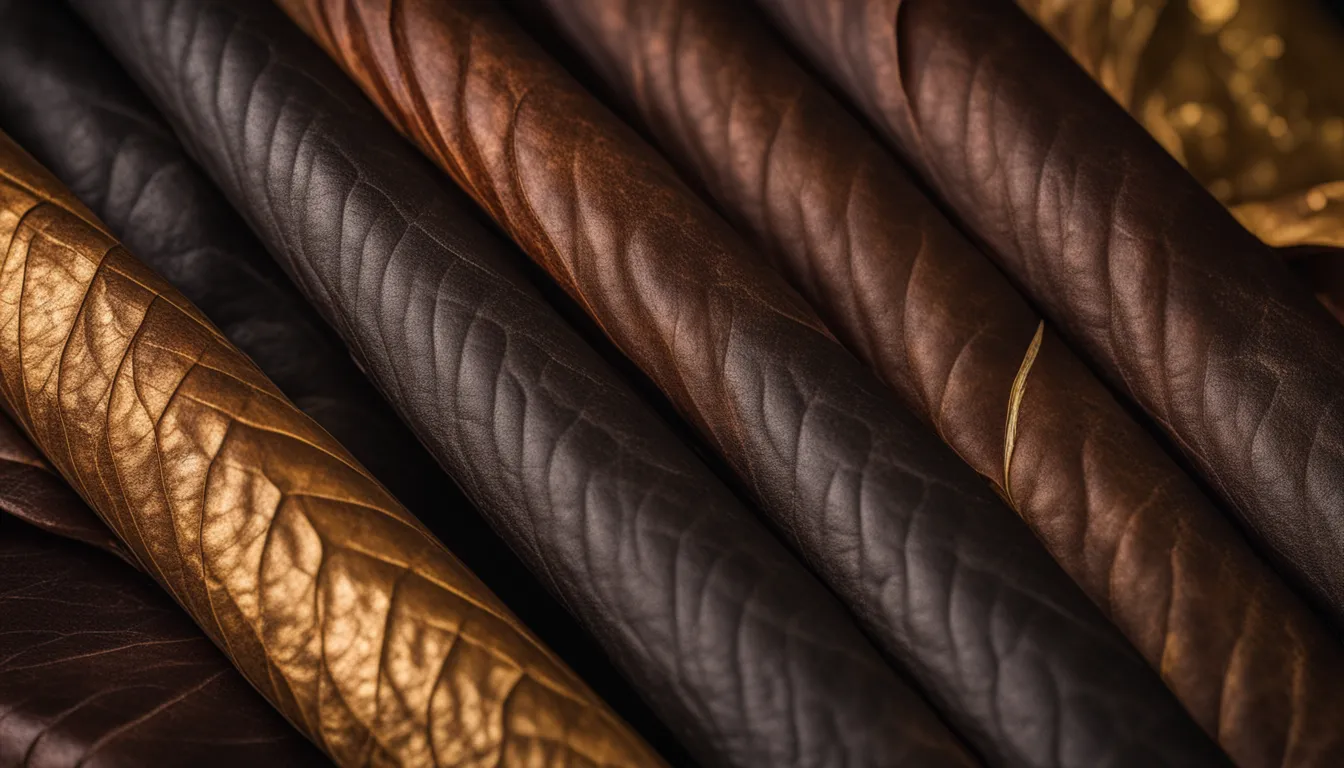
The first time I walked into a serious cigar shop, the guy behind the counter asked if I preferred Connecticut or Maduro. I nodded like I knew what he was talking about and pointed at something in the middle of the display case. It wasn't until three cigars later that I realized he was asking about the wrapper—the leaf that covers the entire cigar—and that this choice would determine most of what I was about to taste.
If you've ever stood in front of a humidor feeling completely lost, or wondered why two cigars that look nearly identical taste completely different, the wrapper is usually your answer. It's the most visible part of the cigar, and it's also the most important for flavor. But the terminology around wrappers is confusing, the naming conventions are inconsistent, and half the time the cigar band doesn't even tell you what you're smoking.
This guide breaks down the major wrapper types you'll actually encounter, what they taste like, and how to use that information to find cigars you'll enjoy. No botany degree required.
Why the Wrapper Matters (More Than You Think)
Here's the thing most beginners don't realize: the wrapper leaf accounts for somewhere between 60% and 90% of a cigar's flavor, depending on who you ask. That outer leaf isn't just decorative—it's the first thing that touches your palate, and because it's exposed to direct heat and air during the smoke, it contributes more to the taste profile than the binder or filler tobacco inside.
The wrapper also tells you a lot about how the cigar was made. A quality wrapper is smooth, oily, and free of major veins or blemishes. The color can range from pale tan to almost black, and that color is a direct result of where the tobacco was grown, how it was cured, and how long it was fermented.
Three things to look for in a wrapper:
- Color — Generally correlates with strength and sweetness. Lighter wrappers tend to be milder; darker wrappers are richer and sweeter.
- Texture — Smooth and oily usually means well-aged and flavorful. Dry or rough can mean the cigar wasn't stored properly or the leaf quality is lower.
- Vein structure — Small veins are fine. Large, pronounced veins can affect the burn and introduce bitterness.
When you understand wrapper types, you can walk into any shop and immediately narrow down your options based on what you're in the mood for. It's the fastest way to go from overwhelmed to informed.
The Major Wrapper Types
There are dozens of wrapper varieties out there, but most of what you'll encounter in a well-stocked humidor falls into a handful of categories. Here's what actually matters.
Connecticut Shade
This is the lightest, mildest wrapper you'll find on a premium cigar. Connecticut Shade tobacco was originally grown under massive cheesecloth tents in the Connecticut River Valley to protect the leaves from direct sunlight, which keeps them thin, smooth, and pale. Today, most Connecticut Shade wrappers come from Ecuador, where the climate naturally mimics those shaded conditions.
The flavor profile is creamy, subtle, and smooth—think cedar, light hay, and a touch of sweetness. Connecticut Shade cigars are what most people start with because they're approachable and forgiving. They pair beautifully with coffee, light cocktails, or an afternoon in the sun.
Examples: Ashton Classic, Perdomo Champagne, Montecristo White Series, Davidoff Aniversario.
If you're new to cigars or prefer something mild and refined, start here.
Connecticut Broadleaf
Broadleaf comes from the same region as Connecticut Shade, but it's grown in full sun, which makes the leaves thicker, darker, and richer. Connecticut Broadleaf is commonly used to make Maduro wrappers (more on that below), and it's prized for its natural sweetness and deep, earthy flavors.
This wrapper brings notes of dark chocolate, espresso, molasses, and a slight spice. It's richer than Shade but not as aggressive as some of the fuller-bodied wrappers. Broadleaf cigars have a smooth, almost velvety texture and a slower, more even burn.
Examples: Arturo Fuente Hemingway Maduro, Herrera Esteli, CAO Brazilia.
If you like bourbon with a high rye content or dark roast coffee, Broadleaf is your speed.
Habano / Cuban-Seed
Habano wrappers are grown from Cuban seed tobacco, but they're cultivated outside of Cuba—primarily in Nicaragua, Ecuador, and Honduras. This is the workhorse wrapper of the modern premium cigar world. It's medium to full-bodied, with bold flavors of pepper, leather, earth, and spice.
Habano-wrapped cigars tend to have more complexity than Connecticut cigars and more balance than pure Maduro. The leaf itself is usually reddish-brown, with a slightly toothy texture and a good amount of oil. These cigars are what you reach for when you want something with punch but not overwhelming strength.
Examples: Padron 1926, My Father Le Bijou, Oliva Serie V, Arturo Fuente Hemingway (natural).
If you're a whiskey drinker who likes complexity and spice, Habano is probably going to be your go-to wrapper.
Corojo
Corojo was originally developed in Cuba in the 1940s as a wrapper leaf for premium cigars, but it fell out of favor because it's difficult to grow and highly susceptible to disease. Today, Corojo is grown primarily in Honduras and Nicaragua, and it's known for its bold, spicy, oily profile.
Corojo wrappers are reddish-brown, heavily veined, and loaded with natural oils. The flavor is intense: black pepper, leather, cedar, and a lingering spice that builds as you smoke. Corojo cigars are not for beginners, but if you like full-flavored, high-octane smokes, this is one of the most satisfying wrappers out there.
Examples: Camacho Corojo, Alec Bradley Prensado, CLE Corojo.
Pair this with a high-proof bourbon or a peaty Scotch. It can handle it.
Maduro
Here's where it gets tricky: Maduro isn't a type of tobacco—it's a process. Any wrapper leaf can become a Maduro if it's fermented longer and at higher temperatures, which darkens the color and concentrates the sugars in the leaf. The result is a wrapper that's almost black, with flavors of cocoa, espresso, molasses, and dark fruit.
Maduro cigars are rich and sweet, but they're not necessarily stronger than natural wrappers. In fact, many Maduros are surprisingly smooth because the extended fermentation mellows out the harsher elements of the tobacco. The wrapper is thick, oily, and luxurious-looking, and the smoke is dense and satisfying.
Examples: Liga Privada No. 9, Padron 1964 Maduro, Ashton Aged Maduro, My Father The Judge.
If you like dessert with your whiskey, you'll love Maduro cigars. They're the equivalent of a bourbon barrel-aged stout.
Sumatra
Sumatra wrappers originated in Indonesia but are now also grown in Ecuador and other regions. The leaf is thin, silky, and slightly sweet, with a spicy, earthy flavor profile that sits somewhere between Connecticut and Habano.
Sumatra-wrapped cigars are complex but not overwhelming. You'll get notes of cedar, nuts, coffee, and a mild spice that lingers on the finish. The texture is smooth and refined, and the burn is usually excellent because the leaf is so thin and even.
Examples: Ashton VSG, Rocky Patel Vintage 1999, Graycliff.
If you want something more interesting than Connecticut but not as aggressive as Corojo, Sumatra is a great middle ground.
Cameroon
Cameroon wrappers come from a small region in Central Africa, and they're one of the rarest and most prized wrapper leaves in the cigar world. The leaf has a distinctive toothy texture, a reddish-brown color, and a flavor profile that's sweet, nutty, and slightly floral.
Cameroon cigars are complex and nuanced, with notes of cedar, honey, toasted almonds, and a light spice. The wrapper is delicate and requires careful handling, which is why Cameroon-wrapped cigars tend to be on the pricier side. Unfortunately, political instability and agricultural challenges in Cameroon have made this wrapper increasingly difficult to source, so when you find a good Cameroon cigar, it's worth grabbing.
Examples: Arturo Fuente Don Carlos, Illusione Epernay, Ashton Cabinet.
If you're looking for something elegant and refined, Cameroon is one of the best wrappers in the world.
Candela
Candela is the green cigar. It's not just a lighter shade—it's literally green, thanks to a quick-drying process that preserves the chlorophyll in the leaf. Candela was hugely popular in the mid-20th century but fell out of favor as smokers gravitated toward darker, richer wrappers.
The flavor is mild, grassy, slightly sweet, and a bit herbal. It's an acquired taste, but there's been a minor resurgence in Candela cigars in recent years as cigar makers experiment with retro blends and limited releases. If you're adventurous or nostalgic, it's worth trying once.
Examples: Illusione Candela, CAO Pilon Candela, Arturo Fuente 8-5-8 Candela.
Think of this as the opposite of Maduro—light, vegetal, and unusual.
How to Read a Cigar Band
Cigar bands are beautiful and often ornate, but they're not always helpful. Some bands will tell you the wrapper type—"Habano," "Maduro," "Connecticut"—but many don't. And even when they do, the terminology can be inconsistent.
Here's what to look for:
- "Natural" or "Claro" — Usually means a lighter wrapper, often Connecticut Shade.
- "Maduro" — Dark, fermented wrapper. Rich and sweet.
- "Habano" — Cuban-seed wrapper. Medium to full-bodied, spicy.
- "Corojo" — Bold, peppery, oily.
- "Oscuro" — Darker than Maduro. Extremely rich and sweet.
If the band doesn't specify, ask the shop staff or look up the cigar online. Most manufacturers list the wrapper type on their website or in product descriptions.
Matching Wrappers to Your Taste
If you're trying to figure out where to start, here's a quick guide based on what you already like:
- You drink light beers or white wine — Start with Connecticut Shade. It's mild, smooth, and won't overwhelm you.
- You love bourbon, especially high-rye or barrel-proof — Go for Maduro or Connecticut Broadleaf. The sweetness and richness will complement the whiskey.
- You're a Scotch drinker — Habano or Corojo. Both have the complexity and spice to match peaty or sherried single malts.
- You like trying new things — Cameroon or Sumatra. Both offer complexity without being too aggressive.
- You want something unusual — Candela. It's polarizing, but it's memorable.
The best way to learn wrappers is to try cigars side by side. Grab a Connecticut Shade, a Habano, and a Maduro from the same brand and smoke them over the course of a week. You'll notice the differences immediately.
For pairing recommendations, check out our guide to cigars that pair with bourbon, or browse our full cigar content for more deep dives.
The Wrapper Is Your First Clue, Not the Whole Story
The wrapper is the most important part of the cigar, but it's not the only part. The binder, filler, and construction all contribute to the final smoke. A great wrapper on a poorly blended cigar is still a disappointment, and a skilled blender can coax incredible flavors out of a relatively simple wrapper.
That said, understanding wrapper types is the fastest way to navigate a humidor with confidence. Once you know whether you prefer the creamy smoothness of Connecticut Shade or the bold spice of Corojo, you can start exploring blends within those categories and refining your palate.
If you're looking for specific recommendations, our top 10 cigars guide breaks down the best options across all wrapper types, and we've got reviews and pairings that'll help you find your next favorite smoke.
The next time someone asks if you prefer Connecticut or Maduro, you'll actually know what they're talking about. And more importantly, you'll know which one you want.