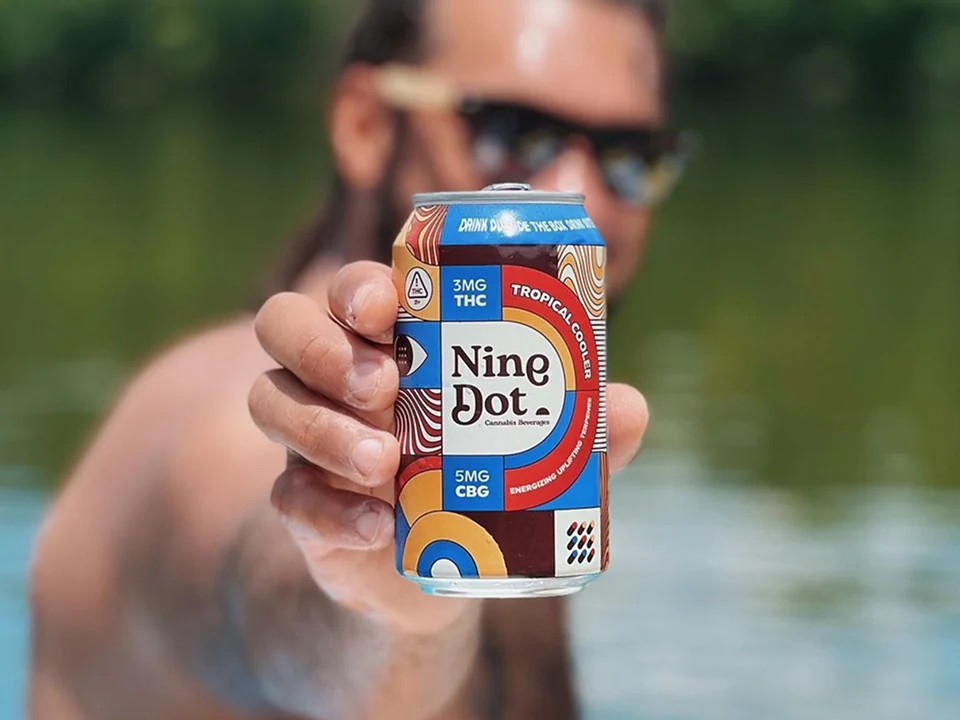
Welcome back to the BoozeMakers Interview Series, where we sit down with the operators reshaping what people drink and how the drinking happens. This time we're stepping a half-pace adjacent to the spirits aisle — into a category that's been quietly migrating from hemp shops into beer-and-wine retailers, then onto bar back-bars: hemp-derived THC beverages. The man across the table built one of the brands actually pulling that off.
Meet David Spang
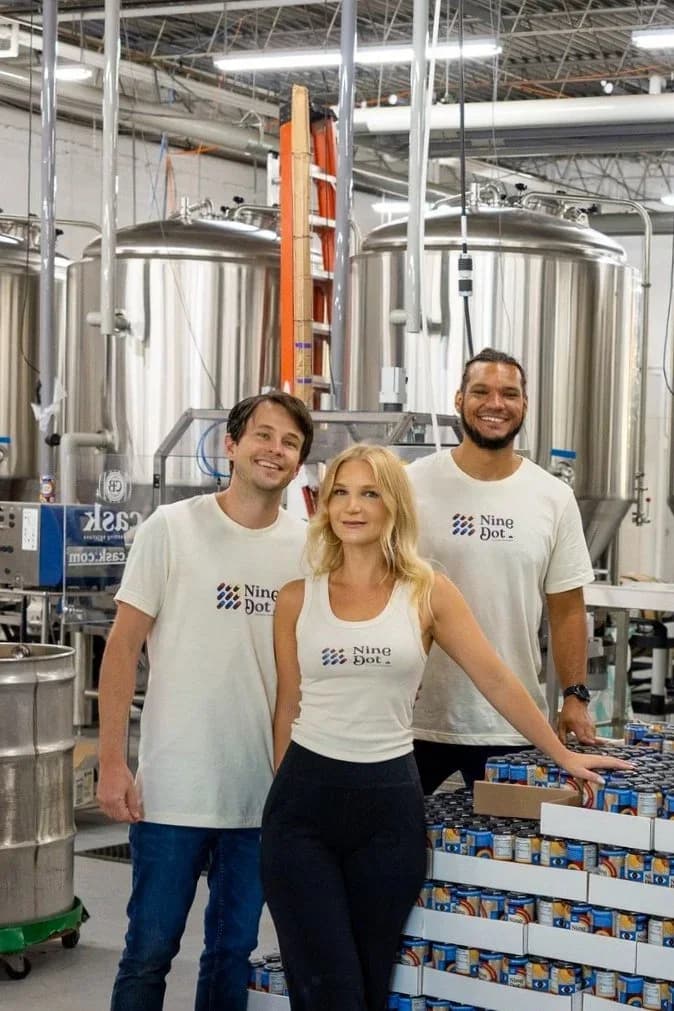
In 2017, while most of the country was still arguing about whether CBD oil was a vitamin or a vice, David Spang opened South Carolina's first dedicated CBD retail location. He calls it Coastal Green Wellness. He and his wife Crystal — a 12-year partnership in life and business — built it in a state with no medical or recreational cannabis program, in a market where banks wouldn't take his deposits, credit card processors hung up on him, and even commercial landlords needed to be talked into a lease.
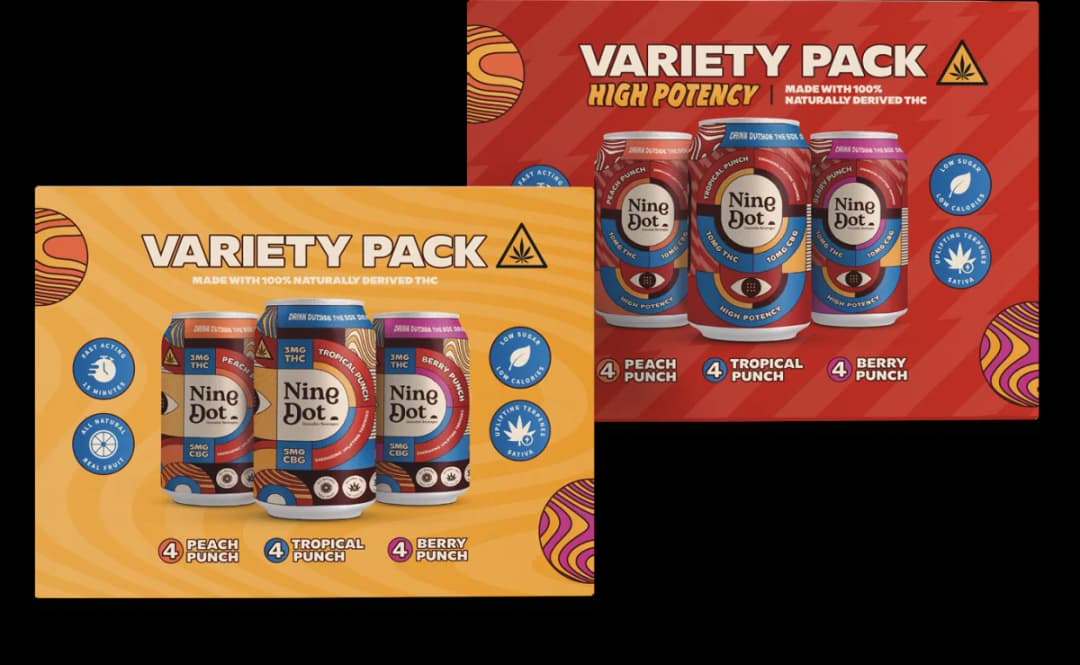
By 2025, that brick-and-mortar operation had quietly evolved into something different. Nine Dot Cannabis Beverages launched into Atlanta and the Southeast on March 25, 2025 — a line of hemp-derived, Farm Bill-compliant THC drinks built around a specific operational claim: 3mg cans for the people who actually want to swap them for beers, 10mg tallboys for the cannabis veterans, and 30mg elixirs for the bartender who wants to mix. A high-potency 12oz can and four-pack format followed in June.
The brand sits in a strange spot. It's not weed — it's hemp-derived THC, federally legal under the 2018 Farm Bill, under 0.3% THC by dry weight. It's not non-alcoholic in the LaCroix sense either — Spang openly markets it as "take the place of alcohol." It's a product designed for the bar crowd, the sober-curious crowd, and the bourbon-on-Tuesday crowd looking for a Wednesday alternative.
The catch: South Carolina, his home state, still hasn't passed comprehensive regulation. Georgia, where Nine Dot now does most of its retail business, has. Spang chairs the South Carolina Healthy Alternatives Association in the middle of what he calls "an absolute roller coaster" of competing bills and enforcement sweeps. The legal ground could shift under him at any time.
We sat down with Spang to talk about the 3mg bet, what nano-emulsification actually changes for the drinker, why he thinks bar owners are partners and not adversaries, and the policy fight he's running in parallel.
The Origin Story: Eight Years Before Anyone Else Showed Up
BoozeMakers: You started Coastal Green Wellness in 2017 as South Carolina's first dedicated CBD retail location — before the industry exploded. What did you see in 2016 that most people didn't, and what did being that early cost you?
Watching cannabis laws change across the country always piqued my interest. As soon as I noticed the pilot program for growing hemp under Federal regulation, I was intrigued by the opportunity to start a hemp company in states without medical or recreational cannabis access.
Being that early in an emerging, slightly polarizing industry caused skepticism from those closest to me, and it created hurdles for almost every business service we needed. From securing retail leases to banking, credit card processing, and insurance, it was a completely new category that caused significant hesitation and roadblocks.
BM: Nine Dot lived as a side project inside Coastal Green for about two years before launch. At what point did it stop feeling like a side project and start feeling like the main event?
To be honest, the turning point had less to do with my own operations and more to do with the mainstream adoption of canned beverages. I was surprised by how quickly traditional retailers got interested in carrying these products. We saw this product category move out of independent hemp retailers and into beer and wine retailers, bars and restaurants, and even venues. Seeing the beginning stages of that growth was definitely my first signal.
The Beverage Build: Where Retail Experience Stopped Helping
BM: You knew retail and formulation cold, but the beverage side was entirely new. What was the hardest thing about the drink itself that retail experience didn't prepare you for?
Hands down, it's absolutely the treacherous world of beverage distribution. Because of the logistical challenges of moving cans across regions, this industry is dominated by major players. The power they hold is something I was far from used to.
BM: Nine Dot is pitched openly as something that can "take the place of alcohol." That's a bold claim to make to a bar crowd. What does a cannabis beverage have to nail — taste, onset, the social ritual — before someone actually puts down the beer?
It's a tall ask, no doubt, but I think it comes down to the onset of effects. One of the biggest problems with gummies or other edibles is the delayed onset. High-quality, water-soluble nanoemulsification drastically reduces the time to feel the effects. So, providing a beverage that allows noticeable effects within minutes is absolutely key.
But not all water-soluble emulsions are made equally. This was the primary focus for the formulation of Nine Dot, and it's something we worked on for years.
BM: Your retail experience told you most hemp drinks got dosing wrong — 5mg being too strong for beginners and too weak for veterans at the same time. Talk us through how you landed on the 3mg cooler, the 10mg Tallboy, and the concentrated elixirs for mixing.
Dosing gets absolutely mixed responses. I stand firm that a low-dose, 3mg long-term is the best alcohol replacement. A lot of the initial growth was fueled by those who already have cannabis experience, but I believe the long-term growth will continue to be fueled by people who are new to THC and those with no tolerance.
5mg can be too much for a first experience. Plus, a low dose of 3mg allows consumers to have multiple, just like you would with a beer or cocktail. This truly lets consumers socialize in the same manner we have with alcohol for decades. But there are absolutely consumers who will outgrow 3mg or already have, which is why a 10mg can or the elixir, which allows you to make your own cocktail at your chosen strength, will also have a strong market hold.
BM: You lean on nanoemulsification for fast onset. For a reader who's only ever felt edibles kick in an hour late and twice as hard — what does "felt in minutes" actually change about the social occasion?
It's a story almost every consumer has: "I didn't feel the edible, so I took another. Now it's time to go home."
Unlike alcohol, when you get more heavily intoxicated on THC, you are hyper-aware of your level of intoxication. So, having a THC beverage you can actually feel in about 15 minutes means you know what to expect and when to expect it. This allows consumers to maintain a consistent and uplifting buzz, which is perfect for social occasions.
The Bar Play: Partner or Threat?
BM: Bars and restaurants are starting to stock THC drinks next to the liquor. Is the long-term play to sit beside alcohol on the menu, or to genuinely replace a chunk of it — and do bar owners see you as a partner or a threat to their margins?
The fact is, younger consumers are simply drinking less alcohol than ever before. Without an alternative, bars and restaurants are missing out on revenue they once had. With that in mind, the only logical perspective is that we're a partner.
But this circles back around to the dosage conversation. As a bar owner, why would you want to sell someone one canned 10mg beverage when they would normally consume two or three beers? Offering a lower dose option where a consumer who may refrain from alcohol would have two or three cans is ideal.
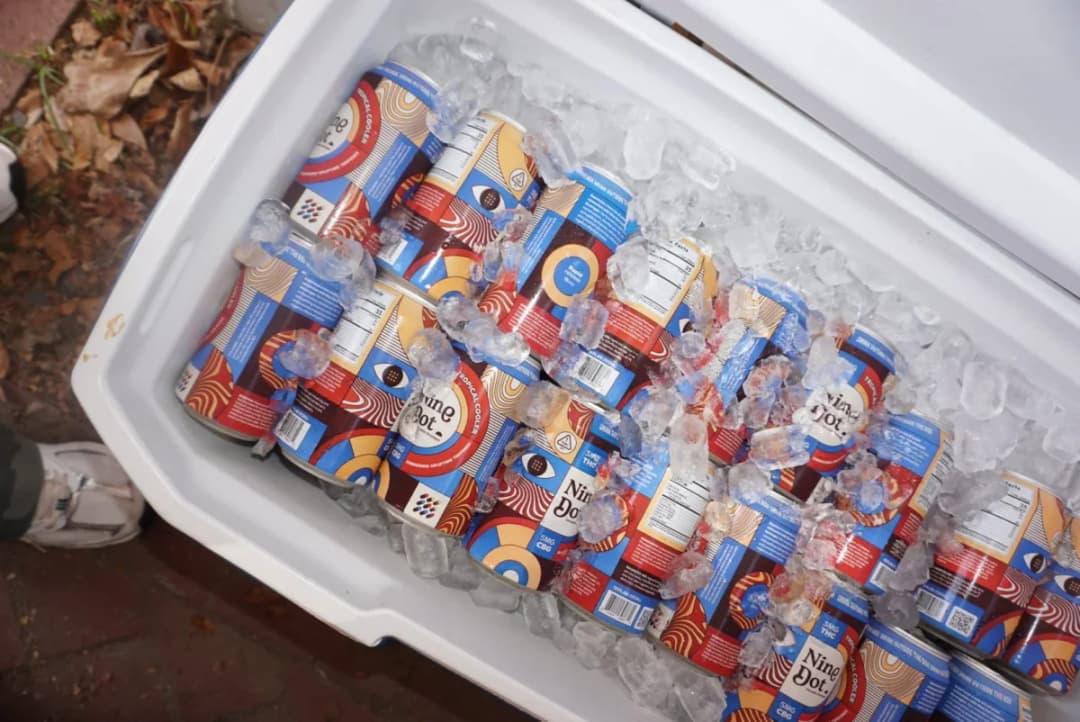
BM: Your tagline is "Drink Outside the Box," and the sober-curious and "California sober" movements are growing fast. Are you building a cannabis brand that happens to be a drink, or a social-drinking brand that happens to be cannabis?
I feel like we are building a social drinking brand that happens to be cannabis. An avid cannabis consumer won't shy away from a cannabis beverage on a menu, but they aren't necessarily our target audience.
The biggest drivers of market growth are going to be those who are cannabis-curious and are looking to drink less, or completely stop drinking alcohol, while still keeping that social connection we all enjoy from time to time.
The Regulatory Roller Coaster
BM: You're chairman of the South Carolina Healthy Alternatives Association during what you've called an "absolute roller coaster" — multiple competing bills before the statehouse, enforcement actions sweeping up legitimate businesses. For someone outside the industry, what's actually at stake right now?
The entire future of this industry is absolutely at stake. There are forces at play that want to completely ban all hemp at both the federal and state levels. If this were actually about consumer safety, the conversation would be about sensible regulation and not prohibition.
BM: You run locations in both South Carolina and Georgia, and you've said Georgia actually spelled out what can be sold, how it's inspected, and who can buy it. What did Georgia get right that South Carolina still hasn't — and what would it take for you to feel secure staying in your home state?
Not only Georgia, but also Tennessee, Florida, Kentucky, and many other states have chosen to regulate this industry sensibly. This keeps consumers safe and small businesses alive.
In South Carolina, we have been pushing for almost 3 years to have full, comprehensive regulations passed, including licensing, testing requirements, packaging, and milligram limits. The only way forward in South Carolina is sensible regulation.
BM: You've been candid that the rug could be pulled out from under you at any moment after eight-plus years and everything you've put in. How do you build a brand, hire people, and plan inventory when the legal ground can shift overnight?
The shortest answer is that this uncertainty creates stress and risk. As far as the risk is concerned, I try to mitigate it, but I also view it as just part of an emerging industry. I do my best to protect our team and their futures through legislative efforts and by ensuring we already comply with the regulations we will hopefully be receiving.
As for the stress, I just remind myself that I'm happy to be in an industry I'm genuinely passionate about. Oh, and a Nine Dot here and there doesn't hurt.
BM: You argue for regulation over prohibition — age limits, licensing, serving-size caps, eliminating bad actors — while some in the industry resist any rules at all. Why is the responsible-regulation position the one that actually protects small operators like you?
When there is money to be made and corners to be cut, they absolutely will be cut. Consumer safety is rarely put before profitability in almost any industry, which is why sensible regulation is needed.
But we have to emphasize that sensible regulation cannot squeeze out small businesses. It can be a balancing act, but when done correctly, it helps small businesses thrive, allows the industry to grow, and keeps consumers happy and safe.
The Partnership Inside the Partnership
BM: You and Crystal built this together — she runs PR, social, and events; you run product and strategy. How do you split the brand without splitting the company, especially when the business is the marriage?
Crystal and I have been together for over 12 years. Throughout that time, we've experienced success, failure, and everything in between. We've always been focused on learning and growing together in ways that help us achieve our goals.
The business/marriage separation is similar to how we approach separating our work and personal life. Essentially, they are the same. I don't really keep work and personal hours; I'm not really "on" or "off." It's just what I wake up and do every day.
BM: There's a single-dose elixir packet in the works, partly to stay ahead of changing Georgia hemp law. How much of your product roadmap is driven by consumer demand versus by legislators you've never met?
For the most part, consumer demand and regulation are always at odds, so keeping both in mind is absolutely key when planning the roadmap. Giving consumers what they want while staying within regulatory guidelines is key to success.
If Everything Changes Overnight
BM: If federal legalization and banking access arrived tomorrow, what's the first thing you'd do that the current patchwork makes impossible — and does that change who Nine Dot competes with overnight?
If complete Federal legalization and banking access happened overnight, it would absolutely change the landscape immediately. With interstate commerce currently restricted for medical and recreational marijuana companies, these established, separate industries would suddenly be available nationwide.
This would completely change everything from investing to the entire supply chain and retail access. The growth would be massive, but incredibly competitive.
About Nine Dot Cannabis Beverages
Nine Dot is a hemp-derived THC beverage line founded by David and Crystal Spang and launched out of Atlanta on March 25, 2025. All products are Farm Bill compliant — hemp-derived and under 0.3% THC by dry weight — and intended for adults 21 and over. The lineup includes:
- 3mg THC / 5mg CBG, 12oz cans — Tropical Punch, Berry Punch, Peach Punch. The "social-drinking" tier; two or three over an evening.
- 10mg THC / 10mg CBG, 12oz tallboys — Same flavors, high-potency format. The "one-and-done" tier for experienced consumers.
- 20mg THC, 16oz high-potency can — Tropical Punch, single-serve.
- 30mg THC / 30mg CBD Cannabis Elixirs — Ginger Limeade and Passion Fruit. 2.5mg THC and 2.5mg CBD per capful, designed for mixing your own cocktail at your chosen strength.
- Variety packs and four-packs — Mixed-flavor and single-potency configurations introduced in June 2025.
Distribution is currently focused in Georgia and South Carolina (online plus select retailers, bars, and venues), with David Spang serving as chairman of the South Carolina Healthy Alternatives Association in parallel.
Web: drinknine.com · drinkninedot.com
Instagram: @drinkninedot
Nine Dot products are for adults 21 and over. Hemp-derived THC products are regulated state-by-state; check your local laws. BoozeMakers covers the business of drinking — including emerging adult-beverage categories — and does not endorse cannabis consumption.
The BoozeMakers Interview Series profiles the operators shaping America's adult-beverage scene — including the ones building outside the spirits aisle. Know someone we should talk to? Drop us a line.