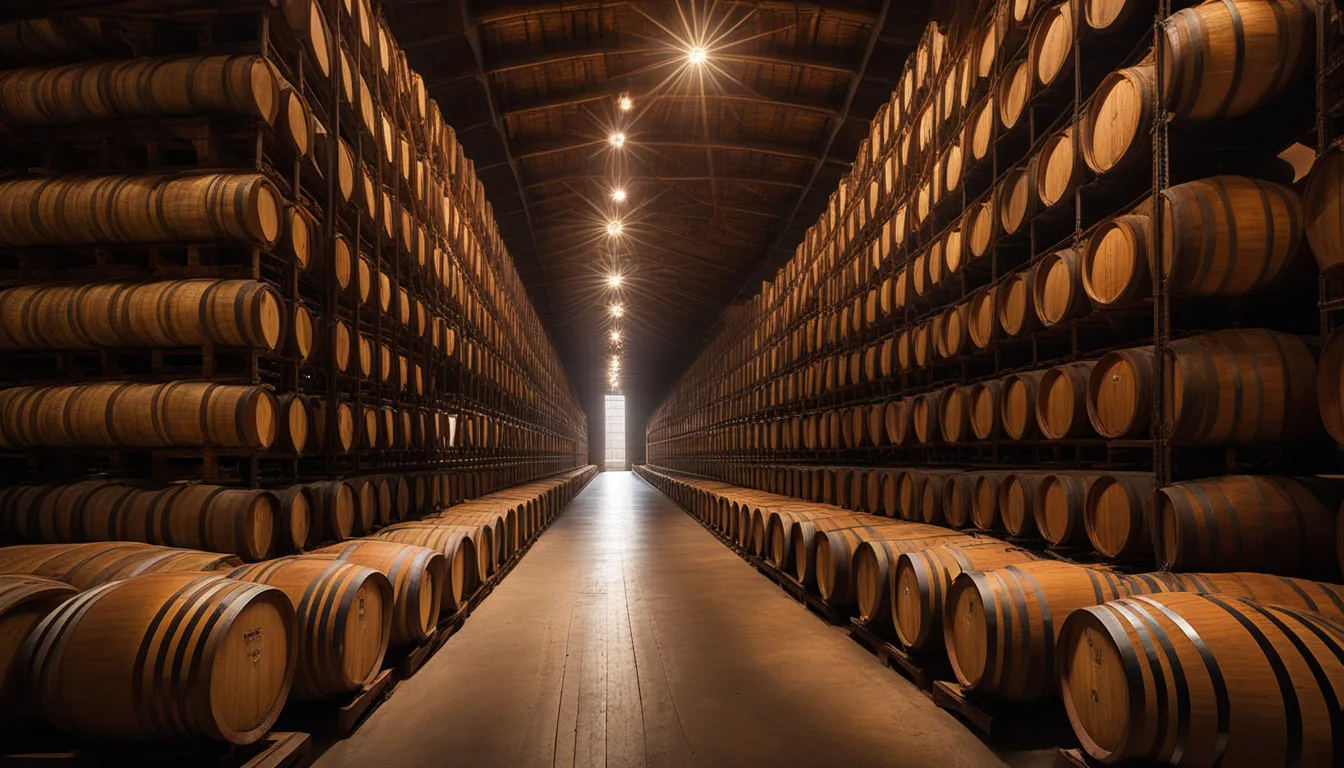
2026 is the best buyer's market for bourbon since before the boom started. Jim Beam didn't just slow down. They turned the key, locked the door at Clermont, and said "see you in 2027." When the largest bourbon producer on the planet mothballs its flagship distillery for an entire calendar year, that's not a blip — that's a signal flare. The bourbon industry overproduced, over-promised, and over-allocated for the better part of a decade, and now the bill's come due. But here's the thing nobody in the trade press wants to say out loud: if you actually drink bourbon — if you're not flipping bottles on Facebook groups or hoarding Weller to feel important — this correction is the best thing that's happened to you in years. Shelves are full. Prices are softening. Allocated bottles are gathering dust. And the window won't stay open forever.
What the Hell Happened? The Bourbon Boom-to-Glut Pipeline
The short version: everyone got drunk on demand projections that turned out to be fantasy.
Between 2016 and 2022, Kentucky's bourbon industry went on the most aggressive expansion spree in its 250-year history. Distillers barreled approximately 2.7 million barrels in 2022 alone — a staggering number when you consider that bourbon needs a minimum of two years (and realistically four to twelve) before it's ready to sell. Distributors, scarred by the allocation chaos of 2019-2021, over-ordered everything they could get their hands on to avoid empty shelves. Distillers read those inflated orders as genuine consumer demand and did what any rational business would do: they built more rickhouses, hired more workers, and ran their stills around the clock.
The math caught up. According to the Kentucky Distillers' Association (KDA), there are now 16.1 million barrels of bourbon and other spirits aging in Kentucky — an all-time record. Every single one of those barrels gets taxed. The barrel tax hit $75 million in 2025, up 27% year-over-year. That's $75 million in taxes on inventory that's just sitting in warehouses, not generating a dime of revenue until someone decides to bottle it and ship it.
Meanwhile, the demand side fell off a cliff. A 2025 Gallup survey found that only 54% of American adults report drinking alcohol — the lowest figure in roughly 90 years. Gen Z and younger millennials are driving an NA and low-ABV movement that would've been unthinkable a decade ago. Post-pandemic inflation squeezed discretionary spending, and $60 bourbon turned out to be pretty discretionary for a lot of households.
Then the tariffs kicked the industry while it was down. EU retaliatory tariffs — originally imposed in response to U.S. steel and aluminum duties — dropped American whiskey exports 27% in recent years. The European Union is bourbon's biggest export market, full stop. A temporary suspension of those tariffs expired in February 2026, and as of this writing, no new deal is in place. Bourbon's second-largest customer base is paying a surcharge that makes Kentucky's finest less competitive against Scotch on European shelves.
So: record production, record inventory, record taxes, declining domestic consumption, and a tariff wall around your best international market. That's the pipeline. That's how 16.1 million barrels end up sitting in Kentucky rickhouses while Jim Beam padlocks Clermont. If you want to understand how bourbon is made, now's actually a great time — because the industry is about to get very interested in reminding you why their product is worth buying. And if you're curious about what those age statements actually mean, understanding the timeline matters more than ever.
Who's Cutting Back (and How Much)
This isn't one distillery having a bad quarter. This is an industry-wide retrenchment, and the numbers are ugly.
Jim Beam shut down its flagship James B. Beam campus in Clermont, Kentucky for the entirety of 2026. That's the big one — the distillery that's been producing bourbon since 1795 (or 1795-ish, depending on which corporate history you believe). Beam Suntory says they'll use the downtime for "site enhancements," which is corporate speak for "we have way too much whiskey and we're not making more until we sell some." The Fred B. Noe craft distillery in Clermont and the Booker Noe site in Boston, Kentucky continue to operate, but those are smaller operations producing specialty releases, not the volume workhorse that Clermont represents.
They're not alone. Heaven Hill trimmed production across its operations in 2025. So did Maker's Mark. So did Wild Turkey. When Jim Beam, Heaven Hill, and Wild Turkey all pump the brakes in the same year, that's not a coincidence. That's an industry admitting it overcooked the mash.
The aggregate picture is even more stark. U.S. whiskey output dropped 28% through August 2025 compared to the prior year. Nearly a third less whiskey being produced across the country. That kind of contraction hasn't happened since the early 1980s, when bourbon was losing market share to vodka and nobody under 40 wanted anything brown in their glass.
The publicly traded players are feeling it in their earnings calls, too. Diageo reported North American sales and operating profit both down 2.8% in its interim FY2026 results — and Diageo owns Bulleit, one of the top-selling bourbon brands in the country. Brown-Forman, parent of Woodford Reserve and Old Forester, has been vocal about tariff headwinds affecting international revenue. Even Sazerac, which owns Buffalo Trace and operates as a private company (meaning they don't have to disclose much), has reportedly slowed barrel fills at multiple facilities.
The common thread across every major Kentucky distiller — Beam Suntory, Heaven Hill, Brown-Forman, Sazerac, Campari (Wild Turkey), Kirin (Four Roses) — is the same: too much inventory, not enough buyers, and a tax bill that grows every year the barrels sit.
Why This Is Spectacular News If You Actually Drink Bourbon
Enough doom and gloom. Let's talk about why you should be grinning right now.
Prices are softening across the board. Not crashing — nobody's selling Pappy for $50 — but the premiumization trend that defined 2018-2024 is hitting a wall. Eight-to-twelve-year aged bourbon that commanded $70-$90 during peak hype is showing up at $55-$70. Core bottles in the $30-$50 range are getting renewed retail attention because distillers and distributors need volume, not limited-edition launches. If your bottle doesn't justify its price tag with real quality — an actual age statement, genuine single-barrel provenance, a story beyond "we put it in a fancy box" — good luck moving it in 2026.
Allocated bottles are sitting on shelves. This one still catches me off guard. I walked into my regular spot last week and saw four bottles of Elijah Craig Barrel Proof lined up like it was nothing. Two years ago, that store would've had a waitlist and a purchase limit. Blanton's sightings have gone from "holy grail" to "oh, there it is again." E.H. Taylor Small Batch pops up with something approaching regularity. The hype chasers — the guys who were paying $800 for Blanton's on the secondary market in 2021 — have largely moved on to Japanese whisky or tequila or whatever the next speculative bubble is. Walk into any decent liquor store and just look at what's on the shelf. It's a different world.
Here's what's counterintuitive: the quality of available bourbon has never been higher. Those 16.1 million barrels sitting in Kentucky rickhouses? They include millions of barrels filled during the boom years, aging right now, reaching peak maturity. Production cuts happening today won't affect what's on your shelf for four to twelve years. The bourbon you're buying in 2026 was distilled during the industry's most ambitious, most heavily invested era. You're getting the peak output at corrected prices. That's an absurd value proposition.
And competition for your dollar is forcing innovation. Distillers who could coast on limited releases and artificial scarcity now need to actually compete. Expect more interesting barrel finishes, experimental grain bills, transparent sourcing, and competitive pricing on genuinely good whiskey. Maker's Mark has been doing fascinating things with their FAE (Fat Stave, Added Extra) series. Bardstown Bourbon Company keeps pushing the envelope with their Discovery and Collaborative Series. Four Roses is releasing recipe-specific single barrels that dive deep into their ten distinct bourbon mashbills. When distillers have to earn your business instead of rationing it, everybody drinks better.
If you need help navigating the options, I've covered the best picks at every price point: best bourbon under $30, best bourbon under $50, best bourbon under $100, and best premium bourbon over $100.
What to Stock Up On Right Now
Okay, practical advice. Three tiers, specific bottles, zero filler. These are what I'd be buying (and in several cases, what I am buying) during this window.
The No-Brainer Shelf Stockers ($25–$45)
Wild Turkey 101 remains the single best value in American whiskey, full stop — 101 proof, no age statement but consistently 6-8 years old, and priced like it doesn't know how good it is. Evan Williams Single Barrel runs about $30 and carries a vintage year on the label, which means you're getting aged, single-barrel bourbon at a price most distillers charge for their bottom-shelf blend. Buffalo Trace went from impossible to find to readily available in most markets — grab one at $28 and remember what the fuss was about. Elijah Craig Small Batch delivers Heaven Hill's signature nutty, caramel-forward profile at $32-$35, and it's a genuine 8-to-12-year blend at a price that's almost insulting. Knob Creek 9-Year is one of the few major bourbons that still carries an age statement, and at $38-$42, you're getting Jim Beam's best non-limited expression.
These were the best values before the glut. Now they're the best values AND actually in stock. If you have cabinet space, buy two of each and forget about them.
The Sweet Spot — Bottles That Used to Disappear ($50–$80)
This is where the correction really shines. Elijah Craig Barrel Proof drops three batches a year (Batch A126 just hit shelves), runs 120-135 proof, and drinks like a $120 bottle that someone accidentally priced at $65. It was the hardest bottle to find in America for about three years running. Now it's findable if you put in minimal effort. Russell's Reserve Single Barrel — Wild Turkey's premium expression, hand-selected by Eddie Russell himself — shows up at $60-$65 and delivers a depth of flavor that justifies twice the price. Knob Creek 12-Year is the big brother to the 9-Year and one of the best age-stated bourbons in this range at around $65. Four Roses Single Barrel at $50-$55 showcases their high-rye OBSV recipe at 100 proof, and it's become one of the most consistently excellent pours in the category.
Two years ago you'd have driven to three stores for ECBP and come home empty-handed. Last week I saw four bottles at my regular spot, all different batches. The sweet spot tier is where this market correction pays the biggest dividends for people who actually open their bottles.
The "Treat Yourself" Window ($80–$150)
Booker's — Beam's uncut, unfiltered flagship named after Booker Noe — releases quarterly batches in the $90-$100 range, and each one is a barrel-proof monster with a story. The 2026 batches are pulling from some of the best stock laid down during peak Clermont production. Bardstown Bourbon Company Discovery Series blends sourced and estate-distilled bourbon into something that routinely scores 90+ from every critic who matters, and it runs $130-$140. Maker's Mark FAE-02 (or whichever Fat Stave/Added Extra variant is current) takes their wheated bourbon profile and amplifies it with innovative stave finishing — $70-$80, technically below this tier, but I'm putting it here because it drinks above its price. Select Heaven Hill releases — Parker's Heritage, Elijah Craig 18-Year when it appears — round out the top shelf.
If there was ever a year to splurge on a bottle you've been eyeing, this is it. The inventory pressure is real, the quality is peak, and nobody's fighting you for shelf space anymore.
The Other Side — What This Means for Kentucky
I'd be a jerk if I wrote 3,000 words about cheap bourbon without acknowledging that someone's losing shifts so your shelf stays full.
The Jim Beam Clermont shutdown affects real workers and real families in Bullitt County, Kentucky. Beam Suntory says affected employees will be offered positions at other facilities, but "offered positions" and "kept whole" aren't the same thing when the other facility is an hour's drive away and your spouse works in Shepherdsville. Bardstown, Frankfort, Lawrenceburg — these are small towns where the distillery isn't just an employer, it's the economic engine. When production slows, the ripple hits restaurants, hotels, cooperages, trucking companies, and every small business in the supply chain.
That $75 million barrel tax is a particular gut punch. Kentucky taxes distillers on every barrel of aging whiskey, regardless of whether it's been sold. When you're sitting on 16.1 million barrels and demand has cratered, you're paying tens of millions in taxes on inventory you can't move fast enough. The KDA has lobbied for tax reform for years, and the current situation gives that argument real urgency — but legislative relief moves slowly, and cash flow problems don't wait for Frankfort to act.
Small craft distillers face the sharpest risk. Operations that expanded during the boom — took on debt, built new rickhouses, hired staff — don't have the cash reserves of Beam Suntory or Brown-Forman to weather a multi-year correction. Some of these distilleries make exceptional bourbon. Not all of them will survive this cycle. If you care about the diversity and creativity of the bourbon landscape, consider putting a few of your correction-era dollars toward craft producers in your state. Visit them if you can — the bourbon trail has never been more worth the trip. And if you want context for why bourbon and taxes have always been a volatile mix, the Whiskey Rebellion of 1794 is a story that rhymes uncomfortably with today.
How Long Does the Window Stay Open?
Here's the math that matters for your buying timeline.
Production cuts in 2025 and 2026 mean fewer barrels entering rickhouses right now. But bourbon takes 4 to 12 years to mature. The whiskey that Jim Beam, Heaven Hill, Wild Turkey, and Maker's Mark aren't producing today won't create a supply gap until 2030 at the earliest — and more likely 2033-2038 for the aged expressions that drinkers care most about. The bottles on your shelf this year were distilled in 2014-2022, during the industry's most prolific era. There's a massive pipeline of well-aged bourbon still working its way to market.
The pricing and availability window — the part where you actually benefit as a consumer — will likely last 18 to 36 months. Distillers and distributors need to work through existing inventory, and with domestic consumption flat and exports constrained by tariffs, that drawdown takes time. If the U.S.-EU tariff situation resolves and export demand rebounds, the domestic oversupply drains faster and the window narrows. If tariffs persist or expand (always possible in the current trade environment), the window stays open longer but at the cost of real pain for producers.
The practical takeaway: stock your bar in 2026, not 2028. The current moment — peak-quality boom-era bourbon, softening prices, full shelves, minimal competition from flippers — is a convergence that won't repeat. By 2028, inventory will have tightened, production may be ramping back up, and the narrative will have shifted from "bourbon glut" to "bourbon recovery." The smart play is now.
The Bottom Line
2026 is a generational buying window for bourbon drinkers. Not for flippers, not for speculators, not for the guys who treat bottles like baseball cards — for people who actually pour whiskey into a glass and drink it. The industry overbuilt, the market corrected, and the people who benefit are the ones standing in their local liquor store this month looking at shelves that haven't been this full or this fairly priced in a decade. Buy what you like. Try bottles you couldn't find two years ago. Support a craft distiller who's sweating through this downturn. And remember: sixteen million barrels. That's the number. Because in five years, when everyone's complaining about bourbon prices again and allocated bottles are back behind the counter, you'll be glad you listened.
Frequently Asked Questions
Is bourbon getting cheaper in 2026?
Yes — core bottles in the $30–$70 range are seeing renewed shelf presence and occasional discounts. Eight-to-twelve-year aged bourbon that commanded premiums during the boom is increasingly available at or below MSRP. The secondary market for allocated bottles has dropped significantly. Don't expect fire-sale pricing on flagship products, but the days of paying over retail for readily available bourbon are largely over.
Why did Jim Beam shut down Clermont?
Jim Beam paused whiskey production at its flagship James B. Beam campus in Clermont, Kentucky for all of 2026 to realign production levels with consumer demand. The company cited oversupply conditions and plans to invest in site enhancements during the downtime. Production continues at the smaller Fred B. Noe craft distillery in Clermont and the Booker Noe site in Boston, Kentucky.
How long will the bourbon glut last?
The current oversupply window will likely last 18 to 36 months based on production cuts across the industry. However, because bourbon requires years of aging, the effects of 2025–2026 production reductions won't fully impact shelf availability until 2030–2038. The near-term pricing advantage for consumers depends partly on whether U.S.–EU tariff disputes are resolved, which would accelerate export demand and drain domestic surplus faster.
What bourbon should I buy right now?
Focus on well-aged core bottles that are suddenly easier to find. In the $25–$45 range: Wild Turkey 101, Elijah Craig Small Batch, and Knob Creek 9-Year. In the $50–$80 range: Elijah Craig Barrel Proof, Russell's Reserve Single Barrel, and Four Roses Single Barrel. For a splurge ($80–$150): Booker's and Bardstown Bourbon Company Discovery Series. These bottles represent peak quality from boom-era production at prices that may not last.