We tasted Oak & Grist's genevers as part of a hosted trip coordinated by One For The Books, which also reimbursed our travel costs. Our tasting was complimentary; we bought the bottle of Barrel Reserve Genever. Our opinions are our own.
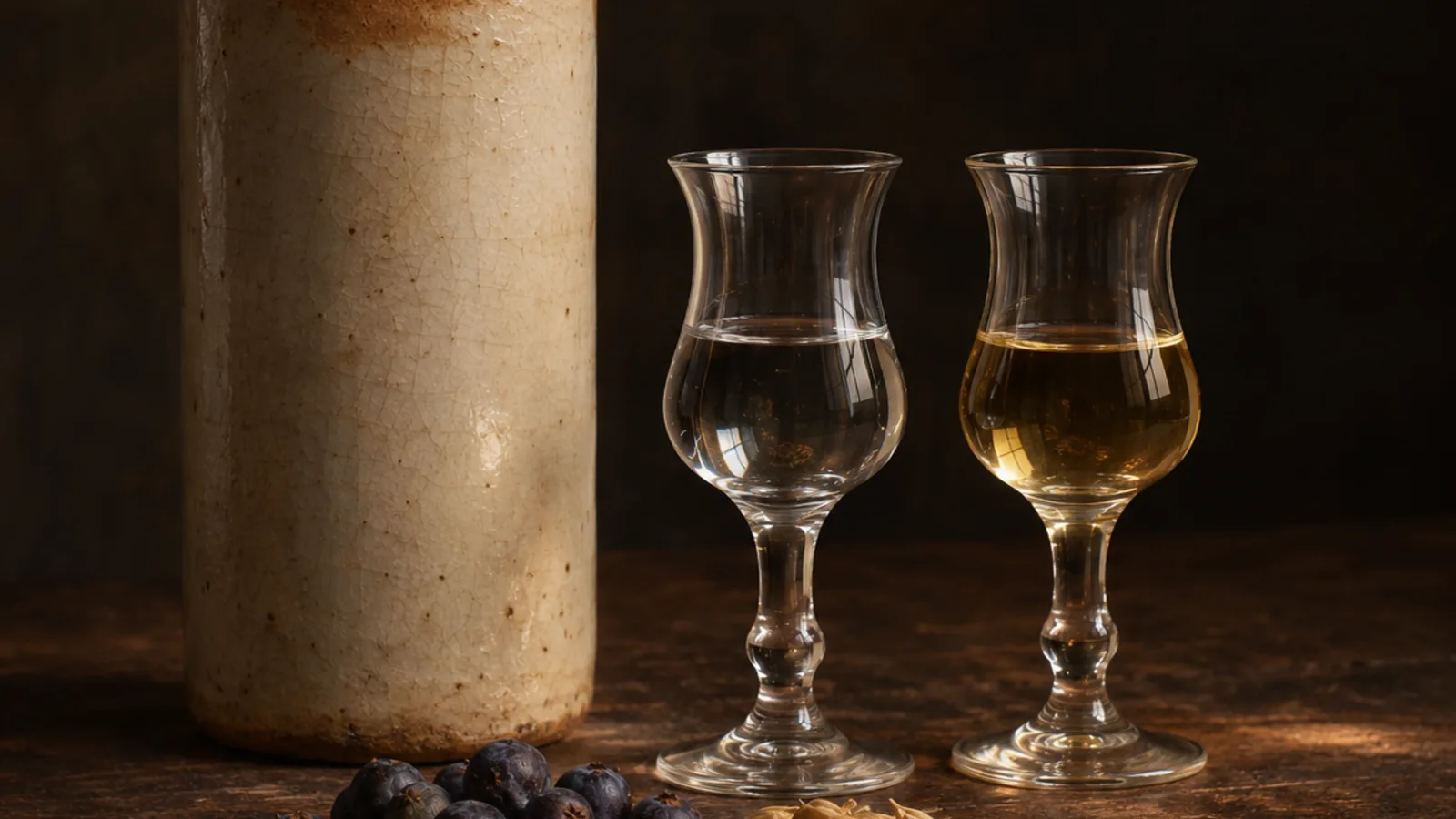
Genever is gin's grain-forward ancestor: juniper over a malty, whiskey-like base instead of neutral spirit. How much of that base is in the bottle is the whole difference, and the Dutch label tells you: a "jonge" genever can be as little as 15% malt wine and 85% something closer to vodka, while a "korenwijn" must be at least 51% malt wine. If you want the grainy style, that one word decides what you get.
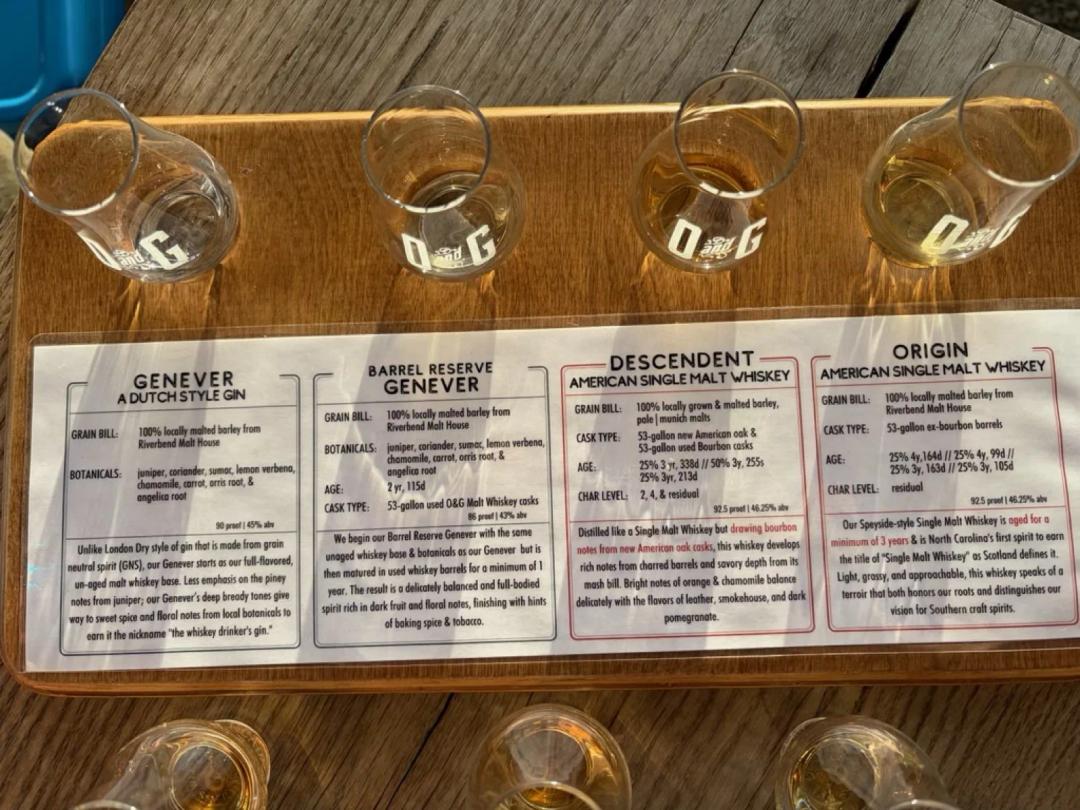
We learned this the good way. On November 5, 2026, our tasting board at Oak & Grist in Black Mountain, North Carolina, held two genevers next to its single malts, and the Barrel Reserve Genever was the standout pour of seven. It's the bottle we bought, over a nine-year single malt. Our Oak & Grist distillery review covers the full flight.
What is the difference between genever and gin?
The base spirit. Both get their main flavor from juniper. Most gin starts as neutral spirit, distilled so high that the grain barely shows, then flavored with juniper and other botanicals. Genever starts with malt wine (moutwijn in Dutch): an unaged, pot-distilled grain spirit that Difford's Guide describes as "a kind of unaged whisk(e)y." The malt wine is what makes genever taste bready and round where a London dry gin tastes lighter.
US law doesn't define genever at all. Under the federal gin standard, 27 CFR 5.144, gin "must derive its main characteristic flavor from juniper berries" and be bottled at no less than 80 proof, and it may be made from mash, by redistillation or by mixing neutral spirits. The only extra words the rule lists for distilled gin are "distilled," "Dry," "London" and "Old Tom." That is why American genevers sit under gin on the label, as Oak & Grist's card does with "Dutch-style gin."
In Europe, the name itself is protected. Genever can only come from the Netherlands, Belgium and small parts of northern France and northwest Germany, according to Difford's Guide. An American genever is an homage to that style, not a member of it.
What do jonge, oude and korenwijn mean on a genever label?
They describe the recipe, not the age. "Oude" (old) means the old style, not an aged spirit. The categories, as Difford's Guide sets them out:
| Label | Malt wine in the base | Sugar, max | Strength, min | What that means in the glass |
|---|---|---|---|---|
| Jonge (young) | No more than 15% | 10 g per liter | 35% ABV | Mostly neutral spirit; closest to a dry gin |
| Oude (old) | At least 15% | 20 g per liter | 35% ABV | More grain, often softer and rounder |
| Korenwijn (grain wine) | At least 51% | 20 g per liter | 38% ABV | Malt wine leads; the most whiskey-like |
Read the jonge row the other way round: a jonge genever can be 85% neutral spirit or more. If you liked the malty style and buy a jonge because "genever" is on the bottle, you're likely paying for something much closer to the gin you already own. Look for oude or korenwijn instead.
How does Oak & Grist's genever compare?
Oak & Grist's base is entirely its own new-make single malt, made from malted barley from Riverbend Malt House in Asheville. That base does the job malt wine does in Dutch genever, but here it is the whole base, not 15% or 51% of it. Founder William Goldberg explained the choice in his written answers for our interview with William Goldberg:
"Well the short answer is I had no interest in making a vodka."
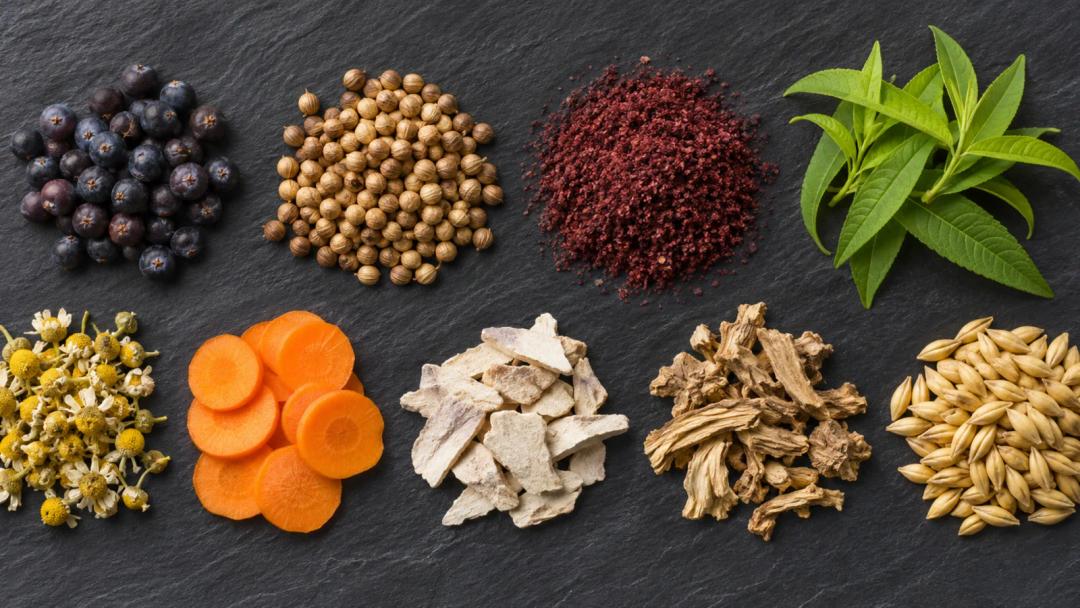
He wrote that a neutral base "removed so much potential profile from the table," and that the "sweet grainy, fruity, and nutty esters" in Oak & Grist's new make could "challenge what a 'gin' could be." For the botanicals, he chose sumac to bring citrus without imported citrus, and carrot from the farmers market for an earthy sweetness that "ended up playing really well with the malted barley."
The two bottles on our board, with specs from the tasting cards:
| Bottle | From the card | What we tasted | Price |
|---|---|---|---|
| Genever | Unaged malt whiskey base; juniper, coriander, sumac, lemon verbena, chamomile, carrot, orris root and angelica root; 90 proof | Citrusy, juniper-forward | $35.95 in NC ABC stores |
| Barrel Reserve Genever | The same base and botanicals, aged 2 years 115 days in used Oak & Grist malt whiskey casks; 86 proof | Sweeter and richer. Heather: lemon, citrus | $76 at the distillery |
The card calls the Genever "the whiskey drinker's gin," and the barrel-aged one leans further that way: in our glasses it was sweeter and richer than the unaged Genever. We liked it more in the glass than the 9 Year single malt, which is the only reason it came home with us.
How should you drink genever?
Start neat, the way we tasted both at the distillery, with a few drops of water if it's hot on the tongue. Then try it where you'd use gin and want more body.
That is how we drink the bottle we brought home. Neat with a few drops of water, the Barrel Reserve Genever is smooth and very aromatic.
If you're in a store rather than a distillery, the rule from the table holds: pick oude or korenwijn for the malty style, and expect a jonge to drink close to a dry gin.
Frequently asked questions
Is genever the same as gin?
What is the difference between jonge and oude genever?
Can genever be made in the United States?
Related reading
Sources
- US gin standard: 27 CFR 5.144, via Cornell Legal Information Institute
- Genever categories, malt wine and protected origin: Difford's Guide
- Oak & Grist tasting cards, our visit on November 5, 2026
- Genever price: NC ABC Commission price list, checked November 13, 2026
- William Goldberg, written answers, November 2026
Rob Boirun is the editor of BoozeMakers.com, where he covers craft distilleries, spirits and the people who make them. He tasted both Oak & Grist genevers at the distillery in Black Mountain, North Carolina, in November 2026.