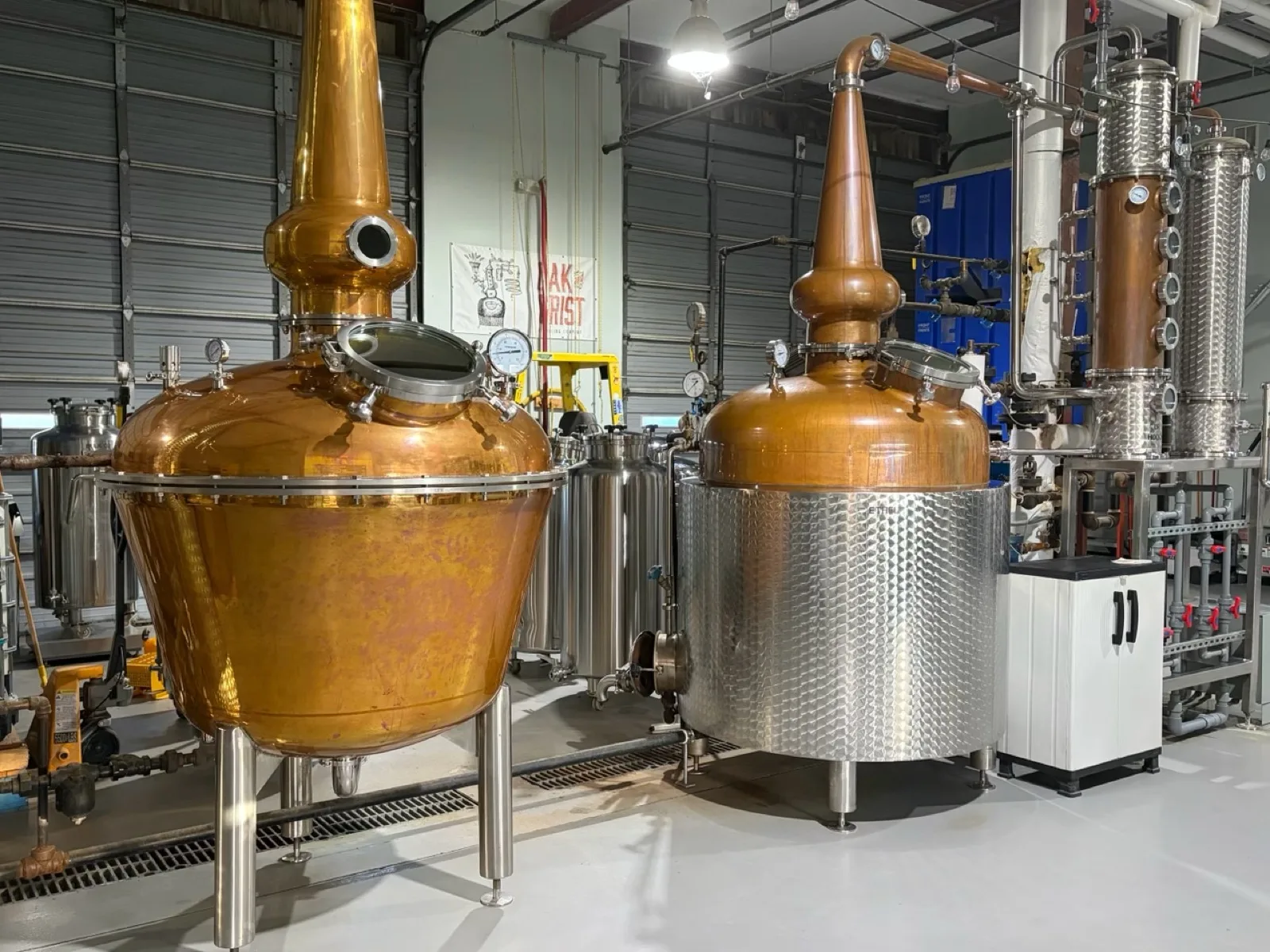
We visited Oak & Grist as part of a hosted trip coordinated by One For The Books, which also reimbursed our travel costs. Our tasting was complimentary. Our opinions are our own.
A pot still makes spirit one batch at a time; a column still makes it continuously. That one difference shapes how a whiskey is made, how efficiently, and how much each batch is allowed to differ from the last. Of the common whisky labels, only one tells you which kind of still was used: single malt Scotch, which must come from pot stills. "Bourbon" and "American single malt" don't say.
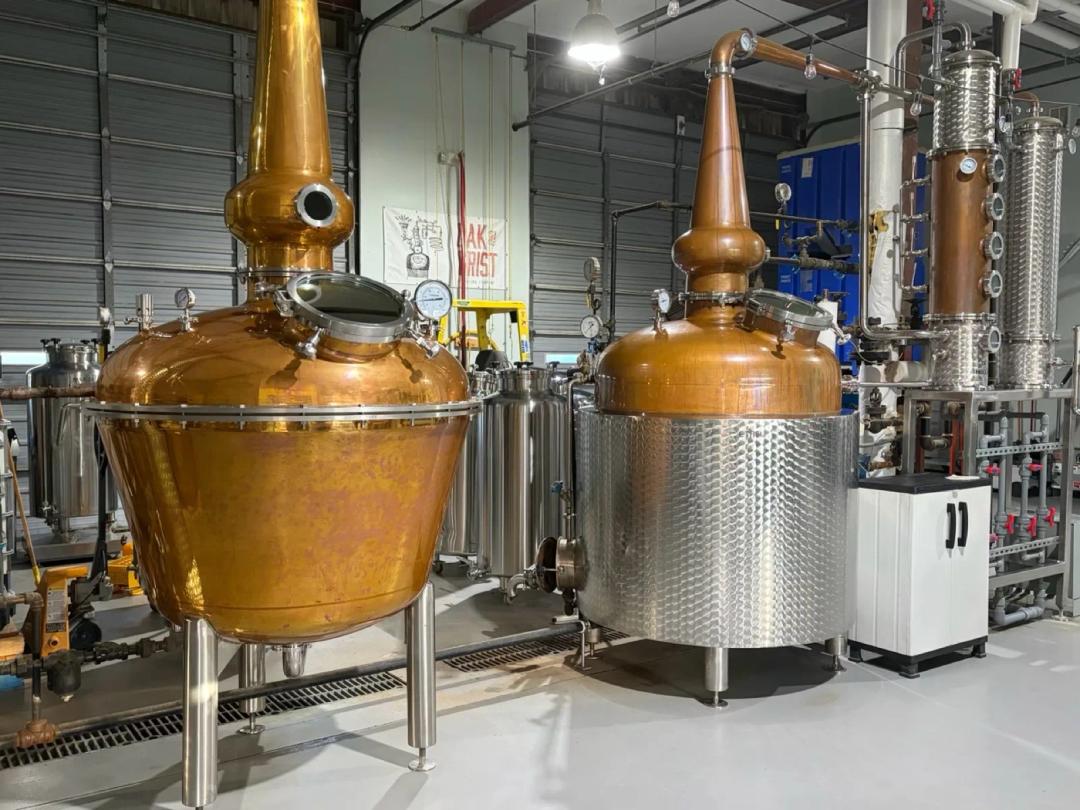
We stood beside the pot stills on November 5, 2026, at Oak & Grist Distilling in Black Mountain, North Carolina, where founder and head distiller William Goldberg walked us through how his pot stills work and why he chose them. Here's what the choice changes, and how to find out which one made the bottle in your hand.
What is the difference between a pot still and a column still?
A pot still works in batches; a column still runs continuously. In a pot still, a fixed charge of fermented wash is heated, the alcohol vapor rises and condenses, and the run ends. The distiller then cleans out the pot and starts again. A column still is fed wash steadily and keeps producing spirit for as long as it runs.
On our tour William framed the trade-off simply. Pot distillation runs in batches, and each batch keeps some individuality. Column distillation is continuous and efficient, and the spirit comes off naturally blended. He called the column the key to vodka and said bourbon has widely adopted it for the efficiency.
How does a pot still distillery make its cuts?
By deciding, batch by batch, where the heads end and the tails begin. At Oak & Grist the spirit runs through the pot stills twice. The first spirit off the still, the heads, carries compounds such as acetone, methanol and aldehydes, and the last of the run, the tails, is set aside as well. The hearts in between go into barrels, and Oak & Grist keeps the full hearts cut together.
William said he makes those cut decisions from temperature, aroma and the live proof reading together, and that one distillery's readings don't transfer to another's, because every still and setup behaves differently. The heads and tails still contain usable alcohol, called faints, which gets distilled again rather than thrown away.
The hearts aren't one flavor either. On the tour, Heather picked out two groups, one bright and citrusy and one darker and chocolatey, and William said both belong in the hearts. That's the individuality a batch process keeps.
Which spirits have to use a pot still?
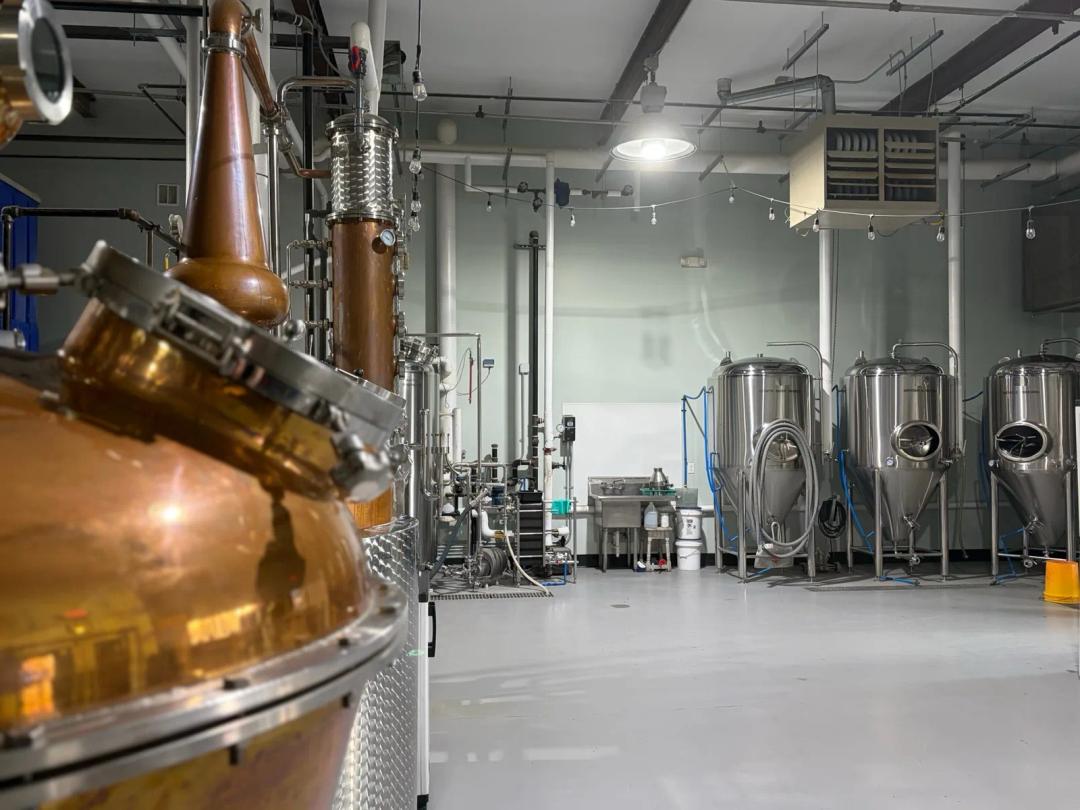
Of the common whisky labels, only single malt Scotch. The table below sets the still and proof rules side by side.
| Label | Still required | Distillation proof | What the label tells you about the still |
|---|---|---|---|
| Single malt Scotch | Pot stills | Under 94.8% ABV | Pot still, at one distillery |
| American single malt | Not specified | 160 proof or less | Nothing |
| Bourbon | Not specified | 160 proof or less | Nothing |
| Vodka (neutral spirits) | Not specified | 190 proof or more | Nothing, though reaching 190 proof is a job for columns |
Sources: The Scotch Whisky Regulations 2009, regulation 3; 27 CFR 5.143 (US whisky standards); 27 CFR 5.142 (neutral spirits and vodka).
How do you tell which still made an American whiskey?
Ask the distillery, or read its own description; the label won't tell you. Nothing in the federal standards requires an American single malt or a bourbon to name its still. Some pot still distilleries say so in their own materials. Oak & Grist describes pot stills, double distillation and a batch process, and its tasting card calls Origin "North Carolina's first spirit to earn the title of Single Malt Whiskey as Scotland defines it." That definition includes pot stills.
That matters most for American single malt, a category that also sets no minimum age. A bottle can follow the Scotch method closely or not at all, and the words "American single malt whisky" read the same either way. Our guide to what the American single malt label does and doesn't guarantee covers the rest of the rules.
Does the still change how whiskey tastes?
It changes how much batch-to-batch character survives, and that's what you taste over several bottles. A batch process lets each run differ a little, and distillers like William make their cuts by nose and readings each time. A continuous column turns out a steadier, naturally blended spirit. Neither is better by rule; they're different goals. Oak & Grist says it was founded to make a Speyside-style single malt, the style the Scotch rules tie to pot stills. William explains how he steers guests through the results in our interview with William Goldberg.
To taste what that produces, read our Oak & Grist distillery review, which covers the full flight from genever to a nine-year single malt.
Frequently asked questions
What is the difference between a pot still and a column still?
Does single malt Scotch have to be made in a pot still?
Does American single malt have to be made in a pot still?
Is bourbon made in a pot still or a column still?
What are heads, hearts and tails?
Rob Boirun is the editor of BoozeMakers.com, where he covers craft distilleries, spirits and the people who make them. He visited Oak & Grist in Black Mountain, North Carolina, in November 2026.