We visited Oak & Grist as part of a hosted trip coordinated by One For The Books, which also reimbursed our travel costs. Our opinions are our own.
Last updated: November 13, 2026
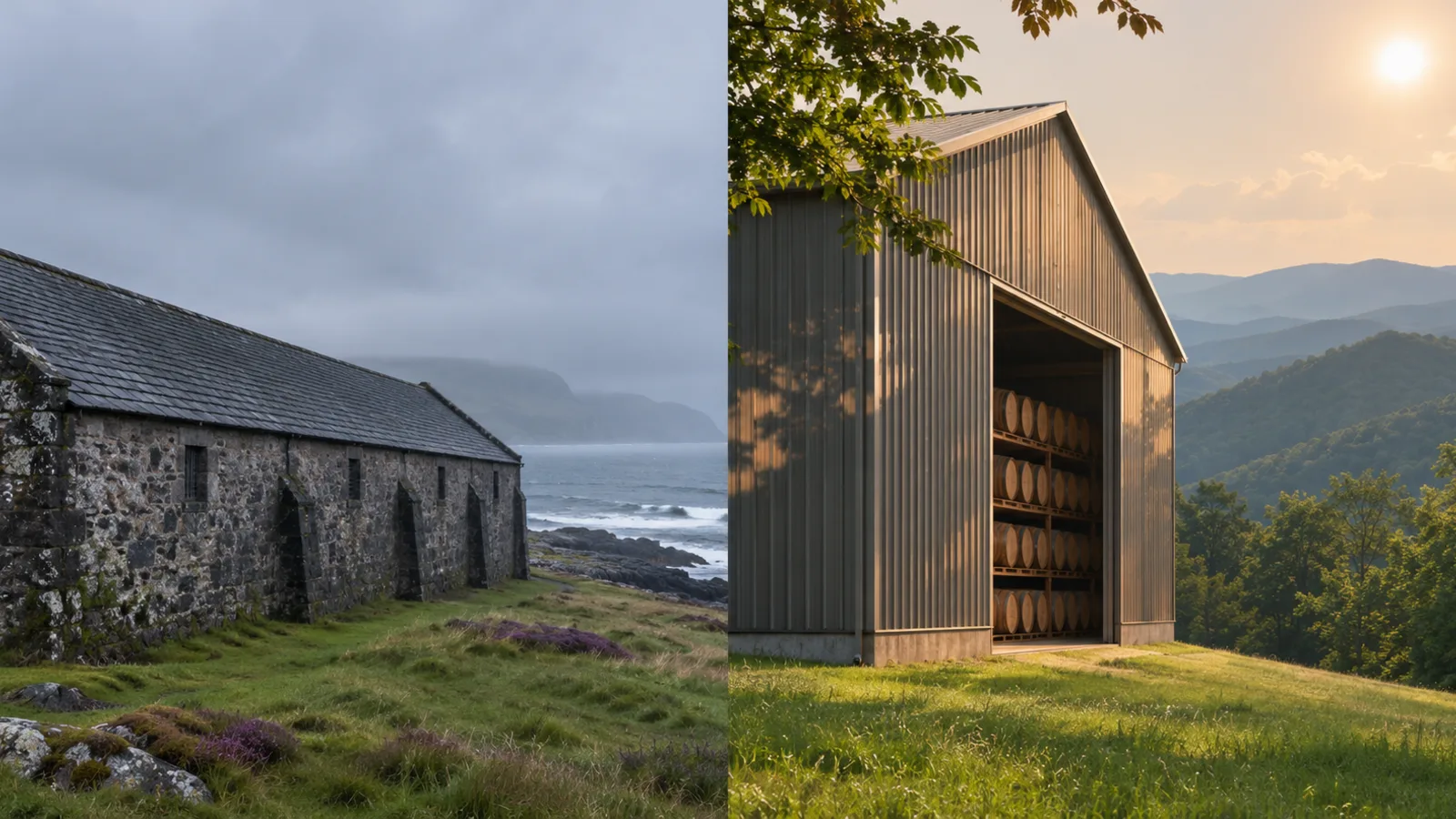
During our tour of Oak & Grist Distilling in Black Mountain, North Carolina, founder and head distiller William Goldberg made a striking comparison. A single malt that needs 18 years to reach a certain stage in Scotland, he said, might get there in about nine in western North Carolina.
That doesn't mean the two whiskeys end up identical. The takeaway is narrower and more useful: the number on a whiskey label means very little until you know where that whiskey spent its years. "Almost ten years in we are also getting to see some pretty stark differences in how climate drives Single Malt development in western North Carolina versus Scotland," he wrote to us before the visit, in our interview with William Goldberg.
Here's why weather matters so much inside a barrel, how the two climates actually compare, and what to make of an age statement the next time you're buying a bottle.
Quick answer
Yes, climate changes how fast whiskey matures. Western North Carolina is warmer than Scotland and swings about 21°F a day on average, versus about 13°F on Scotland's Moray coast. Those swings push spirit in and out of the oak more often, so North Carolina whiskey can reach a mature profile in fewer years. It won't taste identical to an older Scotch, and older isn't automatically better.
Key takeaways
- Heat speeds the chemistry inside the spirit; temperature swings drive extraction from the wood.
- Asheville's average daily swing is about 60% larger than coastal Speyside's (NOAA and Met Office 1991–2020 averages).
- The "18°F rise doubles maturation" rule is chemistry shorthand, useful for direction but not an exact formula.
- An age statement only means something once you know where and in what the whiskey aged.
How does temperature affect whiskey in the barrel?
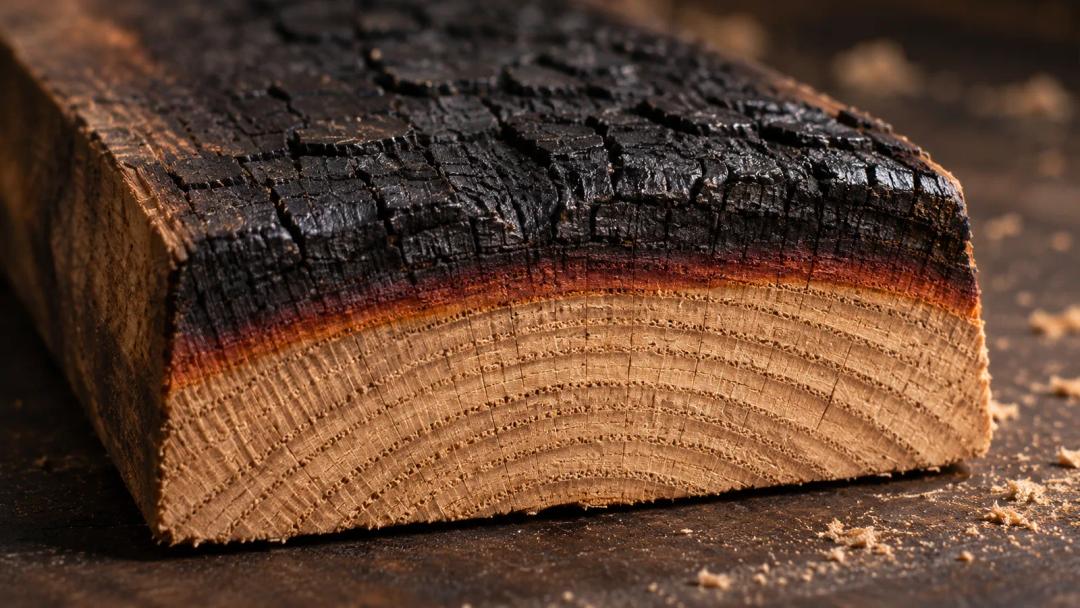
A barrel isn't a passive container. As the spirit warms, it expands and pushes into the oak staves. As it cools, it contracts and pulls back out, carrying wood sugars, vanillin, tannins and color with it. A 2018 study of bourbon barrels published in Scientific Reports describes exactly this push and pull, and points to the faint "red line" inside a used stave as the mark of how deep the spirit soaked in.
Distillers call each warm-to-cool swing a heat cycle. More cycles, and bigger ones, mean more trips in and out of the wood. Heat also speeds up the slower chemistry inside the spirit itself, since most chemical reactions run faster when it's warmer.
The size of the swing changes more than speed. In a study with the Independent Stave Company, Texas distillery Balcones supplied one spirit, which went into matching barrels at distilleries in several U.S. states and in Scotland to age for four years (Distillery Trail). Balcones reported that its own Texas site, the most volatile, saw extreme temperature swings on 213 days a year, nearly 60% of them, and that its whiskey drew on compounds from deeper in the stave. The cooler sites leaned toward honey and caramel notes from the surface wood.
That's the core of William's argument. Western North Carolina gives a barrel a lot of heat cycles. Scotland gives it very few.
How much more does the weather swing in North Carolina than in Scotland?
William put Scotland's typical daily temperature swing at around 10°F and western North Carolina's at 20 to 30°F. We checked his numbers against 30-year climate averages, using Asheville's official weather station for the Blue Ridge side and Lossiemouth, on the Moray coast at the northern edge of Speyside, for Scotland.
| 1991–2020 averages | Asheville, NC | Lossiemouth, Scotland |
|---|---|---|
| Average daily high (year) | 68°F | 54.3°F (12.4°C) |
| Average daily low (year) | 47°F | 41.4°F (5.2°C) |
| Average daily swing (year) | about 21°F | about 13°F |
Sources: NOAA 1991–2020 normals for Asheville (station USW00013872), via Climate-Zone; Met Office 1991–2020 averages for Lossiemouth.
The averages back the direction of William's claim, if not the exact figures. On a typical day, Asheville swings about 60% more than coastal Speyside. Averages also flatten the extremes: plenty of individual mountain days swing well past 21 degrees, which is the kind of day he was describing. Add the seasons, from Asheville's average July high of 86°F to its average January low of 29°F, and a North Carolina barrel works much harder over a year than one on the Moray coast.
Two caveats keep this honest. A warehouse softens the outside weather, so the spirit inside never feels the full swing. And Scotland isn't uniform: inland Highland sites run colder than the coast, and their daily swings may differ too.
Does an 18°F rise really double whiskey aging?
William's math rests on a rule of thumb distillers borrow from chemistry: raise the temperature 18°F and maturation runs about twice as fast. That 18°F is no accident. It's 10°C, and chemists have long used the shorthand that many reaction rates roughly double for every 10°C rise, a simplification of the Arrhenius equation from 1889.
It's a useful lens, with real limits. The doubling is approximate and varies from one reaction to the next. Whiskey maturation also isn't one reaction. It's extraction from the wood, oxidation, evaporation and slow chemical change all at once, each responding to heat differently.
Run the numbers on our climate table and the picture gets more interesting. Asheville's year-round average temperature is roughly 10°F warmer than Lossiemouth's, not 18°F. On averages alone, the rule of thumb predicts faster maturation in North Carolina, but not double. What the averages miss is the pattern William emphasized: hot summer afternoons, cold winter nights and big daily swings, all of which push spirit through the oak in ways a mild, steady climate doesn't.
So "18 years in Scotland, nine in the mountains" works best as a way to think, not a formula. The direction is solid. The exact ratio depends on the warehouse, the barrel and the whiskey.
Is older whiskey always better?
If heat speeds maturation, it's tempting to think the answer is simply more time in more heat. William doesn't see it that way. He described maturation as a wave rather than a straight line: a whiskey moves into balance, sometimes drifts out of it, and can come back again.
He also experimented with smaller barrels early on, which speed things up by exposing more spirit to more wood. "For us smaller format barrels gave us a lot of barrel character quickly but at the expense of our distillery character," he wrote. A fast climate brings a similar risk. The job is knowing when a barrel is ready, not how long it's been sitting.
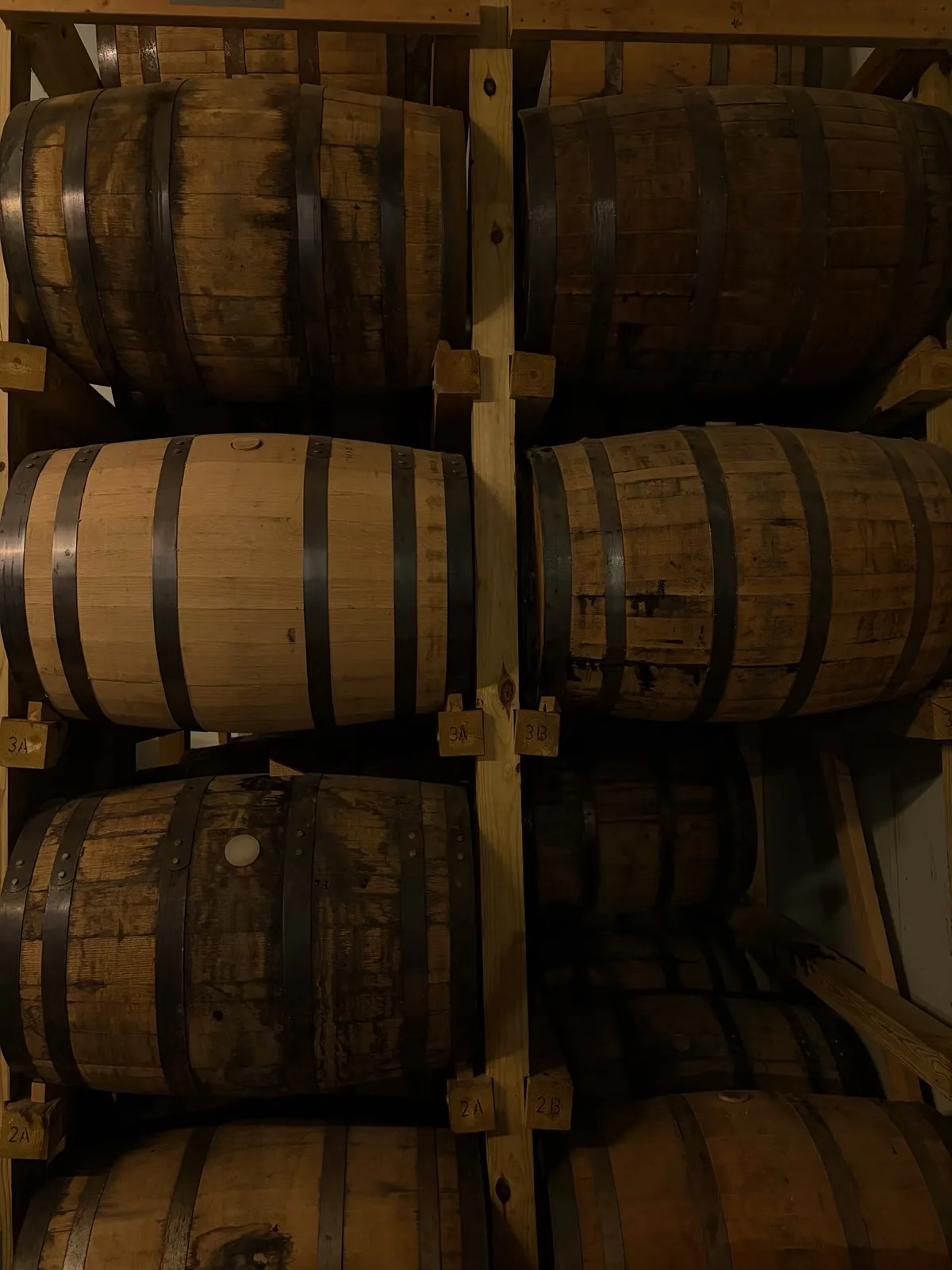
Placement matters as much as region. Barrels high in a warehouse sit in warmer air than barrels near the floor, so two casks filled the same day can age at noticeably different speeds.
What should you look for in a whiskey age statement?
None of this makes age statements meaningless. It makes them incomplete. A few things to keep in mind at the store, and our guide to bourbon age statements explained covers the label rules:
- Ask where it aged. A six-year whiskey from a hot, swinging climate may taste more mature than a ten-year from a cool, steady one. They won't taste the same, though.
- Ask what it aged in. Barrel size, new versus used oak and char level all change the pace.
- Don't pay for the number alone. Older only means longer. Whether it's better depends on whether the distiller pulled it at the right moment.
- Taste young American single malt with fresh eyes. Distillers in places like Texas and the Blue Ridge are producing mature-tasting whiskey on shorter timelines than Scotch drinkers expect.
To see what this looks like in a glass, Oak & Grist's nine-year single malt is a good place to start. Read our full interview with William Goldberg, or plan a tasting with an Asheville long weekend for whiskey and cocktail lovers.
Frequently asked questions
Does climate affect how whiskey ages?
Why does whiskey age faster in North Carolina than in Scotland?
Does an 18°F rise really double maturation speed?
Is older whiskey always better?
Related reading
Sources
- Gollihue et al., Scientific Reports (2018): bourbon barrel stave study
- Distillery Trail: Independent Stave Co. climate study; Balcones Distilling's published climate study results
- Asheville 1991–2020 NOAA normals (Climate-Zone)
- Met Office: Lossiemouth 1991–2020 averages
- William Goldberg, written Q&A and distillery visit, November 2026
Rob Boirun is the editor of BoozeMakers.com, where he covers craft distilleries, spirits and the people who make them. He visited Oak & Grist in Black Mountain, North Carolina, in November 2026 and interviewed founder William Goldberg for this piece.