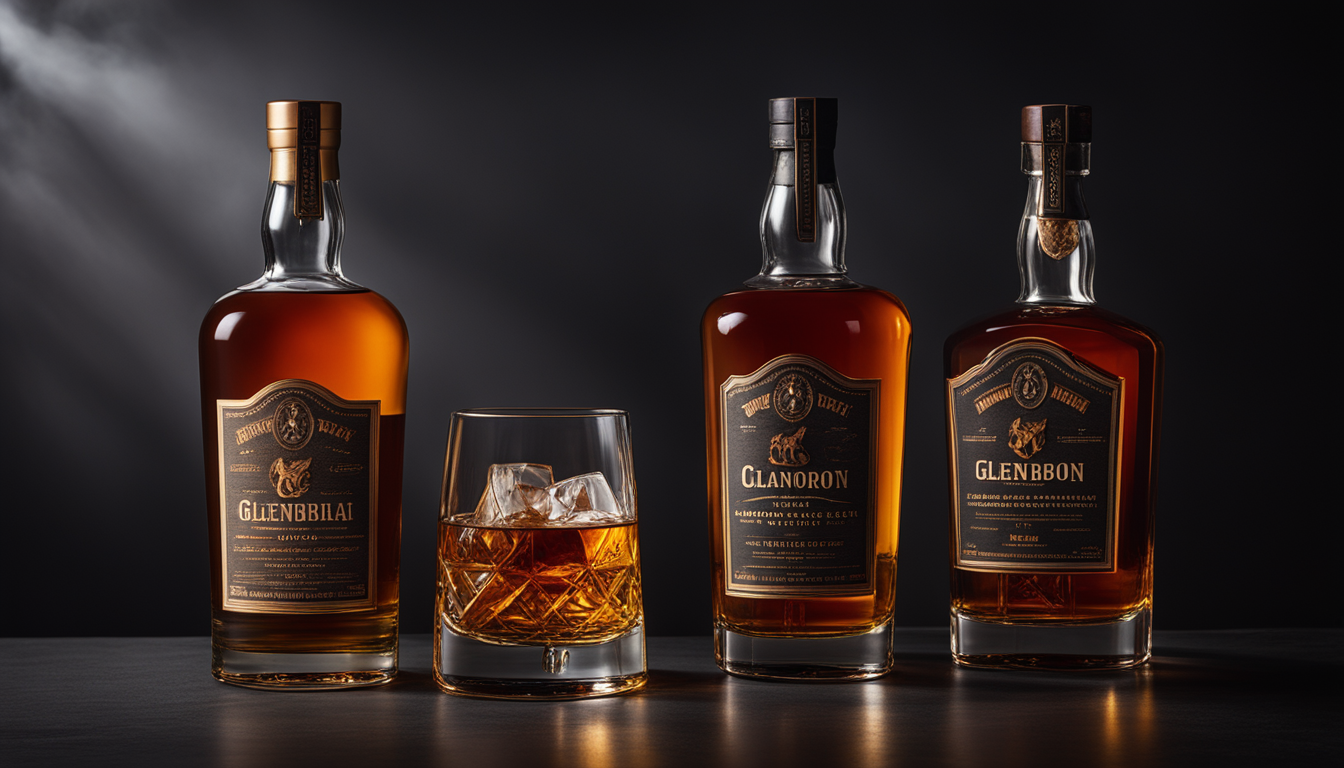
Here's a party trick that has quietly ruined bourbon shopping for us. Next time you're standing in the whiskey aisle, pick up that handsome $55 ‘craft’ bourbon with the serious-looking label and the vague founding story—and turn it around. Read the small print on the back. If it says “Distilled in Indiana,” there's a very good chance the liquid inside came out of the exact same building as a bottle two shelves down selling for $25.
We've now scored more than 100 spirits on this site, a big chunk of them bourbon, and once you taste and research that many bottles a pattern gets impossible to un-see: a surprising number of ‘different’ bourbons are the same base whiskey, wearing different clothes at wildly different prices. This isn't a conspiracy theory. It's printed on the label, it's completely legal, and once you learn to read it you'll never overpay the same way again.
The open secret: most “craft” bourbon isn't distilled by the brand on the front
Making bourbon takes years. A new distillery has to build a facility, fill barrels, and then wait—four years minimum for a ‘straight’ bourbon, often longer—before it has anything to sell. That's a brutal amount of time to spend with no revenue. So a huge number of brands, especially newer ones, do the sensible thing: they buy whiskey that's already made and aged from a large contract distillery, then bottle it under their own name.
The most famous of these is a plant in Lawrenceburg, Indiana—MGP (now Ross & Squibb). For years it has quietly produced whiskey for dozens upon dozens of labels, many of which lean hard on a rustic, small-town-craft image that says nothing about Indiana. The whiskey is often genuinely good. The problem isn't the sourcing. The problem is that two bottles of essentially the same distillate can sit on the same shelf at a 2x or 3x price difference—and the only thing you're paying extra for is the story on the front.
The four words that give it away
Federal labeling rules mean the truth is usually right there in the fine print. You just have to know the code. Flip the bottle over and look at who—and where—it was made:
- “Distilled by [Brand] in [their town]” — They actually made it. This is what you want to see on a bottle claiming to be a real distillery.
- “Distilled in Indiana” (or Tennessee, or elsewhere) + “Bottled by” or “Produced by” — Big tell. The company on the front label very likely bought and bottled it, not distilled it.
- No distillery, no location, lots of vibes — A label heavy on ‘handcrafted,’ ‘small batch,’ and founder mythology but light on who distilled it and where is usually hiding something: sourced juice at a craft markup.
‘Small batch’ and ‘handcrafted,’ by the way, are marketing terms with no legal definition whatsoever. A billion-dollar conglomerate can print ‘small batch’ on a bourbon blended from hundreds of barrels, and it's perfectly legal. The words tell you nothing. The back label tells you everything.
Wait—so is sourced whiskey a rip-off?
No, and this is the part people get wrong. Some of the best-value bourbon on the shelf is sourced, and some genuinely excellent brands are transparent about buying great barrels and finishing or blending them with real skill. Sourcing isn't the crime. Paying a craft-distillery premium for a mass-produced base is the crime.
The distinction that matters is honesty plus price. A brand that's upfront about sourcing and charges a fair price for tasty whiskey? Great—buy it. A brand inventing a fake heritage to justify charging $60 for the same Indiana distillate you can get for $25 with a plainer label? That's the one to walk past. Your palate can't tell the difference in a blind pour, but your wallet sure can.
Five red flags of an overpriced sourced bottle
- A craft image with no distillery named. If you can't find the words ‘distilled by’ followed by an actual place, be suspicious.
- “Distilled in Indiana” in the smallest legal font. Nothing wrong with Indiana whiskey—but if they're hiding it, they're charging you for a story.
- No age statement on a ‘premium’ pour. If it's expensive and young and vague, you're paying for the bottle design.
- Heavy founder mythology, thin facts. Long tale about a great-grandfather's recipe; nothing about the mash bill, proof, or who made it.
- A price that jumped for no reason. Allocation and hype inflate plenty of bottles far past what the liquid justifies—as we found with Blanton's.
How to actually buy value instead
The good news: once you stop paying for stories, bourbon gets a lot cheaper and just as delicious. Here's how we shop after 100-plus reviews:
- Shop by proof and provenance, not by label design. A transparent, distiller-owned bourbon at 100 proof usually out-drinks a vague ‘craft’ bottle costing twice as much.
- Trust bottled-in-bond. The Bottled-in-Bond designation is a legal guarantee—one distillery, one season, at least four years, 100 proof. It's the original truth-in-labeling law, and it's still the best value signal in bourbon. Our best bottled-in-bond bourbons are almost all under $40.
- Go single barrel for character without the hype tax. Our best single barrel bourbons deliver one-of-a-kind whiskey—and the top value pick costs less than most ‘craft’ sourced bottles.
- Let us do the price-hunting. We've ranked the genuine standouts at every tier: the best bourbons under $30 and the best bourbons under $50. Every bottle on those lists earns its place on the liquid, not the legend.
And if you want to go deeper on the sourcing world itself, our guide to the Indiana bourbon corridor pulls back the curtain on the plant behind so many labels.
The bottom line
Bourbon is one of the few products where the truth is legally required to be printed on the package—most people just never turn the bottle around. Do it once and it becomes a reflex. You'll spot the sourced-and-marked-up bottles instantly, you'll stop paying twice for the same whiskey, and you'll put that saved money toward bottles that are actually worth it. That $60 you almost spent on a story? Two genuinely great bottles from our value lists, and change left over for a decent glass to drink them from.
How can I tell if my bourbon is sourced?
Read the back label. Look for “Distilled by [Brand]” with an actual location—that means the brand made it. If it says “Distilled in Indiana” (or another state) alongside “Bottled by” or “Produced by,” the company on the front most likely bought the whiskey from a contract distillery rather than distilling it themselves.
Is sourced bourbon lower quality?
Not at all. Much of the whiskey from large contract distillers like MGP in Indiana is very good, and several respected brands source excellent barrels and blend them skillfully. The issue isn't quality—it's paying a craft-distillery premium for a mass-produced base. Honest sourcing at a fair price is a great buy; a fake heritage story at triple the price is not.
What does “small batch” legally mean on a bourbon?
Nothing. “Small batch” and “handcrafted” have no legal definition in the United States, so any producer can use them regardless of scale. They're marketing language, not a quality guarantee. Rely on the back label, the proof, and designations like Bottled-in-Bond instead.
Why do two bourbons that taste similar cost so differently?
Often because they share the same sourced base whiskey but differ in branding, bottle design, and marketing story—none of which change what's in the glass. Allocation and hype inflate some prices further. Shopping by proof, provenance, and Bottled-in-Bond status rather than label design is the fastest way to avoid overpaying.
What is the best value bourbon to buy?
Bottled-in-Bond bourbons are the strongest value signal—a legal guarantee of one distillery, one season, at least four years, and 100 proof, usually under $40. Our best-bottled-in-bond, best-single-barrel, and best-bourbon-under-$30 and under-$50 roundups rank the standouts that earn their place on the liquid rather than the label.